
News
Implementation of Kampala Convention on IDPs Advocated by Ecowas Parliament

By Odimmegwa Johnpeter/Abuja
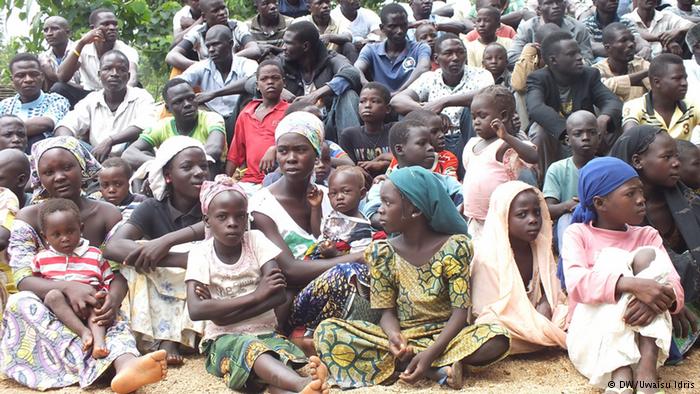
ECOWAS Parliament has urged national parliaments of member countries to ratify and domesticate the legal instruments in the Kampala convention of 2009 as recipe to finding lasting solutions to the crisis of Internally Displaced Persons (IDPs) and refugees in West Africa.
The call was made at the technical session of the Delocalised Meeting of the ECOWAS Parliament Joint Committee on Health and Social Services, Agriculture, Environment, Water Resources and Infrastru cture Development, Energy, Mines & Industry, Human Rights, Child Protection and Other Vulnerable Groups in Lome, Togo.
The Commissioner for Social Affairs and Gender in the ECOWAS Commission, Siga Fatima Jagne, while making her presentation, said, the objective is to “facilitate the sharing of lessons learned on development and implementation of laws and policies to prevent internal displacement and to encourage further ratification and domestication of the Kampala Convention among Member states.”
Also speaking to reporters in an interview, a member of the ECOWAS Parliament, Chernor Maju Bah, from Sierra Leone, admonished African leaders on the need to address the root causes of Refugees and internal displacement, which he noted are caused mainly by political instability, ethnic clashes and corruption.
“As a sub-region we are under obligation to ensure that real and genuine democracy is obtained within our sub-region. Those things leading to instability must be addressed,” he said, adding that West African leaders must address the problems of hunger and create jobs for the teeming population.
Participants at the session had referred member states to the Communique issued in Dakar in March, 2019, where comprehensive recommendations where made on how the sub-region can effectively exploit the legal instruments enunciated in the Kampala Convention to implement policies to prevent and address the scourge of Internal Displacement in the region.
The ECOWAS Parliament and its counterpart, the Commission, the United Nations High Commission for Refugees (UNHCR), the United Nations Office for the Coordination of Humanitarian Affairs (OCHA), the International Committee of the Red Cross (ICRC) and others had during the Dakar summit, recommended far reaching approach to the crisis.
Some of the recommendations include; that national parliaments should assist states, where relevant, to ratify and/or implement the Kampala Convention in a holistic manner; member states shall ensure that adequate resources are made available through national budgets and national development plans to protect and assist IDPs and achieve durable solutions for them effectively in line with Article 3(2)(d) of the Kampala Convention.
ECOWAS has also been tasked to build capacity of Parliamentarians, magistrates, civil society organisations and national human rights institutions through capacity-building and awareness-raising workshops to popularise the Kampala Convention and the African Union law as well as sharing Niger’s IDP law, the first country in Africa to domesticate the Kampala Convention after ratification.
The Kampala Convention was an initiative of the African Union (AU), which was adopted on October 23rd 2009 and entered into Force on December 6, 2012. The Convention is for the protection of displaced persons in Africa. 11 ECOWAS member states have ratified it. Only Guinea, Ghana and Senegal are signatories but have not ratified, and Cape Verde is the only non-signatory.


-

 Business1 week ago
Dangote Refinery IPO: 70% Subscription claim meets fourfold demand assertion as investors seek clarity
-

 Featured4 days ago
Inside INEC’s race to prepare for Nigeria’s 2027 elections
-
Business1 week ago
Dangote Refinery IPO Extension: Was the 70% subscription report overhyped?
-

 Latest6 days ago
UCTH faces morgue crisis as 50 unclaimed corpses await mass burial
-
 Featured4 days ago
2027: APC unveils nationwide campaign timetable, Tinubu to rally in 12 states
-

 Business6 days ago
BREAKING: Nigeria’s Inflation Rate Drops to 14.63% in September
-

 Featured1 week ago
El-Rufai, ADC governorship candidate’s court appearance puts Kaduna opposition politics in focus
-

 Aviation1 week ago
Germany opens online application route for student, EU Blue Card and other long-stay visas