
Aviation
International flights now prefer landing in Ghana to Nigeria

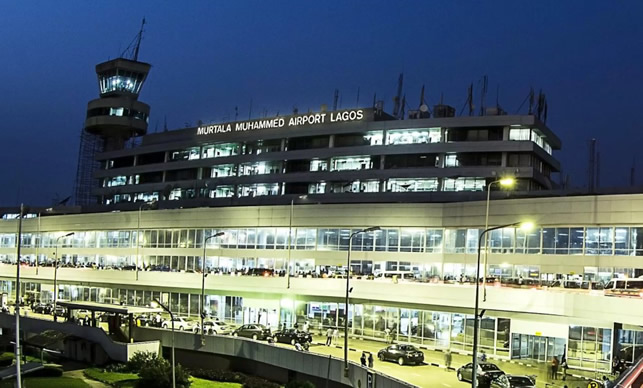
Kotoka International Airport, Accra, Ghana now has the highest operations of International airlines, relegating Nigeria’s Lagos and Abuja International Airports to second place.
According to statistics released by Ghana Statistical Service (GSS), the economy jumped provisionally by 8.5 percent in 2017 compared to 3.7 percent recorded in 2016.
National Daily learnt that many international flights coming to Africa prefer landing in Ghana from where they will rely on local airlines to distribute both arrival and departing traffic to other regional airports including those in Nigeria.
Industry observers say preferring Accra International Airport to Nigeria’s Lagos and Abuja stemmed from the availability of latest aviation infrastructure that are of global standards and seamless administration of the facility by the Ghanaian aviation agencies.
Only recently, the Accra Airport gates were laced with barometric e-Gates to allow for seamless in and out access as obtainable in developed and some developing economies.
Whereas the Accra Airport had long been covered by Close Circuit TV (CCTV) infrastructure, only recently, the Nigerian Civil Aviation Authority (NCAA) announced that it has attained up to 90 per cent coverage of Lagos and Abuja Airports with CCTV.
According to the acting Ghanaian Government Statistician, Mr. Baah Wadieh, who announced the cheering economic growth rate, he attributed the growth to increased oil and gas production and tailored management of the resources for the growth of the economy.
Besides, GSS averred that the Industry sector recorded the highest growth rate of 16.7 percent, followed by Agriculture 8.4 percent and the Services 4.3 percent sectors.
Services remained the largest sector but its share of GDP decreased from 56.8 percent in 2016 to 56.2 percent in 2017.
The sector’s growth rate also decreased from 5.7 percent in 2016 to 4.3 percent in 2017.
However, two of the subsectors in the services sector recorded double digit growth rates, including Information and Communication 13.2 percent and Health and Social Work 14.4 percent.
The Industry sector, the highest growing sector with a GDP share of 25.5 percent, had its growth rate increasing from -0.5 percent in 2016 to 16.7 percent in 2017.
Of all the industrial activities the Mining and Quarrying subsector recorded the highest growth of 46.7 percent in 2017.
The Agriculture sector expanded from a growth rate of 3.0 percent in 2016 to 8.4 percent in 2017. Its share of GDP, however, declined from 18.7 percent in 2016 to 18.3 percent in 2017. Crops remain the largest activity with a share of 14.2 percent of GDP.




-

 Latest7 days ago
US Immigration fees rise from October 16 as USCIS announces new charges
-
 Latest2 days ago
Israel marks 3 years since October 7 Hamas attack amid Gaza strikes, election debate
-

 Business7 days ago
Nigeria’s $55bn reserves raise fresh questions over naira value
-

 Health6 days ago
Florida sues Pfizer over deceptive COVID-19 vaccine marketing
-

 Business1 week ago
Tuoyo Erikowa wins digital marketing personality of the Year at 2026 EDGE awards
-

 Crime6 days ago
From camp to captivity: How kidnappers now target NYSC Corps members on highways
-

 Featured7 days ago
2027: Can Nigeria’s opposition still unite behind a single presidential candidate?
-

 Crime6 days ago
Fulani Militia leader linked to Christian killings arrested in Plateau