
Aviation
Judgment debt looms as Nigeria Air deal grovels in mud

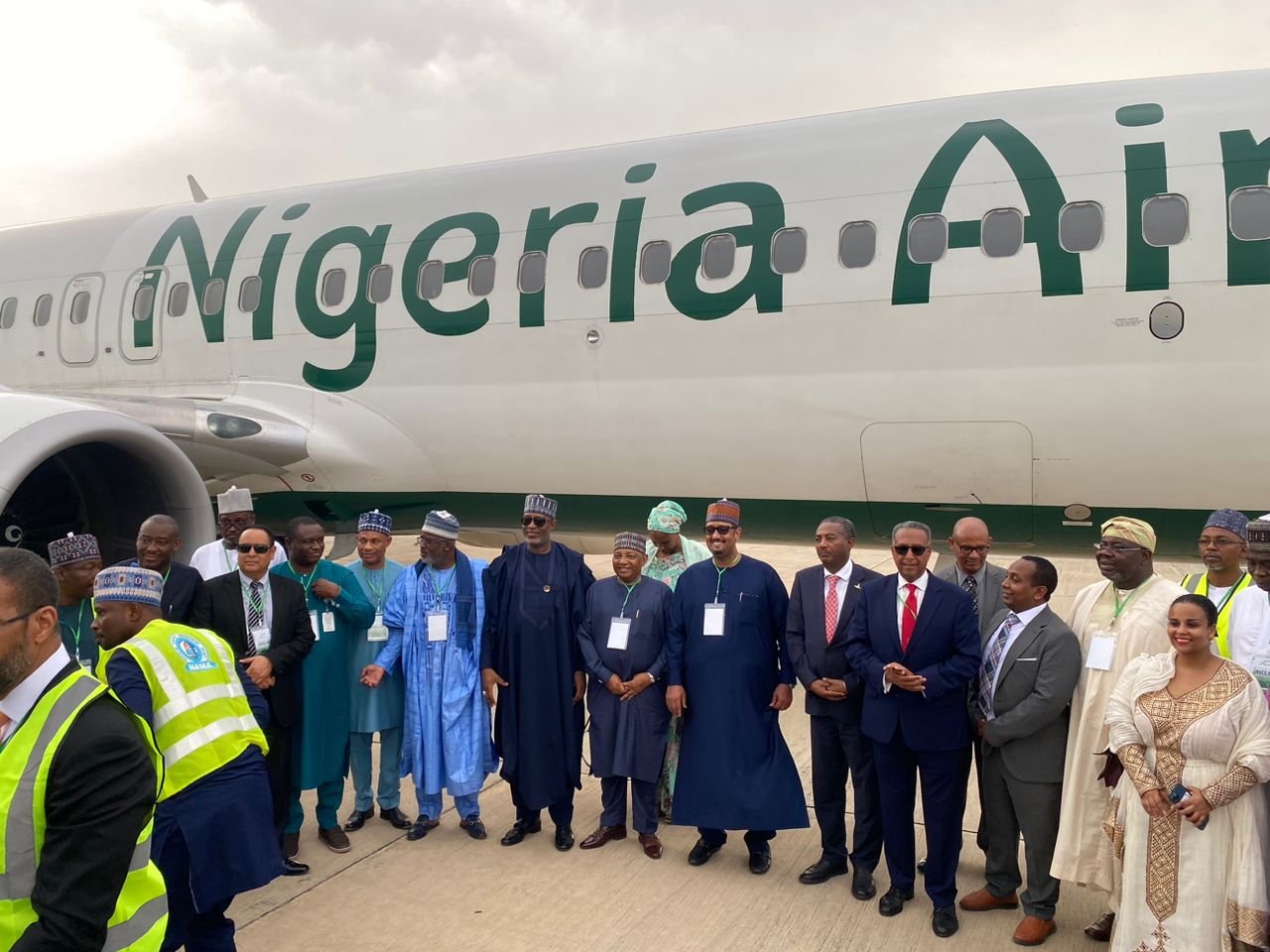
The launch of Nigeria Air, the national carrier, has been strongly criticized by aviation industry experts due to the former Minister of Aviation, Hadi Sirika, proceeding despite a federal high court judgment and the failure to obtain an Air Operators Certificate (AOC) from the Nigerian Civil Aviation Authority (NCAA).
The fact that the flight is still registered under Ethiopian Airlines indicates that Nigeria Air does not possess an AOC, which is a requirement for registering aircraft in Nigeria. Although the airline obtained the Air Transport License (ATL) last year, it should be noted that there are several other licenses that new airlines must acquire from the NCAA before commencing commercial flights.
The financial details of the Nigeria Air project have come under scrutiny, with allegations of misappropriation of funds and fraud directed at the former Minister. A total of N15.9bn has been committed by the Federal Government to the project over eight years without significant progress.
READ ALSO: End of road for Air Nigeria
Critics argue that instead of a wet lease arrangement that possibly gives Ethiopian Airlines ill-defined investment advantage, the fleet of aircraft previously held by AMCON from Arik and Aero contractors could have been utilized as viable alternatives.
Analysts maintain that the new administration must intervene promptly to prevent potential contract defaults that could result in a series of judgment debts against the country.
The alleged lack of transparency has raised concern by domestic operators, as evidenced by the federal high court injunction, highlight the need for a comprehensive evaluation of the project. The gains from having Ethiopian Airlines as a technical partner to the country’s flag carrier must be balanced with the interests of domestic airline operators.
In this regard, domestic operators have expressed worries about the lack of clarity over the shareholding structure of the national carrier and the overweight influence of Ethiopian Airlines, underlining the potential perverse impact on the local aviation sector in a Single Air Market.
The absence of a shareholder’s agreement with the structured arrangement excluding meaningful domestic interests, such as Sahcol and MRS on the board, is notable. The arrangement grants a 3% stake to the Sifax investment adviser even though it had not contributed any funds, has prompted apprehension.


-
 Latest6 days ago
Israel marks 3 years since October 7 Hamas attack amid Gaza strikes, election debate
-

 Energy6 days ago
Fuel Battle: Dangote, marketers and government clash over petrol imports
-

 Energy7 days ago
Petrol, diesel prices rise 86% in 2026 as costs hit fresh highs
-
 Energy1 week ago
Has Iran lost control of the Strait of Hormuz? Oil flows rebound as war disruptions persist
-

 Football7 days ago
Nigeria’s World Cup exit under spotlight as FIFA’s DR Congo files emerge
-

 Latest7 days ago
US Court set to rule on release of FBI, DEA records on Tinubu
-

 Business7 days ago
Nigerian investors at a crossroads as fixed-income yields slide
-

 Latest15 hours ago
Full List: Meet the 2026 Nobel Prize winners across six categories