
Business
Looming risks in financial market, IMF warns central banks

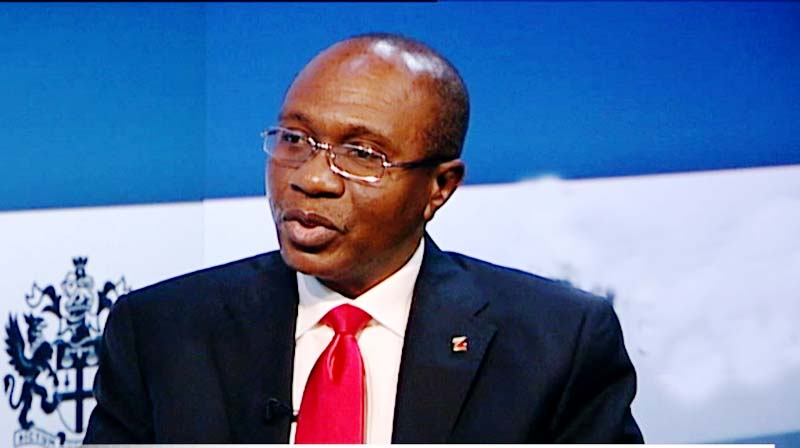
The International Monetary Fund (IMF) has asked the global central banks to keep watch over the improving financial system across the world, as there are looming dangers in the form of rising financial risks
The warning came, as there were estimated one-third of globally systematically important banks with assets worth $17 trillion that will continue to struggle to achieve sustainable profit.
Nigeria already has no less than five systematically important banks, which by the nature of their asset base and global engagement with other international financial institutions, may give rise to a new task for the Central Bank of Nigeria (CBN).
The IMF, while unveiling its 2017 Global Financial Stability Report in Washington DC yesterday, urged the central banks to now plan a well communicated programme for unwinding unconventional policies to ward off market turbulence.
“The risks are unsustainable level of non-performing loans (NPLs) across major banks, although majority are recapitalising; increased borrowing by governments, particularly emerging and low income countries like Nigeria; and the risk of poor implementation of the borrowed funds.
“Portfolio inflows to emerging economies are on track to $300 billion in 2017, more than twice the totals over the past two years. But this greater reliance on foreign borrowing may at a point become a vulnerability, particularly for low income countries if they are not put to good use,” said the Financial Counsellor, IMF, Tobias Adrian.
ALSO SEE: Traffic decongestion: Lagos to construct multi-layer car parks in strategic locations
Adrian said borrowings by governments, households and companies, excluding banks, in the Group of 20 (G-20) economies, for which Nigeria is aspiring to join, has exceeded $135 trillion, equivalent to about 235 per cent of their combined Gross Domestic Product (GDP).
“Despite low interest rates, debt servicing burdens have risen in several economies. And while borrowing has helped the recovery, it has also created new financial risks, accompanied by an underlying deterioration of debt burdens as measured by the debt service ratio.
“Major central banks should focus more on the business models of banks to ensure sustainable profitability. This is not the time for complacency. The time to act is now. Otherwise, future growth could be at risk,” he added.
In Nigeria, a recent data from the Nigerian Bureau of Statistics (NBS) put the country’s total debt as at June 30, 2017, at N19 trillion, while the servicing is put at more than N1.7 trillion in the national budget.








-

 Featured1 week ago
Inside INEC’s race to prepare for Nigeria’s 2027 elections
-

 Featured1 week ago
2027: APC unveils nationwide campaign timetable, Tinubu to rally in 12 states
-
 Business4 days ago
Naira faces exchange rate gap as Dollar hits N1,380 on parallel market
-
 Business1 week ago
Court dismisses ₦170m Trade Fair contract claim, says Zenith Bank was not a party
-

 Latest1 week ago
Breaking: NNPCL raises petrol price to ₦1,405 per litre amid discount controversy
-

 Featured1 week ago
From kitchen to Supreme Court: Nigerian’s fight over alleged support for terrorists
-

 Football1 week ago
Maresca reveals Guardiola’s reaction to Man City’s 4-2 defeat to PSG
-

 Business6 days ago
NCC launches Internet Governance Working Group to tackle AI risks, boost online safety