
Business
Nigeria has no choice but to restructure debt burden –expert

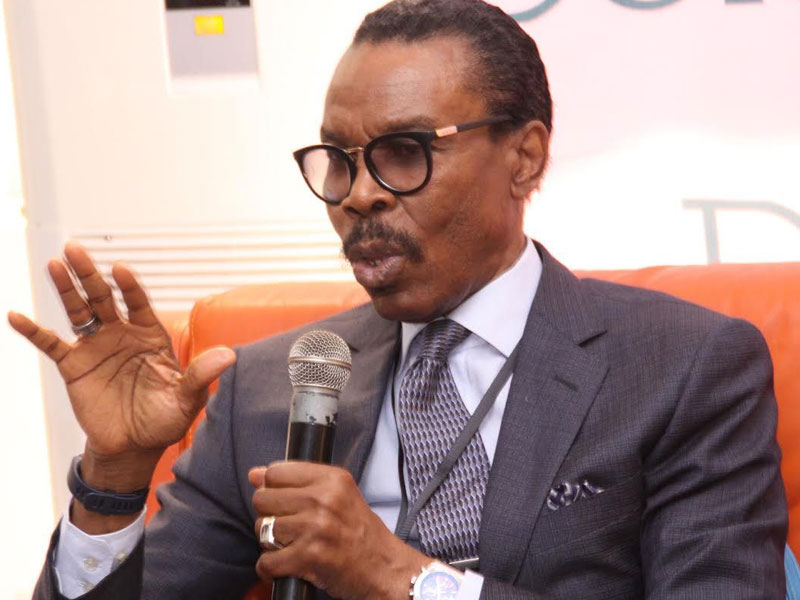
Managing Director/CEO at Financial Derivatives, Bismarck Rewane, says Nigeria has gotten to a point where it has no choice but to restructure its debt overload.
It should be recalled that the minister of finance, Zainab Ahmed has stated that there are no plans to restructure Nigeria’s debt as the country has a debt strategy that could be followed closely.
According to the minister, the 33 per cent debt to GDP ratio of Nigeria’s debt is still the lowest when placed beside countries with equal comparatives
Reacting to the minister’s assertion, Rewane in an interview noted that while the finance ministry has been emphatic that debt restructuring is not going to happen, Nigeria’s has gotten to a point where it has no choice but to restructure its debt.
“The finance minister with all due respect is doing her job and saying what should be said. The job of the finance minister and central bank governor is not to cause panic but the reality is that this is a 12-week game. After 12 weeks, nobody’s going to look in that direction.
READ ALSO: Buhari hired unimaginative team in CBN to create debts than managing economy – Adebayo, SDP
“The debt level at even 35 percent of GDP is not staggering compared to others, but the reality is that if it was 10 percent of GDP 10 years ago and it is now 35 percent, the trend shows that you are growing your debt to a level which could be unsustainable.
“Secondly, what have you done with the debt? Debts are liabilities. You have to look at the asset side of the balance sheet and say what Nigeria has achieved with the debt it has accumulated – both domestic and international.”
Rewane noted that the economy has not performed that well and the way forward would be to restructure.
He said: “Labour productivity is flat and negative, the total factor of productivity which is the test for the optimal use of capital stock in the country is 0.7 per cent and it was even negative before then. It shows really from an economic evaluation policy and impact analysis, that the economy has not done that well. It is suboptimal, to put it mildly.
“Therefore what happens is; as a prodigal son, you finish the food, sell your father’s wealth and you go borrow and then come back home. The reality is you must restructure your debt, you must go to your creditors and ask for forbearance so that you can now begin to grow. Nigeria has become a prodigal economy which means we now have to go back to the basics and do the right thing.”


-

 Latest5 days ago
Full List: Meet the 2026 Nobel Prize winners across six categories
-

 Football5 days ago
Premier League Matchweek 7: Five Fixtures That Could Shape the Weekend
-
 Latest4 days ago
Umahi defends Lagos-Calabar highway route changes amid public outcry
-
 Business3 days ago
Dangote Refinery IPO: 70% Subscription claim meets fourfold demand assertion as investors seek clarity
-
Business4 days ago
Dangote Refinery IPO Extension: Was the 70% subscription report overhyped?
-

 Latest2 days ago
UCTH faces morgue crisis as 50 unclaimed corpses await mass burial
-
 Featured4 days ago
El-Rufai, ADC governorship candidate’s court appearance puts Kaduna opposition politics in focus
-
 Business2 days ago
BREAKING: Nigeria’s Inflation Rate Drops to 14.63% in September