
Business
Nigerians groan as food inflation outpaces headline rate

By Arthur Eriye
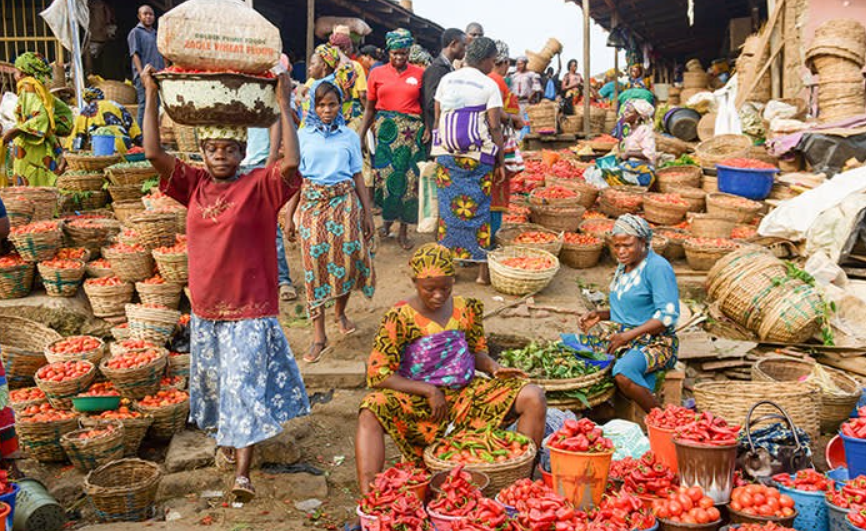
Data from the National Bureau of Statistics (NBS) indicates that although there was a slight decrease in Nigeria’s headline inflation rate in June, food prices continued to escalate. This trend highlights the ongoing cost-of-living crisis impacting millions of households and emphasizes the urgent need for enhanced intervention in the agricultural sector.
The June 2026 Consumer Price Index (CPI) report published by the Data Agency shows that the headline inflation rate decreased marginally to 15.91 percent, down from 15.93 percent in May. Conversely, food inflation increased to 17.52 percent, rising from 16.96 percent the previous month, which suggests that food prices are the main contributor to inflationary pressures throughout the nation.
The NBS attributed the increase to sustained rises in the prices of major food commodities sold in markets nationwide. The data suggests that while overall inflation is beginning to stabilise, the cost of food remains a significant burden for Nigerian families.
READ ALSO; Food prices now biggest threat to inflation, beyond CBN’s reach – Analysts
Analysts say the latest figures reflect a familiar pattern in which headline inflation softens on paper while households continue to feel the strain of rising food costs in practical terms. They note that the slight moderation in the overall inflation rate may be driven partly by base effects and slower price increases in some non-food categories, but that this offers little relief to consumers whose spending is dominated by food.
According to economic analysts, the persistent gap between headline inflation and food inflation points to deeper structural weaknesses in Nigeria’s food system.
They argue that insecurity in farming communities, inadequate storage facilities, weak transport infrastructure, high energy costs, and dependence on imported inputs continue to keep food prices elevated. Some analysts also warn that seasonal harvest patterns may temporarily ease prices in certain markets but are unlikely to deliver lasting relief without sustained policy action.
The continued rise in food inflation comes against the backdrop of mounting challenges confronting the agricultural sector. Insecurity in key food-producing communities, high transportation and logistics costs, exchange rate pressures affecting farm inputs, climate-related disruptions, and post-harvest losses continue to constrain domestic food production and distribution.
Market watchers say the pressure is being felt most acutely by low-income households, many of whom now spend the bulk of their earnings on food. Analysts note that this erosion of purchasing power is forcing families to cut back on other essentials such as education, healthcare, housing, and transportation.
They warn that if food inflation remains elevated, poverty levels could deepen further, especially in urban centres where incomes have not kept pace with rising prices.
READ ALSO; Nigeria’s inflation declines again, but household expenses remain stubbornly high
The June inflation report dominated discussions at the opening of the 306th Monetary Policy Committee (MPC) meeting of the Central Bank of Nigeria on Monday. Committee members are assessing whether the recent moderation in headline inflation is sufficient to justify a change in monetary policy or whether the continued rise in food inflation warrants maintaining the Bank’s tight policy stance.
Other issues under consideration include exchange-rate stability, external reserves, global economic uncertainty, crude oil prices, domestic liquidity conditions, and the outlook for economic growth.
Economists expect the Committee to remain cautious, arguing that although headline inflation has eased significantly over the past year, elevated food prices continue to pose risks to price stability. They maintain that monetary policy alone cannot substantially reduce food inflation, as it is driven largely by supply-side constraints such as insecurity, poor logistics, and low agricultural productivity.
Experts have urged the Federal Government to expedite investments in mechanized agriculture, enhance rural road networks, expand irrigation systems, bolster security in agricultural communities, and minimize post-harvest losses through improved storage and processing facilities.
They also emphasize the need for greater access to affordable credit for farmers, targeted assistance for smallholder producers, enhanced extension services, and improved coordination of food distribution systems to lower the costs associated with transporting produce from farms to markets.
While recent improvements in headline inflation offer cautious optimism, economists argue that sustained decreases in food prices will ultimately dictate whether Nigerians will experience significant relief from the escalating cost of living.
For millions of households, the genuine indicator of economic recovery will not be solely reflected in inflation figures, but rather in the affordability of essential food items available in the market.


-
 Latest6 days ago
Israel marks 3 years since October 7 Hamas attack amid Gaza strikes, election debate
-

 Energy6 days ago
Fuel Battle: Dangote, marketers and government clash over petrol imports
-

 Energy7 days ago
Petrol, diesel prices rise 86% in 2026 as costs hit fresh highs
-

 Energy1 week ago
Has Iran lost control of the Strait of Hormuz? Oil flows rebound as war disruptions persist
-

 Football6 days ago
Nigeria’s World Cup exit under spotlight as FIFA’s DR Congo files emerge
-

 Latest6 days ago
US Court set to rule on release of FBI, DEA records on Tinubu
-

 Business6 days ago
Nigerian investors at a crossroads as fixed-income yields slide
-

 Business1 week ago
LoveWorld Trade and Investment Forum to Convene Business Leaders in Accra