
Business
Nigeria’s debt offer is subject to speculation, Fitch tells investors

By Odunewu Segun
By downgrading Nigeria’s long-term foreign and local currency issuer default ratings (IDRs) to negative from stable, putting it at ‘B+’, Fitch Ratings is telling international investors that the country’s debt offer is subject to speculations (uncertainty) and moving towards non-investment grade.
A credit rating is used by sovereign wealth funds, pension funds and other investors to gauge the credit worthiness of a country, thus there is a big impact on the country’s borrowing costs.
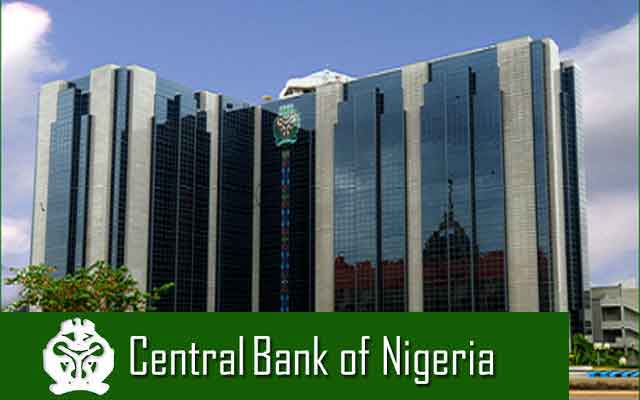
The last time Fitch rated Nigeria this low was shortly after unveiling of the flexible foreign exchange policy by the Central Bank of Nigeria (CBN) citing currency depreciation.
According to the agency, the revision of the Outlook on Nigeria’s Long-Term IDRs reflected tight liquidity and low oil production, which have so far led to the country’s recession since 1994.
While the economy contracted through the first three quarters of 2016, Fitch now estimates a growth of -1.5 per cent in 2016 as a whole and expects a limited economic recovery in 2017, with growth of 1.5 per cent, which it said is well below the 2011-15 annual growth average of 4.8 per cent.
It added that gross general government debt increased to an estimated 17% of GDP at end-2016, from 13% at end-2015, lending a support to the rating.
Meanwhile, the CBN has said its foreign exchange utilisation records for banks showed a disbursement of $1.1 billion in November 2016.
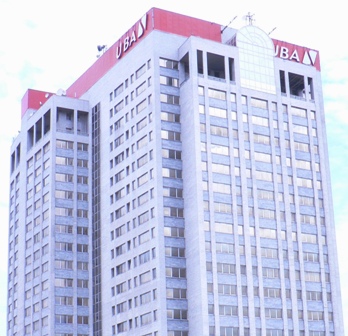
However, of the 4,328 transactions in the period under review, five banks dominated the deals with 2,892, representing about 67 per cent of the total activity.
The banks with highest utilisation were First Bank of Nigeria, with 1,039 deals; Zenith Bank, 706; Stanbic IBTC, 397; Standard Chartered Bank of Nigeria, 389; and First City Monument Bank, 361.
Out of 25 financial institutions- commercial and merchant banks involved in the transactions, only 1,436 deals were left for the remaining 20 banks.
The apex bank yesterday asked banks to bid in a special currency auction due soon, in efforts to clear backlog of demands from businesses.
The backlogs were particularly for fuel importers, airlines, raw-materials producers, and makers of agricultural chemicals and machinery for manufacturers.
In December 2016, CBN sold about $1 billion on the forward market to tackle the backlog of dollar demands, in an effort to support production and fulfill its pledge to the real sector operators.
Research analyst at FXTM, Lukman Otunuga, noted that CBN is aware that the nation still remains exposed to both external and internal risks, particularly exchange rate, despite improved outlook, which should keep the CBN on high alert.
“It must be understood that the cause behind the incessant rise in consumer prices is the disparity between the official and black market exchange,” he said.


-
 Latest6 days ago
Israel marks 3 years since October 7 Hamas attack amid Gaza strikes, election debate
-

 Energy6 days ago
Fuel Battle: Dangote, marketers and government clash over petrol imports
-

 Energy7 days ago
Petrol, diesel prices rise 86% in 2026 as costs hit fresh highs
-
 Energy1 week ago
Has Iran lost control of the Strait of Hormuz? Oil flows rebound as war disruptions persist
-

 Football7 days ago
Nigeria’s World Cup exit under spotlight as FIFA’s DR Congo files emerge
-

 Latest6 days ago
US Court set to rule on release of FBI, DEA records on Tinubu
-
 Business6 days ago
Nigerian investors at a crossroads as fixed-income yields slide
-

 Business1 week ago
LoveWorld Trade and Investment Forum to Convene Business Leaders in Accra