
Crime
Protesters spark controversy by waving Russian flags during ’10 days of rage’

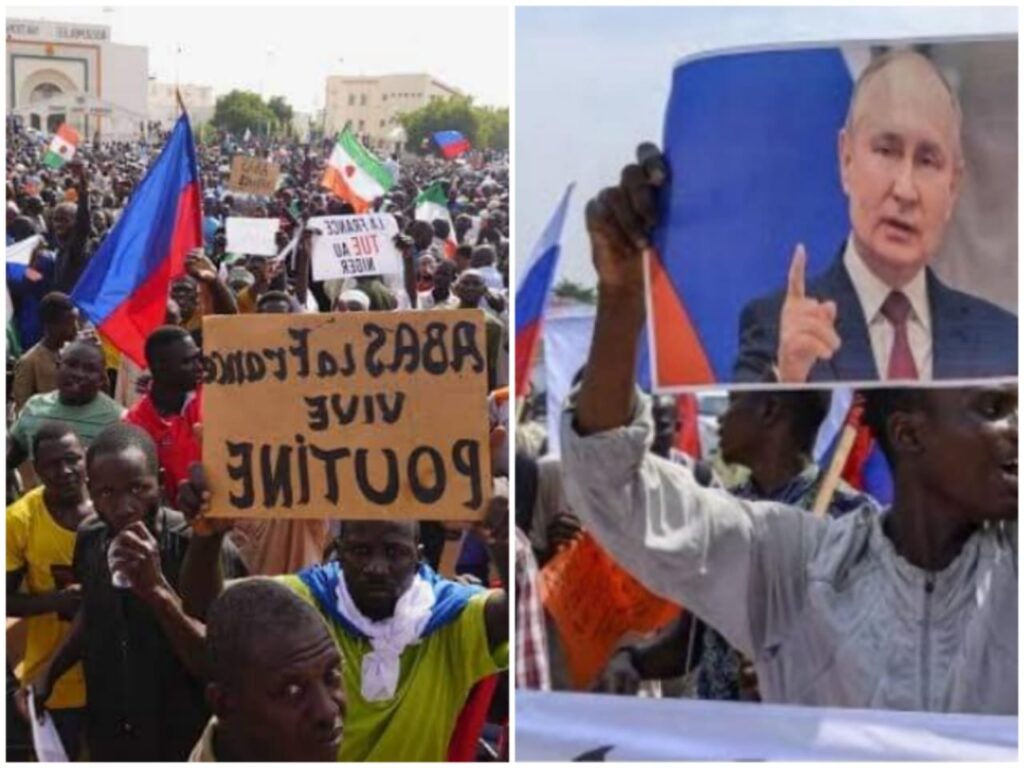
On August 1, young Nigerians launched a 10-day nationwide protest, dubbed “10 Days of Rage,” to demand an end to economic hardship and what they describe as “bad governance.”
Initially peaceful, the protest took a surprising turn when demonstrators in the northern part of the country began waving Russian flags.
This unexpected display of foreign flags has raised concerns about the implications for Nigeria’s politics and security.
On August 3, protesters in Kano state were seen waving Russian flags, calling on Russian President Vladimir Putin to intervene in Nigeria’s situation.
The trend quickly spread to other states, including Jos, Kaduna, and Abuja, where more protesters were spotted with Russian and Japanese flags.
The Russian embassy in Nigeria promptly issued a statement distancing itself from the protesters, stating that the Russian government has no connection to the demonstrations.
Meanwhile, Nigeria’s Department of State Services (DSS) arrested several tailors in Kano for sewing the Russian flags, and police in Maiduguri detained nine protesters involved in the same activity.
Kano’s Commissioner of Police, Salman Dogo, announced that foreign nationals suspected of sponsoring the protests had been apprehended.
READ ALSO: Rage of fury, protesters defy Army warnings, storm Zamfara Govt House waving Russian flag
Chief of Defence Staff Christopher Musa warned that flying foreign flags during protests is a “treasonable offence,” echoing concerns about national sovereignty.
The Nigeria Police Force also issued a stern warning, labeling the act of flying foreign flags during protests as a treasonable felony. They noted that the organizers were using children to display the flags, further complicating the situation.
Kabir Adamu, a security expert, noted that the use of foreign flags reflects the frustration and disillusionment of some Nigerians with their current government. He warned that this could lead to a crackdown by security agencies and potentially harm President Tinubu’s reputation.
Agbu Osita, a professor of international relations, suggested that the appearance of Russian flags might be influenced by recent events in neighboring Francophone countries, where anti-French sentiments have grown.
He viewed the flag-waving as a sign of deep dissatisfaction with the state of affairs in Nigeria, with some protesters seemingly seeking foreign intervention.
The incident has sparked widespread debate and concern about the direction of the protests and their broader implications for Nigeria’s stability.


-
 Latest6 days ago
Israel marks 3 years since October 7 Hamas attack amid Gaza strikes, election debate
-

 Energy5 days ago
Fuel Battle: Dangote, marketers and government clash over petrol imports
-

 Energy7 days ago
Petrol, diesel prices rise 86% in 2026 as costs hit fresh highs
-
 Energy1 week ago
Has Iran lost control of the Strait of Hormuz? Oil flows rebound as war disruptions persist
-

 Football6 days ago
Nigeria’s World Cup exit under spotlight as FIFA’s DR Congo files emerge
-
 Latest6 days ago
US Court set to rule on release of FBI, DEA records on Tinubu
-
 Business6 days ago
Nigerian investors at a crossroads as fixed-income yields slide
-

 Business1 week ago
LoveWorld Trade and Investment Forum to Convene Business Leaders in Accra