
Business
Real sector’s major challenge is purchasing power – Fasua

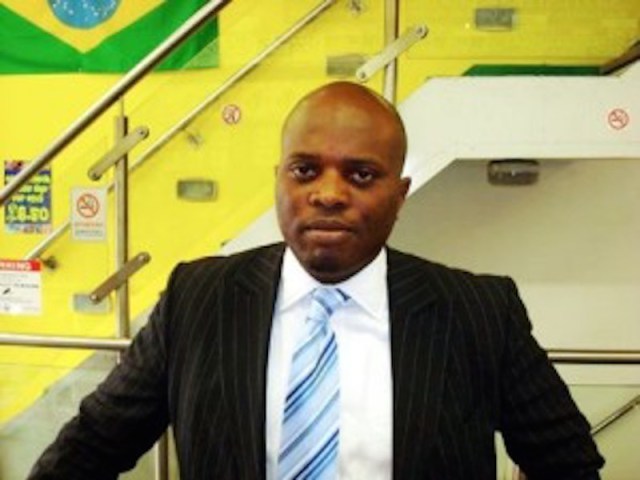
By Chioma Obinagwam
Purchasing power has been identified as the major challenge facing the real sector in Nigeria.
The Chief Executive Officer (CEO) of Global Analytics Consulting limited, Tope Fasua declared this during an exclusive interview with National Daily Newspapers.
“The biggest challenge the real sector has is purchasing power,” he said.
He noted that one of the ways of addressing the challenge of purchasing power is by engaging and deploying the unskilled labour in the country to achieve productivity of the economy.
“Unskilled labour is the bulk of labour in Nigeria. What we probably should be looking at is a well-oriented labour. Government has a role to play. The private sector can’t do it for you. This is because the private sector is more interested in making profits,” he argued.
“Unskilled labour should be deployed to organize the economy. The reason why the skilled labour cannot live in peace in the country; why there is so much call for secession in the country is because the unskilled labour is disoriented and disenchanted. They need to be engaged. Unskilled labour is the engine of the economy,” he added
Fasua, who is also an economist, explained that when the unskilled labour are empowered, then their purchasing power will be boosted.
“I did write about a cleaner Nigeria- incorporating the youths to clean-up Nigeria. When the unskilled labour are empowered, especially, the youths. By putting money in the pockets of the youths, you eradicate food poverty, restiveness etc,” he highlighted.
Fasua was quick to add that skilled labour was also critical to the growth of the economy, especially, when they are absorbed earlier in their prime.
The economist pointed that as part of efforts towards achieving a thriving real sector, government should also focus on building infrastructure beyond credit and interest rate.
He, however, frowned at the Federal Government’s(FGs) resolve to borrow money until such a time when there’s no need for it.
“The government is talking of borrowing money such that they won’t borrow money. I personally believe we don’t need to borrow money. I believe our debt is not sustainable. We can’t run our economy on debt,” he argued.
Continue Reading


-
 Latest6 days ago
Israel marks 3 years since October 7 Hamas attack amid Gaza strikes, election debate
-
 Energy6 days ago
Fuel Battle: Dangote, marketers and government clash over petrol imports
-
 Energy7 days ago
Petrol, diesel prices rise 86% in 2026 as costs hit fresh highs
-
 Energy1 week ago
Has Iran lost control of the Strait of Hormuz? Oil flows rebound as war disruptions persist
-

 Football7 days ago
Nigeria’s World Cup exit under spotlight as FIFA’s DR Congo files emerge
-
 Latest7 days ago
US Court set to rule on release of FBI, DEA records on Tinubu
-
 Business7 days ago
Nigerian investors at a crossroads as fixed-income yields slide
-

 Latest14 hours ago
Full List: Meet the 2026 Nobel Prize winners across six categories