
News
Tinubu signs tax reforms, Grants income tax relief to low earners
President Bola Tinubu has signed four landmark tax reform bills into law, a move poised to reshape Nigeria’s fiscal landscape.

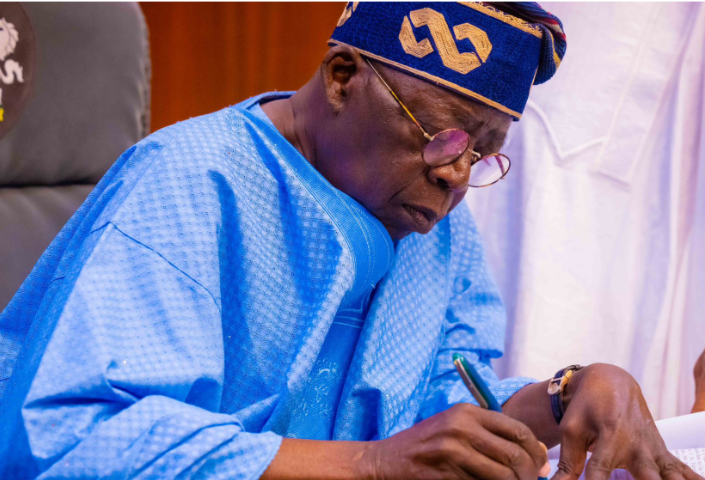
President Bola Tinubu has signed four major tax reform bills into law. These new legislations introduce sweeping changes to Nigeria’s tax system, most notably exempting individuals earning ₦800,000 or less annually from personal income tax.
This move is specifically designed to lighten the financial load on low-income earners and increase their disposable income.
According to a statement released over the weekend by the Chairman of the Senate Committee on Appropriations, these new laws are set to transform Nigeria’s fiscal system.
The reforms aim to simplify tax compliance, remove burdensome taxes on vulnerable citizens, and make the country a more attractive destination for foreign investors.
A key highlight of the new provisions is the zero-rating of Value Added Tax (VAT) on a range of essential goods and services.
This includes staple food items, education, healthcare services, sanitary products, and locally manufactured pharmaceuticals, all of which will now be more affordable for Nigerians.
ALSO READ: Tinubu approves faster PPP approvals for projects below ₦20bn
The four critical laws signed by President Tinubu are:
- Nigeria Tax Act
- Nigeria Tax Administration Act
- Nigeria Revenue Service (Establishment) Act
- Joint Revenue Board (Establishment) Act
The lawmaker explained that the Nigeria Tax Act introduces a unified framework for all tax-related legislation, effectively reducing duplication and streamlining compliance procedures for individuals and businesses alike.
Meanwhile, the Tax Administration Act establishes uniform procedures for more efficient tax enforcement and optimized revenue collection.
The signing of these landmark laws, the lawmaker emphasized, demonstrates President Tinubu’s unwavering commitment to fostering inclusive economic growth.
He urged all citizens to support the full implementation of these reforms, which are slated to commence in January 2026.












-

 Latest6 days ago
Full List: Meet the 2026 Nobel Prize winners across six categories
-

 Football6 days ago
Premier League Matchweek 7: Five Fixtures That Could Shape the Weekend
-

 Business4 days ago
Dangote Refinery IPO: 70% Subscription claim meets fourfold demand assertion as investors seek clarity
-

 Latest5 days ago
Umahi defends Lagos-Calabar highway route changes amid public outcry
-
Business5 days ago
Dangote Refinery IPO Extension: Was the 70% subscription report overhyped?
-

 Latest3 days ago
UCTH faces morgue crisis as 50 unclaimed corpses await mass burial
-

 Featured5 days ago
El-Rufai, ADC governorship candidate’s court appearance puts Kaduna opposition politics in focus
-

 Business3 days ago
BREAKING: Nigeria’s Inflation Rate Drops to 14.63% in September