
Covid-19
Top radio presenter dies of COVID vaccine complications

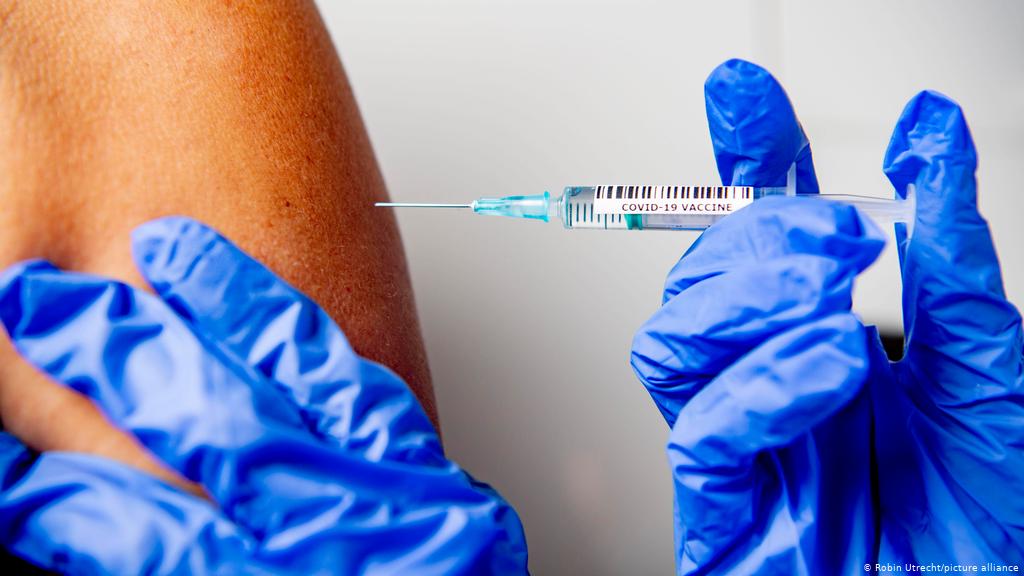
An award-winning BBC radio presenter died as a result of complications from her first dose of AstraZeneca’s COVID vaccine, a coroner report has concluded.
Lisa Shaw, 44, who worked for BBC Radio Newcastle, died at the city’s Royal Victoria Infirmary in May — a little more than three weeks after her first dose of the vaccine developed by University of Oxford.
According to the BBC, the inquest — a judicial inquiry to ascertain the facts relating to an incident, such as a death — heard Shaw had been admitted to hospital after doctors investigating her complaints of headaches found she had suffered a brain hemorrhage.
Karen Dilks, a senior coroner from Newcastle, said “Lisa died due to complications of an AstraZeneca COVID vaccination.”
READ ALSO: Japan suspends COVID vaccine over contamination fear
Dilks said Shaw was previously fit and well but concluded that it was “clearly established” that her death was due to a very rare “vaccine-induced thrombotic thrombocytopenia” — a condition which leads to swelling and bleeding of the brain, BBC reported.
Tuomo Polvikoski, a pathologist, told the coroner Shaw was fit and healthy before receiving the vaccine. When asked about the underlying cause of the fatal clotting on her brain, Polvikoski said the clinical evidence “strongly supports the idea that it was, indeed, vaccine-induced.”
Shaw, who was referred to during the inquiry by her married name, Lisa Eve, started complaining of headaches a few days after she got the vaccine. She eventually visited a hospital in Durham, where she was diagnosed with a blood clot.
Shaw received her first dose of AstraZeneca on April 29. On May 13 she was taken by ambulance to University Hospital of North Durham after having a headache for several days.
In a statement, Dr. John Holmes, who treated Shaw, said she complained of having a “severe headache shooting and stabbing” across her forehead and behind her eyes.
Shaw was transferred to the Royal Victoria Infirmary where she received a number of treatments, including cutting away part of her skull to relieve the pressure on her brain. She died May 21.
German researchers in May, said they believed they found the cause of the rare blood clots linked to the Johnson & Johnson (J&J) and AstraZeneca vaccines.
The researchers said COVID vaccines that employ adenovirus vectors — cold viruses used to deliver vaccine material — send some of their payload into the nucleus of cells, where some of the instructions for making coronavirus proteins can be misread. This can result in proteins that can potentially trigger blood clot disorders in a small number of recipients.
Shaw’s death came weeks after the UK’s vaccine advisory panel restricted use of the Oxford/AstraZeneca vaccine to people over 40, after reports that some recipients with low platelets developed unusual blood clots. Other countries imposed similar restrictions or suspended use of the vaccine entirely.


-
 Latest6 days ago
Israel marks 3 years since October 7 Hamas attack amid Gaza strikes, election debate
-

 Energy5 days ago
Fuel Battle: Dangote, marketers and government clash over petrol imports
-

 Energy7 days ago
Petrol, diesel prices rise 86% in 2026 as costs hit fresh highs
-

 Energy1 week ago
Has Iran lost control of the Strait of Hormuz? Oil flows rebound as war disruptions persist
-

 Football6 days ago
Nigeria’s World Cup exit under spotlight as FIFA’s DR Congo files emerge
-

 Latest6 days ago
US Court set to rule on release of FBI, DEA records on Tinubu
-

 Business6 days ago
Nigerian investors at a crossroads as fixed-income yields slide
-

 Business1 week ago
LoveWorld Trade and Investment Forum to Convene Business Leaders in Accra