
News
US indicts Buhari on corruption

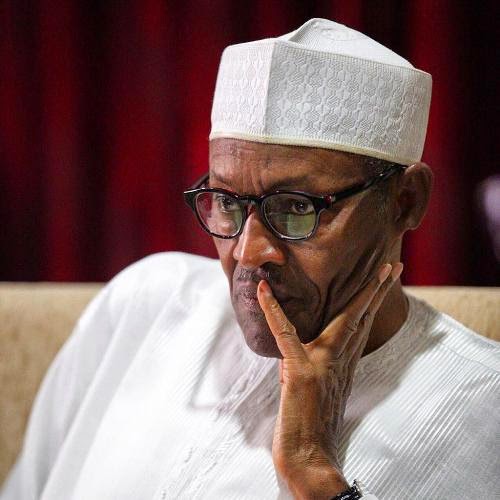
- Report show APC Govt records highest corruption in Nigeria
The United States in its latest reports indicted President Muhammadu Buhari on corruption, stating that corruption is evident across all levels of government currently under the All Progressives Congress (APC) regime. Thus, in the US 2017 Human Rights Report, the foreign body rated the Buhari administration low on the fight against corruption in the country.
The US 2017 Human Rights Report indicated that the Federal Government under Buhari failed to implement laws against corrupt practices.
National Daily gathered that the report noted that although the government took steps to investigate alleged human rights abuses, “impunity remained widespread at all levels of government.”
The report succinctly remarked: “Although the law provides criminal penalties for conviction of official corruption, the government did not implement the law effectively, and officials frequently engaged in corrupt practices with impunity. Massive, widespread, and pervasive corruption affected all levels of government and the security services.
“The constitution provides immunity from civil and criminal prosecution for the president, vice president, governors, and deputy governors while in office.”
The report further faulted the procedure the Economic and Financial Crimes Commission (EFCC) adopted in prosecuting corruption charges; stating that the Commission failed to follow due process.
The US report was said to have cited the case of the embattled former National Security Adviser (NSA), Sambo Dasuki, who has been in custody of the Department of State Services (DSS) since 2015, despite court orders demanding his release.
The report listed the most significant human rights issues during the year to include: ”Extrajudicial and arbitrary killings; disappearances and arbitrary detentions; torture, particularly in detention facilities, including sexual exploitation and abuse; use of children by some security elements, looting, and destruction of property; civilian detentions in military facilities, often based on flimsy evidence.”
The list also included, “denial of fair public trial; executive influence on the judiciary; infringement on citizens’ privacy rights; restrictions on freedoms of speech, press, assembly, and movement; official corruption; lack of accountability in cases involving violence against women and children; trafficking in persons; and early and forced marriages.”
The report further blamed judicial system in Nigeria, noting the judiciary was compromised during the period under review.
The US decried that the executive and legislative arms of government continued to interfere with the judiciary.
“Although the constitution and law provide for an independent judiciary, the judicial branch remained susceptible to pressure from the executive and legislative branches. Political leaders influenced the judiciary, particularly at the state and local levels.
“Understaffing, underfunding, inefficiency, and corruption prevented the judiciary from functioning adequately. Judges frequently failed to appear for trials.
“In addition, the salaries of court officials were low, and they often lacked proper equipment and training. There was a widespread public perception that judges were easily bribed and litigants could not rely on the courts to render impartial judgments.
“Citizens encountered long delays and received requests from judicial officials for bribes to expedite cases or obtain favorable rulings,” it declared.
The report was released at a time President Buhari at the Nigerian Bar Association Annual Conference in Abuja, declared that the rule of law in Nigeria is limited by national interest.








-

 Business1 week ago
Dangote Refinery IPO: 70% Subscription claim meets fourfold demand assertion as investors seek clarity
-
 Featured4 days ago
Inside INEC’s race to prepare for Nigeria’s 2027 elections
-

 Latest6 days ago
UCTH faces morgue crisis as 50 unclaimed corpses await mass burial
-
 Featured4 days ago
2027: APC unveils nationwide campaign timetable, Tinubu to rally in 12 states
-

 Business6 days ago
BREAKING: Nigeria’s Inflation Rate Drops to 14.63% in September
-
 Aviation1 week ago
Germany opens online application route for student, EU Blue Card and other long-stay visas
-
 Business4 days ago
Court dismisses ₦170m Trade Fair contract claim, says Zenith Bank was not a party
-

 Business5 days ago
President Tinubu and the Low Transport Fares Fiasco