
Energy
Nigeria revenue drops as tax, oil income fall


NIGERIA’S revenue fell last month to the lowest level in more than five years as taxes and oil earnings dropped, making it more difficult for the government to pay public workers.
The federal, state and local governments were altogether allocated 300 billion naira ($1.5 billion) in March, the Ministry of Finance said in a statement, to assist the lower-tier governments; the ministry also waived 10.9 billion naira of loan repayments.
About 27 of 36 states are “currently experiencing challenges meeting their salary payments,” the ministry said. “We are not able to guarantee that all states will be able to meet their salary obligations.”
Nigeria, Africa’s biggest oil producer, has been hammered by crude prices falling 60 percent since mid-2014 to about $45 a barrel. The economy grew 2.8 percent last year, the slowest since 1999. That pace will probably falter further to 2.3 percent in 2016, the International Monetary Fund said last month.
A decision by the government to peg its currency even as oil revenue falls has been blamed by analysts for worsening the crisis. Foreign investors are shunning the country’s bonds and stocks until there’s devaluation, while local businesses are struggling to import essential raw materials.
“This is another by-product of a broken foreign exchange policy,” Alan Cameron, an economist at Exotix Partners LLP in London, said by phone on Friday. “Unpaid civil service salaries have the potential to turn into a big social and political problem because for every salary paid there are likely to be several more people who rely on it.”
The central bank has kept the naira’s official rate at 197-199 against the dollar since March 2015, causing a rationing of foreign exchange to businesses which has led to shortages of goods from gasoline to milk and has sent the local currency plunging to 320 on the black market.
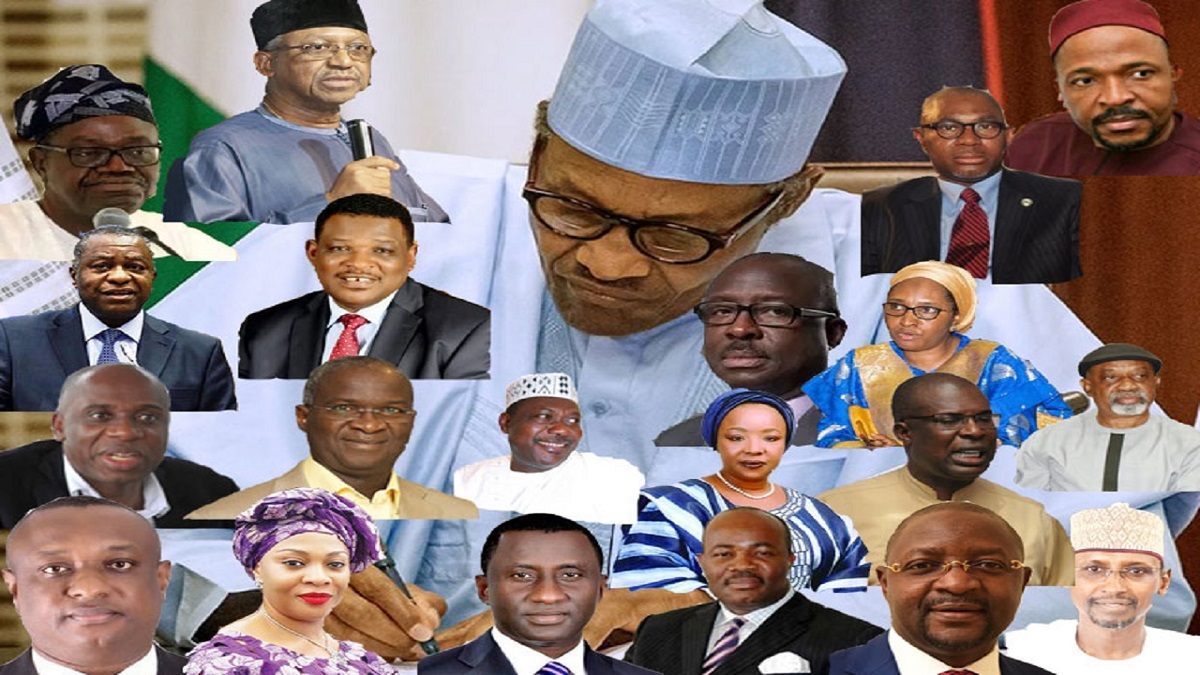
President Muhammadu Buhari has made it clear that he, not the central bank, has the final say on currency policy — and that he is against devaluation just as he was during his first stint in power as a military ruler in the 1980s. The former general is loath to be seen by voters as capitulating to foreign investors and the IMF, both vocal critics of his stance.
Buhari reiterated on Friday that he has yet to be convinced that a weaker naira will have any tangible benefit to most Nigerians in the import dependent country. He said in a statement that a previous devaluation after he was deposed in a 1985 coup didn’t lead to the creation of jobs or new industry.
“When I was military head of state, the IMF and the World Bank wanted us to devalue the naira,” Buhari said. “But I stood my ground for the good of Nigeria.”







-
 Featured6 days ago
Inside INEC’s race to prepare for Nigeria’s 2027 elections
-
 Featured6 days ago
2027: APC unveils nationwide campaign timetable, Tinubu to rally in 12 states
-

 Latest1 week ago
UCTH faces morgue crisis as 50 unclaimed corpses await mass burial
-
 Business7 days ago
President Tinubu and the Low Transport Fares Fiasco
-
 Latest7 days ago
Global excitement builds as Healing Streams Live Services returns October 23
-

 Business1 week ago
BREAKING: Nigeria’s Inflation Rate Drops to 14.63% in September
-

 Business6 days ago
Court dismisses ₦170m Trade Fair contract claim, says Zenith Bank was not a party
-
 Business3 days ago
Naira faces exchange rate gap as Dollar hits N1,380 on parallel market