
News
2016 budget will kick-start our economic recovery, Finance Minister assures

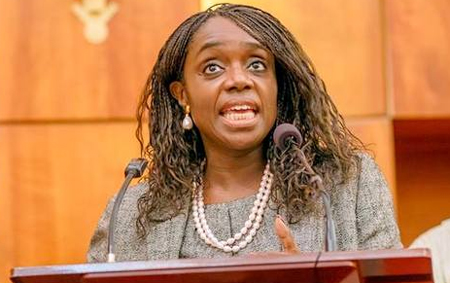
From ODIMMEGWA JOHNPETER, Abuja
THE federal government has reaffirmed its determination to achieve the recovery of Gross Domestic Product (GDP) growth and forestall the remote possibility of recession through full implementation of the 2016 budget.
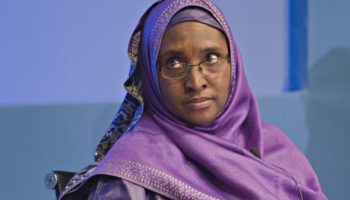
The assurance was given by the Minister of Finance, Mrs. Kemi Adeosun in a document made available to the media on Thursday.
Noting that the focus of the current administration is to stimulate the economy and achieve a real GDP growth rate of 4.2 per cent by the implementation of the draft 2016 budget, the minister said the administration is also determined to reduce the cost of governance, extract efficiencies in public service and enhance revenue collections.
According to her, The administration plans to increase government expenditure on infrastructure (Transport, Roads, Housing and Power) with a view to achieving a substantial increase in gross capital formation and to fund the budget deficit and the negative trade balance in a cost effective and efficient manner, which will keep the government within the acceptable debt sustainable ratio that is expected of most emerging economies.
In the document titled, ‘Nigeria’s Economy: The Road to Recovery’, the minister who acknowledged the impact of the sliding oil prices on the Nigeria’s economy said, “Our main macroeconomic objective is to use a government expenditure-led growth strategy in 2016, combined with a stimulant approach based on injections of more efficiently collected revenues and blocking of leakages. The combination of these fiscal injections will have a catalytic multiplier effect on the GDP growth rate.”
“The budget deficit is estimated at N2.2trn or 2.16 per cent of GDP based on an estimated benchmark oil price of $38pb. In view of present realities and the dynamics in the global oil markets, we have braced ourselves for the probability of a further decline in oil prices. Even though we believe the average price of oil in 2016 will recover, we have developed a shadow budgeting process with tactical responses to build in the flexibility in our borrowing needs. This way, we will not undermine the fundamental principle of the economic stimulus model used by countries facing a contraction in economic activities and growth.”
Adeosun pledged the resolve of the current administration to go ahead with its robust commitments on infrastructure despite the present oil price. She said, “We are firmly committed to the countercyclical budget expenditure model. Therefore we will not reduce our investment in infrastructure i.e. Transport, Roads, Housing and Power. Our deficit will expand by N0.8trn to N3trn, which will be 3per cent of GDP. This is still within the comfort zone for the international rating agencies.”



-
 Business1 week ago
Dangote Refinery IPO: 70% Subscription claim meets fourfold demand assertion as investors seek clarity
-
 Featured4 days ago
Inside INEC’s race to prepare for Nigeria’s 2027 elections
-
Business1 week ago
Dangote Refinery IPO Extension: Was the 70% subscription report overhyped?
-

 Latest6 days ago
UCTH faces morgue crisis as 50 unclaimed corpses await mass burial
-
 Featured4 days ago
2027: APC unveils nationwide campaign timetable, Tinubu to rally in 12 states
-
 Business6 days ago
BREAKING: Nigeria’s Inflation Rate Drops to 14.63% in September
-
 Featured1 week ago
El-Rufai, ADC governorship candidate’s court appearance puts Kaduna opposition politics in focus
-
 Aviation1 week ago
Germany opens online application route for student, EU Blue Card and other long-stay visas