
Featured
27 Years of Democracy: Nigerians weigh freedom against rising hardship

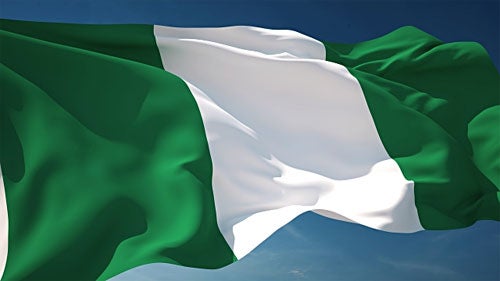
Twenty-seven years after Nigeria returned to civilian rule in 1999, a central question continues to dominate public discourse on Democracy Day: has democratic governance truly improved the lives of ordinary citizens?
Since the end of military rule on May 29, 1999, Nigeria has maintained its longest uninterrupted democratic era, marked by regular elections, leadership transitions, and expanded civic freedoms. But alongside these gains, many citizens and analysts say economic hardship and insecurity have reshaped how democracy is experienced in daily life.
A comparison of key economic indicators from 1999 to 2026 highlights the scale of change over the period. In 1999, petrol sold for about ₦20 per litre, the exchange rate stood at roughly ₦99 to the dollar, and the national minimum wage was ₦5,500 per month.
By mid-2026, following subsidy removals and currency reforms, petrol prices have risen to between ₦1,250 and ₦1,350 per litre, while the naira trades at over ₦1,300 to the dollar on the official market. The minimum wage has increased to ₦70,000, but its purchasing power has been sharply eroded by inflation.
Despite the nominal wage increase, economists note that real incomes have struggled to keep pace with rising living costs, particularly in food, transport, and housing.
Nigeria’s security landscape has also evolved significantly since 1999. While early democratic years were largely defined by urban crime such as armed robbery, the current era is marked by more complex and widespread threats.
These include insurgency in the North-East, banditry and mass kidnappings in the North-West and parts of the North-Central region, and pockets of separatist violence in the South-East. Rural communities, in particular, have faced repeated attacks that have disrupted farming and displaced populations.
Government spending on security has increased substantially in response, with trillions of naira allocated in recent budgets. However, many affected communities say the impact on ground-level safety remains uneven.
Despite economic and security concerns, analysts point to notable gains under democratic rule, especially in technology and infrastructure.
Nigeria now has one of Africa’s largest digital economies, driven by widespread mobile internet adoption and the growth of fintech companies and startups. The expansion of telecommunications access has transformed communication, banking, and commerce compared to the late 1990s.
Infrastructure developments such as new rail projects, major bridges, and increased domestic refining capacity have also been cited as signs of long-term structural progress.
For many Nigerians, the reality of democracy is mixed.
At Mile 12 Market in Lagos, trader Alhaja Kudirat Adebayo said life has become more difficult despite political freedom.
“In 1999, what ₦10,000 could buy is not what it buys today,” she said. “We are free, yes, but survival is harder.”
For younger Nigerians born at the dawn of democracy, expectations are different but still shaped by economic pressure.
Software engineer Chinedu Okafor, born in May 1999, said his generation has only known civilian rule but faces limited economic opportunity.
“We can speak freely and build businesses, but many of us still want to leave the country for better opportunities,” he said.
Economists and political analysts say Nigeria’s democracy has succeeded in maintaining electoral continuity and civil liberties, but continues to struggle with delivering broad-based prosperity.
Some argue that structural economic reforms are beginning to address long-standing imbalances, while others warn that the benefits remain unevenly distributed.
Civil society groups, meanwhile, say accountability and governance effectiveness remain central concerns, despite improvements in civic space and public engagement.
Twenty-seven years after the return to civilian rule, Nigeria’s democratic journey remains defined by contrasts, expanded freedoms on one hand, and persistent economic and security pressures on the other.
For many citizens, the assessment of democracy is no longer about political survival alone, but about whether it delivers measurable improvements in everyday life: food security, safety, jobs, and dignity.
As the country reflects on its democratic milestone, that question remains at the centre of national debate.


-

 Latest5 days ago
Full List: Meet the 2026 Nobel Prize winners across six categories
-

 Football5 days ago
Premier League Matchweek 7: Five Fixtures That Could Shape the Weekend
-
 Latest4 days ago
Umahi defends Lagos-Calabar highway route changes amid public outcry
-

 Business3 days ago
Dangote Refinery IPO: 70% Subscription claim meets fourfold demand assertion as investors seek clarity
-
Business4 days ago
Dangote Refinery IPO Extension: Was the 70% subscription report overhyped?
-

 Latest2 days ago
UCTH faces morgue crisis as 50 unclaimed corpses await mass burial
-
 Featured4 days ago
El-Rufai, ADC governorship candidate’s court appearance puts Kaduna opposition politics in focus
-
 Business2 days ago
BREAKING: Nigeria’s Inflation Rate Drops to 14.63% in September