
News
Why IMF supports closure of Nigerian borders, by Finance Minister

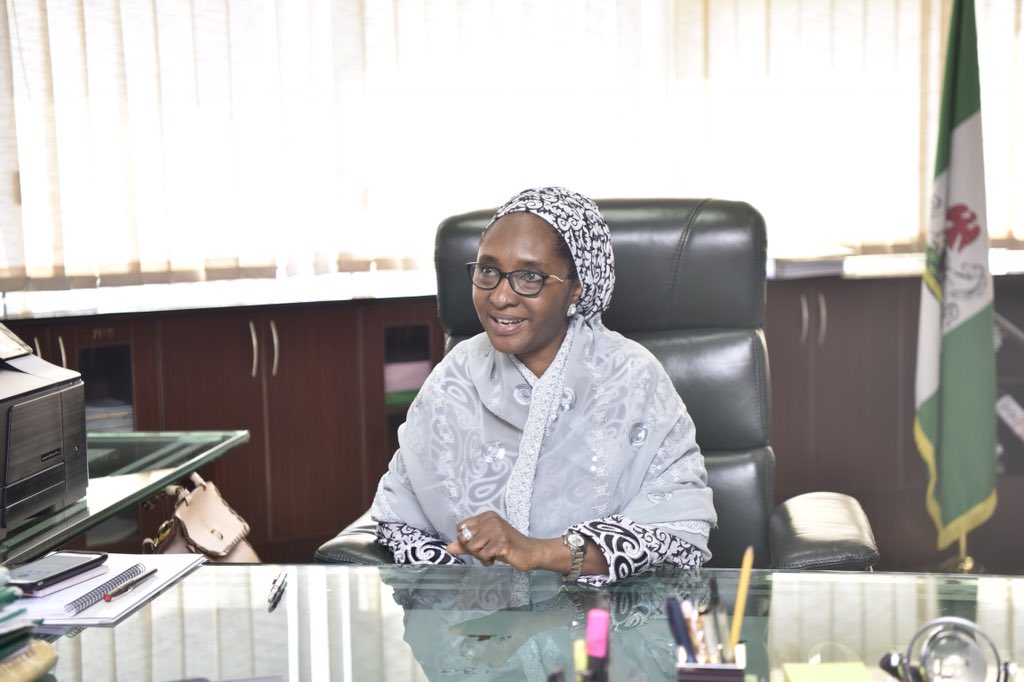
- As Nigerian and Ghanaian ministers met to find solutions to the border closure
Richards Adeniyi
The Minister of Finance, Mrs. Zainab Ahmed, Sunday claimed that the International Monetary Fund (IMF) supports the closure of Nigerian borders.
Ahmed who addressed newsmen in Washington said it was because the international monetary agency understands that the measure was not punitive.
The Finance Minister claimed the action was mainly to ensure that Nigeria’s relationship with its neighbours is restored on the basis of already made commitments.
According to her, President Muhammadu Buhari initially did not want to approve the closure of the borders because of the adverse effects to the neighbouring countries.
She also admitted that the negative impact has been on both sides, adding that things got worse even with severall engagements between Nigeria and other countries.
She also added that the issue has been compliance to agreements reached.
In the report filed by THISDAY, Ahmed was quoted saying:
“Of course, there will be economic impact on the side of our neighbours due to the border closure, that is a consequence of it.
“In a manner of speaking, IMF supports the border closure that we have done because they understand that the closure was not meant to be punitive.
“It was meant for us to restore our relationship with our neighbours back to the commitments that we made.
“The commitment that we have among these countries is that goods can come through their ports to Nigeria.
“They are supposed to come in sealed containers escorted to Nigeria for the Nigeria Customs Service to inspect the goods and charge them.
“But that is not what is happening. They allow containers to be opened, and also allow goods to be smuggled beyond the formal borders through several illegal routes’’
However, indications are that Ghana and Nigeria are planning to create a temporary measure so that the former’s goods trapped on transit in Benin Republic routes can be allowed passage.
Based on the arrangement, Ghanaian agencies are expected to provide necessary information on their companies that do business in Nigeria and the goods involved.
This was part of the decisions reached between Nigeria’s Foreign Minister, Geoffrey Onyeama and Ghana’s Minister of Foreign Affairs and Regional Integration, Shirley Botchwey.
Also involved in the decision were Nigeria’s Minister of Industry, Trade and Investment, Otunba Niyi Adebayo and Ghana’s Minister of Trade and Industry, Alan Kyerematen.
Onyema told newsmen weekend that the meetings were to find ways to address the challenges facing Nigerian companies and traders as a result of the closure.


-
 Latest6 days ago
Israel marks 3 years since October 7 Hamas attack amid Gaza strikes, election debate
-

 Energy6 days ago
Fuel Battle: Dangote, marketers and government clash over petrol imports
-
 Energy1 week ago
Petrol, diesel prices rise 86% in 2026 as costs hit fresh highs
-

 Football7 days ago
Nigeria’s World Cup exit under spotlight as FIFA’s DR Congo files emerge
-
 Energy1 week ago
Has Iran lost control of the Strait of Hormuz? Oil flows rebound as war disruptions persist
-
 Latest24 hours ago
Full List: Meet the 2026 Nobel Prize winners across six categories
-

 Latest7 days ago
US Court set to rule on release of FBI, DEA records on Tinubu
-
 Business7 days ago
Nigerian investors at a crossroads as fixed-income yields slide