
Business
Naira faces devaluation as CBN agrees to settle NDF at N412/$1

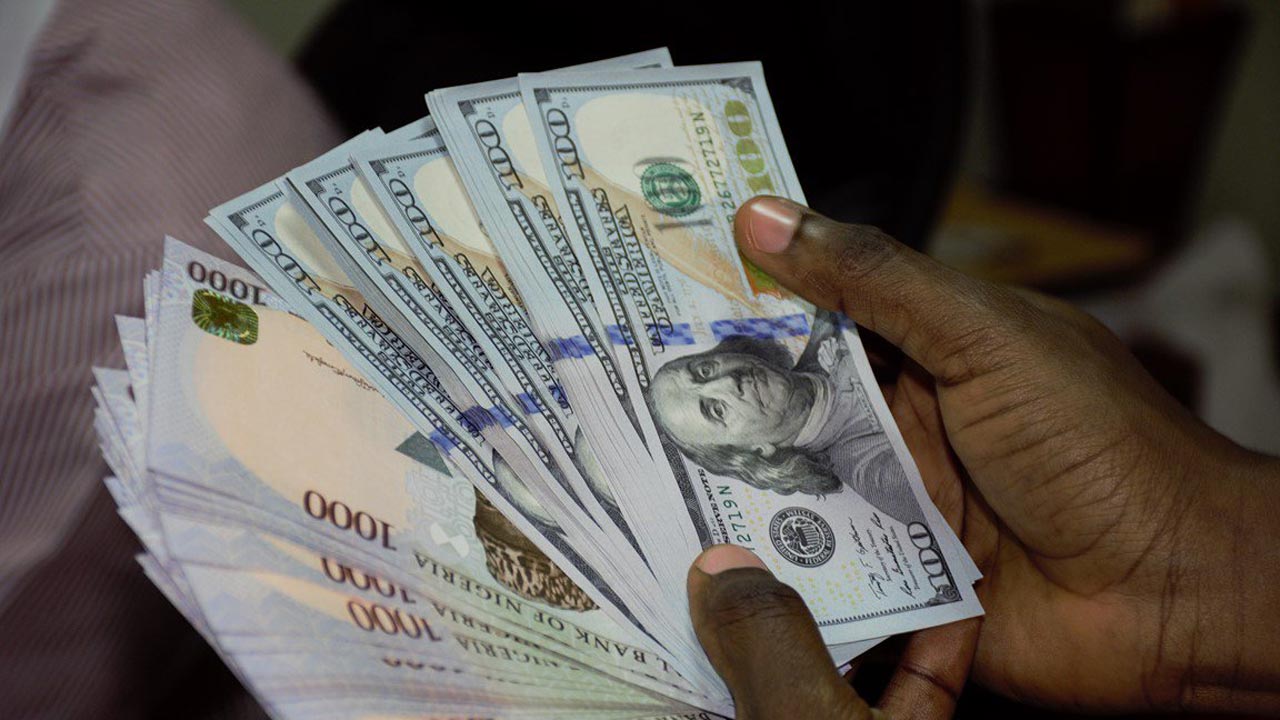
With the decision of the Central Bank of Nigeria to settle foreign exchange futures contracts for the month of February at N452.82 per dollar up from N440.86, financial analysts are pointing to the Non-Deliverables Forwards contracts as an indication that the closing rate of the exchange rate at the I&E window might be devalued this month.
Findings show that in the contract terminating February 24th, 2021 the CBN priced the dollar at N412.14 which, compared to the N395/$1 traded at the Investors and Exporters (I&E) window, represents a 4 per cent devaluation.
According to some of the analysts, with the CBN willing to settle NDF contracts due at the end of February for N412.14, suggest the current CBN official exchange rate of N379/$1 could also be devalued soon, while the exchange rate at the I&E window could also weaken to N415/$1.
The exchange rate between the dollar and naira at the end of the year 2020 was N410.25, a signal that the CBN was open to a weakened currency in 2021. So far, it has resisted weakening.
The exchange rate between the naira and dollar closed at N395/$1 on Wednesday despite recording an intraday high of N416.95 according to data from the FMDQ. At the parallel market, the exchange rate closed at N480/$1.
It would be recalled that the apex bank had in time past resisted the need to devalue the currency closer to the parallel market, citing the latter as a relatively smaller market that cannot be used to determine the true value of the naira relative to the dollar.
Instead, it has introduced several foreign exchange policies aimed at curtailing excess demand for forex and improving liquidity.
For example, foreign remittances are now required to be paid in the currency in which they were remitted. Exporters are also mandated to inflow their proceeds to the I&E window or get kicked out of the banking sector. None of these moves are yet to close the disparity between the exchange rate and the black market and the official NAFEX market.
The CBN enters into contracts with foreign investors who inflow foreign exchange into the country to hedge against devaluation risks. Using the example of a one-year NDF, a foreign investor brings in $1 million dollars into Nigeria and hopes to repatriate it one year from now.
If the exchange rate devalues beyond N452.82 to, say N460/$1, the CBN pays the foreign investor the difference of N7.18 multiplied by the $1 million. This protects the foreign investor against any future risk more than the N452.82 that he would have planned for.


-
 Comments and Issues5 days ago
Can President Tinubu Revive Nigeria’s Moribund Refineries?
-

 Business5 days ago
TikTok, ByteDance agree to $400m settlement in US children’s privacy case
-
 Business5 days ago
Tinubu knocks Atiku’s subsidy plan, says proposal shows ‘ignorance’ of economy
-

 Entertainment1 week ago
Poco Lee faces rape allegation as unverified UK arrest report spreads online
-

 Latest1 week ago
Tinubu files: US Judge grants four-day extension in FOIA disclosure battle
-

 Football5 days ago
EPL 2026/27: Experts back Arsenal for title as Haaland, Rice lead individual award picks
-

 Featured5 days ago
Economic Reality vs Party Machinery: What will drive Nigeria’s 2027 election?
-

 Business1 week ago
Standard Bank eyes stake in OPay ahead of planned $4bn US IPO