
Covid-19
How international media ignored new research on facemasks inefficacy

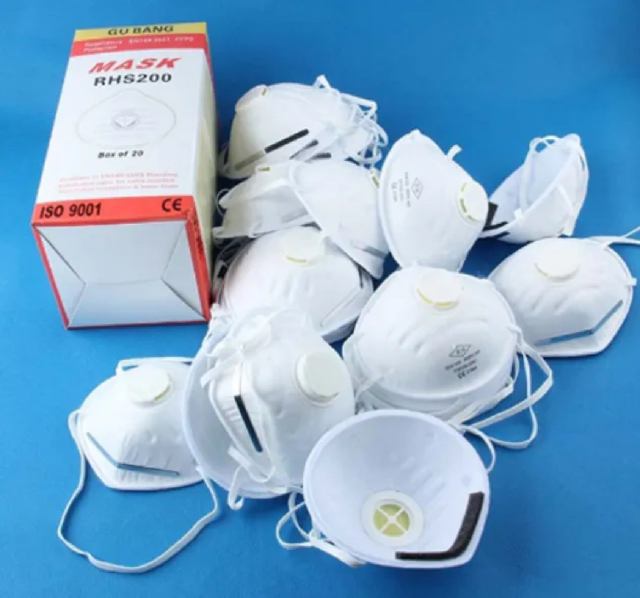
A peer-reviewed study done by Stanford University which demonstrated beyond a reasonable doubt that face masks have absolutely zero chance of preventing the spread of Covid-19, was allegedly ignored by mainstream media because it didn’t follow their narratives, a report has said.
The research was posted on the National Center for Biological Information government website. The NCBI is a branch of the National Institute for Health, so one would think such a study would be widely reported by mainstream media and embraced by the “science-loving” folks in Big Tech.
Instead, a DuckDuckGo search reveals it was picked up by ZERO mainstream media outlets and Big Tech tyrants will suspend people who post it, as political strategist Steve Cortes learned the hard way when he posted a Tweet that went against the face mask narrative.
The Tweet itself featured a quote and a link that prompted Twitter to suspend his account, potentially indefinitely.
He was quoting directly from the NCBI publication of the study. The government website he linked to features a peer-reviewed study by Stanford University’s Baruch Vainshelboim.
In it, he cited 67 scholars, doctors, scientists, and other studies to support his conclusions.
The sentence Cortes quoted from the study’s conclusion reads: “The data suggest that both medical and non-medical face masks are ineffective to block human-to-human transmission of viral and infectious disease such as SARS-CoV-2 and COVID-19, supporting against the usage of facemasks.”
Twitter messaged Cortes demanding he delete the Tweet, citing that he broke Twitter rules specifically for, “Violating the policy on spreading misleading and potentially harmful information related to COVID-19.”
According to the current knowledge, the virus SARS-CoV-2 has a diameter of 60 nm to 140 nm, while medical and non-medical facemasks’ thread diameter ranges from 55 µm to 440 µm micrometers, which is more than 1000 times larger.
Due to the difference in sizes between SARS-CoV-2 diameter and facemasks thread diameter, SARS-CoV-2 can easily pass through any facemask.
This study isn’t the only one out there that demonstrates scientifically the inefficacy and dangers associated with constant use of face masks. One would think that considering the source, this type of information would be acceptable to even Big Tech firms.
Many countries across the globe utilized medical and non-medical facemasks as non-pharmaceutical intervention for reducing the transmission and infectivity of coronavirus disease-2019 (COVID-19).
Although, scientific evidence supporting facemasks’ efficacy is lacking, adverse physiological, psychological and health effects are established.


-

 Latest4 days ago
Full List: Meet the 2026 Nobel Prize winners across six categories
-
 Featured1 week ago
103 Million Voters: What does INEC’s new register say about Nigeria’s population?
-

 Football3 days ago
Premier League Matchweek 7: Five Fixtures That Could Shape the Weekend
-

 Latest3 days ago
Umahi defends Lagos-Calabar highway route changes amid public outcry
-

 Features1 week ago
Edo’s 2.5 million vote promise: Can the numbers match the politics?
-

 Business3 days ago
Dangote Refinery IPO Extension: Was the 70% subscription report overhyped?
-
Business2 days ago
Dangote Refinery IPO: 70% Subscription claim meets fourfold demand assertion as investors seek clarity
-

 Latest1 week ago
Nigeria to Ghana: Inside police hunt for Anambra kidnap suspect