
News
NLC to embark on nationwide strike over petrol subsidy removal

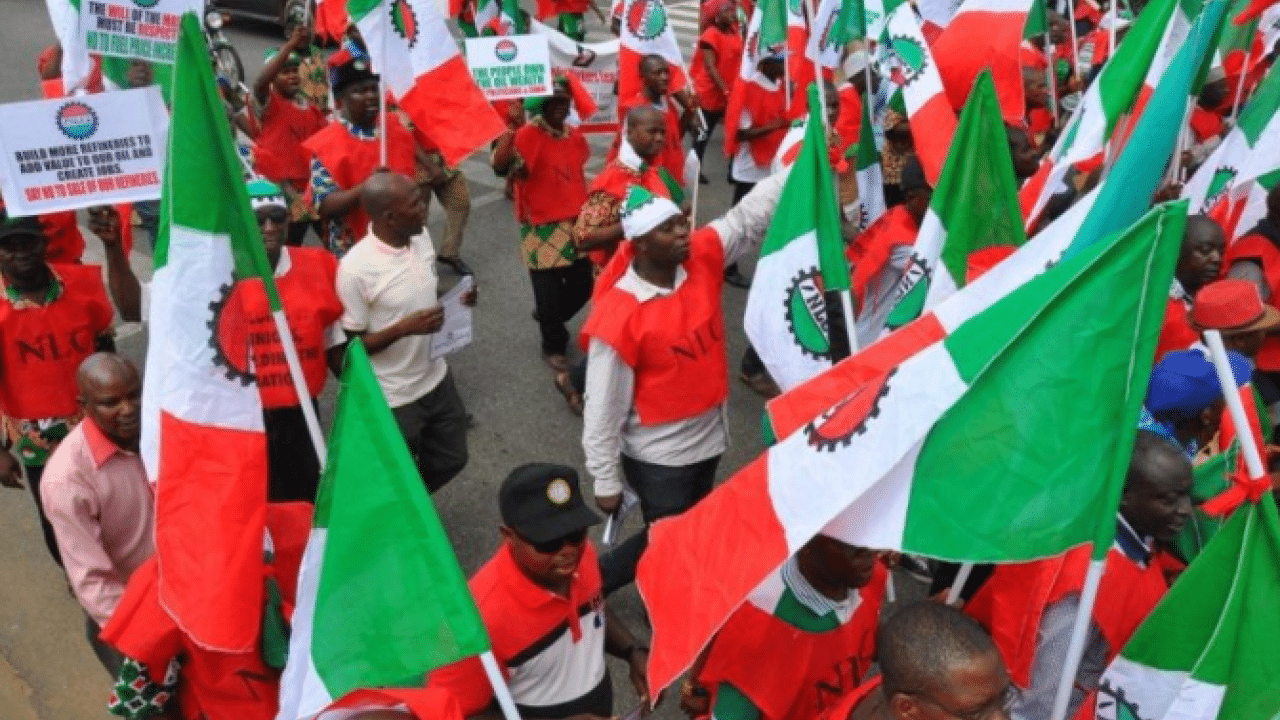
The NLC President said the government, particularly the Nigerian National Petroleum Company (NNPC) Limited had up until Wednesday next week to revert to the old price of Premium Motor Spirit (PMS) otherwise referred to as petrol.
The union disclosed this during its National Executive Council, NEC, meeting held in the Federal Capital territory, Abuja.
The planned action of the Labour union comes amid fuel shortages across the country occasioned by President Bola Tinubu’s inaugural speech in which he declared that “fuel subsidy is gone”.
READ ALSO: Just in: NLC takes stand on fuel subsidy removal
The declaration was made by the President of NLC, Joe Ajaero after an emergency meeting of the union’s National Executive Council (NEC) in Abuja.
The meeting was called for deliberation on the fuel subsidy removal by the Federal Government and the resultant astronomical hike in the pump price of petrol.
Ajaero noted that the failure of the Federal Government to meet the ultimatum would attract an indefinite protest across the country.
The NEC comprises all Presidents, General Secretaries, Treasurers of all NLC’s affiliate unions; State Chairpersons and Secretaries of the NLC State Councils, Chairperson of the NLC Youth Committee and members of the National Administrative Council (NAC).


-
 Latest6 days ago
Israel marks 3 years since October 7 Hamas attack amid Gaza strikes, election debate
-

 Energy6 days ago
Fuel Battle: Dangote, marketers and government clash over petrol imports
-

 Energy1 week ago
Petrol, diesel prices rise 86% in 2026 as costs hit fresh highs
-

 Football7 days ago
Nigeria’s World Cup exit under spotlight as FIFA’s DR Congo files emerge
-

 Energy1 week ago
Has Iran lost control of the Strait of Hormuz? Oil flows rebound as war disruptions persist
-

 Latest23 hours ago
Full List: Meet the 2026 Nobel Prize winners across six categories
-

 Latest7 days ago
US Court set to rule on release of FBI, DEA records on Tinubu
-

 Business7 days ago
Nigerian investors at a crossroads as fixed-income yields slide