
Business
Naira slides to N1,600.50/$1 amid persistent FX market volatility

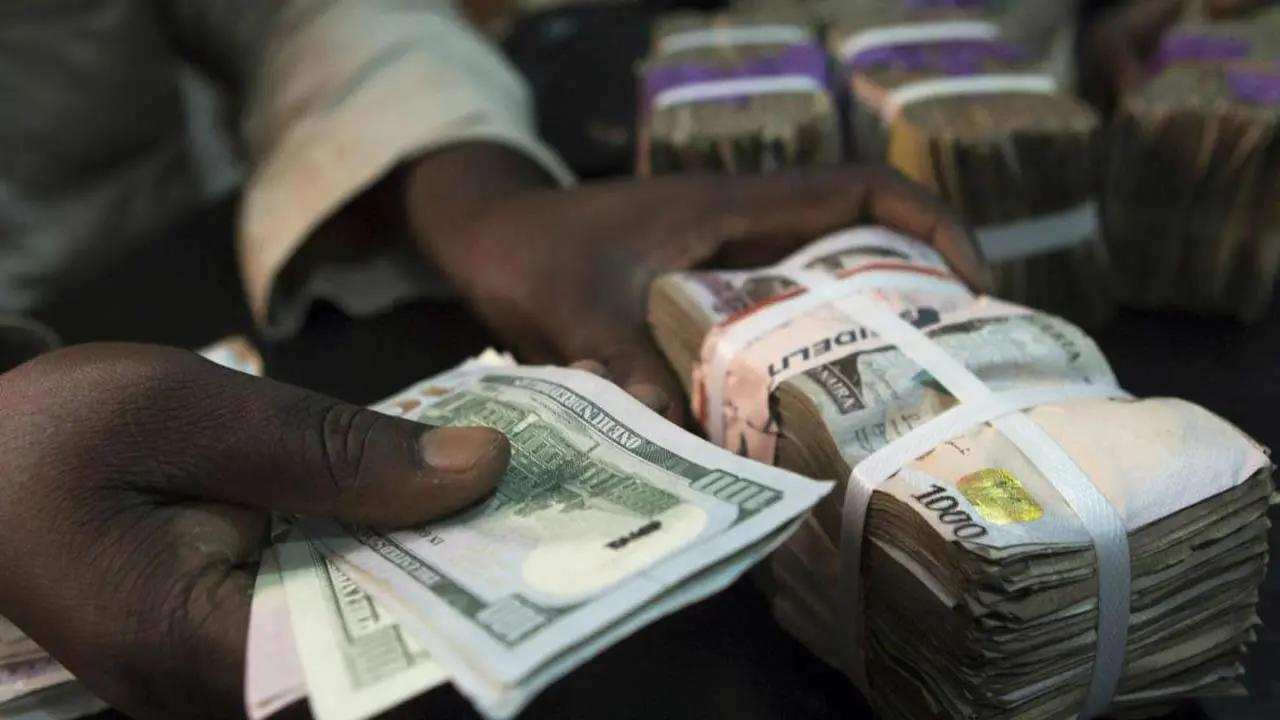
The Nigerian naira weakened further in the official foreign exchange market on Thursday, closing at N1,600.50 per dollar, according to data published on the Central Bank of Nigeria’s (CBN) website.
This latest dip represents a slight decline from Wednesday’s rate of N1,599.00/$1 and continues a trend of volatility that has marked the week ahead of the Easter holiday.
Earlier in the week, the naira stood at N1,604.00/$1 on Tuesday and N1,599.00/$1 on Monday, underscoring a pattern of consistent fluctuations amid sustained demand pressure for the U.S. dollar.
Analysts attribute the persistent swings to deep-rooted challenges surrounding foreign exchange liquidity and a widening supply-demand mismatch.
Market participants are reportedly waiting for more robust inflows from critical sources such as oil exports, diaspora remittances, and foreign portfolio investments.
The naira’s performance in the parallel (black) market also mirrored the turbulence seen officially. After opening the week at N1,605.00/$1 on Monday — a 0.93% appreciation — the currency weakened to N1,618.00/$1 on Tuesday, a 0.80% decline.
The downward trajectory continued with a marginal drop to N1,620.00/$1 on Wednesd ay. However, by Thursday, the naira clawed back some of its losses, appreciating by 0.62% to close at N1,610.00/$1.
READ ALSO:Naira weakens at black market despite rise in official inflows
Beyond the dollar, the naira also fluctuated against other major currencies in the parallel market. Against the British pound, significant volatility was recorded: after starting the week at N2,040.00/£1 on Monday and reaching N2,075.00/£1 on Tuesday, the naira weakened to N2,050.00/£1 on Wednesday.
By Thursday, the rate dropped further to N2,080.00/£1, reflecting a 1.44% depreciation.
The euro similarly exhibited erratic movements. It began the week at N1,705.00/€1, climbed to N1,720.00/€1 on Tuesday, and then to N1,735.00/€1 by Wednesday.
However, by Thursday, the euro traded at N1,730.00/€1, representing a slight 0.29% appreciation for the naira.
Analysts suggest that the continued depreciation across both the official and parallel markets highlights the persistent imbalance between the demand and supply of foreign exchange in Nigeria.
Despite recent reform efforts by the CBN aimed at stabilizing the FX market, the naira remains under severe pressure, driven by speculative demand, reduced foreign currency inflows, and lingering investor uncertainties.
The narrowing gap between the official and parallel market rates indicates ongoing arbitrage activities, pointing to a still-volatile and uncertain FX landscape.
Moreover, the fluctuations in other major currencies such as the pound and euro are seen as a reflection of broader instability affecting Nigeria’s external sector.
For businesses and consumers, this foreign exchange instability translates to increased import costs, heightened inflationary pressures, and financial planning difficulties.
With the Easter holiday typically spurring higher demand for dollars for travel and import purposes, market watchers caution that the naira could face continued downward pressure in the near term unless supported by stronger dollar inflows or decisive monetary interventions.


-

 Business4 days ago
OPay explains how Nigerians can access FG’s N50,000 monthly cash relief
-

 Sports1 week ago
Senegal opens Dakar 2026 Youth Olympic Games, Africa’s first Olympic event
-

 Latest1 week ago
FG Announces N50,000 cash support for vulnerable Nigerians under new relief programme
-

 Business1 week ago
NNPC’s N66-per-litre petrol discount set to end October 31
-

 Latest1 week ago
INEC recognises Pantami for Gombe, keeps Kano NDC candidate off final list
-

 Latest1 week ago
NDC Chieftain tells Atiku to drop presidential ambition over son’s support for Tinubu
-

 Crime1 week ago
Doris Ogala remanded as Court adjourns bail hearing to November 6
-

 Latest1 week ago
One dead, one injured in three road emergencies across Lagos – LASEMA