
Business
Manufacturers urge full privatization of Nigeria’s refineries
The Manufacturers Association of Nigeria (MAN) urges the federal government to privatize all state-owned refineries, citing the private sector’s proven capacity for efficiency and energy security, and highlighting the Dangote Refinery as a prime example.

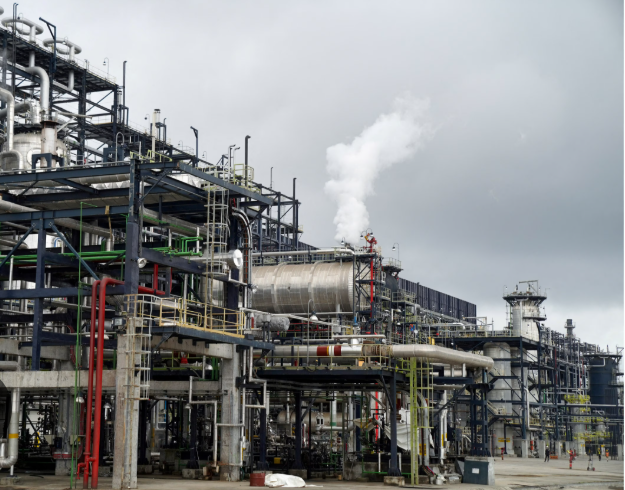
The Manufacturers Association of Nigeria (MAN) has intensified its call for the federal government to fully privatize all government-owned refineries, arguing that private sector management is essential for achieving optimal efficiency and ensuring energy security in Nigeria.
Segun Ajayi-Kadir, Director-General of MAN, made the strong recommendation during a recent television appearance.
He expressed firm confidence that private investors would unlock the full potential of these critical national assets, asserting that the private sector has demonstrated a superior ability to drive both efficiency and energy security.
To underscore his point, Ajayi-Kadir pointed directly to the impressive performance of the Dangote Refinery, stating it as clear proof that the government has “no business” operating in the refining sector.
“Before now, Nigeria was exporting crude and importing refined fuel – a tragic mismatch for a country rich in oil,” Ajayi-Kadir remarked.
“But with local refining now gaining traction, especially through private efforts, we’re seeing prices come down and supply chains improve.”
Ajayi-Kadir suggested that the removal of fuel subsidies, while initially creating hardships for manufacturers, is paradoxically proving to be a “blessing in disguise.”
He believes it has paved the way for broader, much-needed reforms within the energy sector.
ALSO READ :Katsina state declares public holiday to honor late President Buhari
He highlighted that the Dangote Refinery has already contributed significantly by reducing logistics costs for businesses, cutting out profiteering by middlemen, and boosting the overall availability of petroleum products across the nation.
Addressing potential concerns about a monopoly, Ajayi-Kadir dismissed the notion, arguing that the real problem lies in the inefficiency of other market players, rather than the dominance of any single entity.
He emphasized that the focus should remain squarely on “performance and the value delivered to consumers.”
The MAN DG underscored the critical impact of energy costs on the manufacturing sector, noting that they account for over 40 percent of overall manufacturing expenses.
He asserted that any improvement in energy supply—particularly through increased local production of diesel and compressed natural gas (CNG)—would directly translate to lower production costs, a vital step towards reviving struggling small and medium-sized businesses across the country.
“The government should incentivize serious investors and step back from operating businesses. The cost of maintaining inefficient state-owned refineries is unfair to the Nigerian people,” Ajayi-Kadir concluded, reiterating MAN’s firm stance on the necessity of government divestment from the refining sector to foster a more vibrant and efficient industrial landscape.












-
 Comments and Issues5 days ago
Can President Tinubu Revive Nigeria’s Moribund Refineries?
-

 Business5 days ago
TikTok, ByteDance agree to $400m settlement in US children’s privacy case
-
 Business6 days ago
Tinubu knocks Atiku’s subsidy plan, says proposal shows ‘ignorance’ of economy
-

 Entertainment1 week ago
Poco Lee faces rape allegation as unverified UK arrest report spreads online
-

 Football6 days ago
EPL 2026/27: Experts back Arsenal for title as Haaland, Rice lead individual award picks
-

 Featured6 days ago
Economic Reality vs Party Machinery: What will drive Nigeria’s 2027 election?
-

 Entertainment3 days ago
Miss World 2026: Four Continental winners battle for automatic top 20 spot (VIDEO)
-

 Featured5 days ago
MLS fines Lionel Messi for striking Philadelphia Union’s Quinn Sullivan