
Latest
State Police debate intensifies as security experts weigh prospects for tackling Nigeria’s insecurity

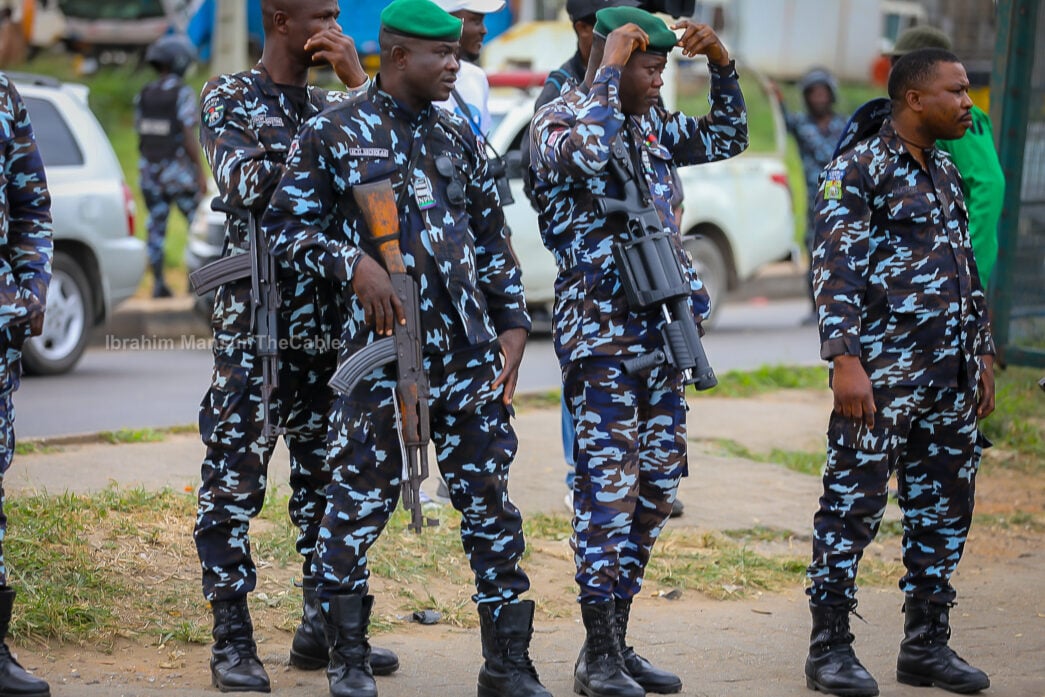
As Nigeria continues to battle rising cases of kidnapping, banditry, terrorism, communal clashes, and other violent crimes, attention has increasingly shifted to the proposed establishment of state police as a potential solution to the country’s worsening security challenges.
The debate has gained renewed momentum as Nigerians await the outcome of legislative deliberations on the state police bill. If eventually passed by the National Assembly, the constitutional amendment would still require approval by no fewer than 24 State Houses of Assembly before it can be transmitted to the President for assent.
The proposal has generated widespread discussion among policymakers, security experts, retired military officers, and civil society groups, with many questioning whether state police can effectively address the deep-rooted security problems confronting the nation.
Supporters of the initiative argue that decentralizing policing would strengthen intelligence gathering, improve response times, and bring law enforcement closer to the communities they serve. They maintain that local security challenges are best addressed by officers who possess intimate knowledge of the terrain, culture, and dynamics of their communities.
Among the prominent advocates of community-based security frameworks is Major General Chris Olukolade (retd.), former Director of Defence Information, who has consistently emphasized the importance of local intelligence in combating criminal activities. According to him, effective policing requires close collaboration between security agencies and local communities, a model that state police could potentially enhance.
Speaking during a recent appearance on the TVC Breakfast Show, retired Rear Admiral Oluwabunmi Bankole argued that Nigeria’s security crisis demands a comprehensive and multifaceted approach that goes beyond conventional military operations.
He noted that stronger local security structures, improved intelligence gathering, modern surveillance technology, and active community participation are essential components of any sustainable security strategy.
According to Bankole, security agencies operating from centralized command structures often face limitations in effectively monitoring every community across the country, particularly in remote areas where local knowledge can make a significant difference in crime prevention and response.
He expressed support for the creation of state police, stating that officers recruited and deployed within their local environments would likely have a better understanding of the security realities in their jurisdictions, thereby enhancing efforts to combat kidnapping, banditry, terrorism, and other crimes.
However, the retired naval officer cautioned that state police must not become instruments of political manipulation. He stressed the need for clear legal safeguards, adequate funding, professional training, operational independence, and effective oversight mechanisms to prevent abuse by political office holders.
Breaking: Senate passes constitutional amendment bill for State Police, clears major hurdle
Bankole further emphasized that security is not solely a military matter, noting that intelligence gathering, citizen engagement, technology-driven surveillance, and efforts to address poverty and unemployment are equally important in addressing insecurity.
He added that state police should complement existing federal security agencies rather than replace them, while operating within a framework that guarantees accountability, professionalism, and respect for the rule of law.
Also lending his voice to the debate, Major General Garba Wahab (retd.) maintained that many security threats in Nigeria are localized and therefore require localized responses that state police formations would be better positioned to provide.
Similarly, security analyst Ayomide Akinwale argued that Nigeria’s centralized policing structure often delays emergency responses because state governments do not exercise direct operational control over police personnel within their territories.
According to Akinwale, a decentralized policing model could improve intelligence gathering, facilitate quicker interventions, and enhance cooperation between security agencies and local communities.
Proponents of state policing frequently point out that governors are constitutionally designated as chief security officers of their states but lack direct authority over the police. They argue that establishing state police would bridge this gap and enable state governments to respond more swiftly and effectively to emerging security threats.
Despite these perceived advantages, concerns remain over the potential misuse of state police by political actors.
Some retired security officials and policy analysts have warned that, without adequate constitutional safeguards, state police could become tools for political intimidation and suppression of opposition voices.
Among those expressing reservations is former Minister of Defence, Major General Bashir Magashi (retd.), who has cautioned that governors could exploit state-controlled police forces for partisan interests unless robust checks and balances are put in place.
To address such concerns, experts have recommended the establishment of independent oversight bodies, clear constitutional limitations, transparent recruitment procedures, national operational standards, and strong collaboration mechanisms between federal and state security institutions.
Recent proposals for state policing have also included accountability measures such as national standards boards, independent complaint commissions, and the deployment of body-worn cameras to improve transparency and public trust.
While opinions remain divided on the structure and implementation of state police, there appears to be broad agreement among security experts that decentralizing policing could contribute significantly to addressing Nigeria’s security challenges if properly managed.
Nevertheless, analysts caution that state police alone cannot serve as a magic solution to the country’s security crisis.
They insist that meaningful progress will also require addressing underlying socio-economic factors such as unemployment, poverty, corruption, weak institutions, and poor intelligence coordination, all of which contribute to criminality and insecurity across the country.
As the debate continues and lawmakers deliberate on the proposed legislation, Nigerians remain hopeful that any reform adopted will strengthen the nation’s security architecture and provide lasting solutions to the growing threats facing communities nationwide.


-
 Latest6 days ago
Israel marks 3 years since October 7 Hamas attack amid Gaza strikes, election debate
-

 Energy5 days ago
Fuel Battle: Dangote, marketers and government clash over petrol imports
-

 Energy7 days ago
Petrol, diesel prices rise 86% in 2026 as costs hit fresh highs
-

 Energy1 week ago
Has Iran lost control of the Strait of Hormuz? Oil flows rebound as war disruptions persist
-

 Football6 days ago
Nigeria’s World Cup exit under spotlight as FIFA’s DR Congo files emerge
-

 Latest6 days ago
US Court set to rule on release of FBI, DEA records on Tinubu
-

 Business6 days ago
Nigerian investors at a crossroads as fixed-income yields slide
-

 Business7 days ago
LoveWorld Trade and Investment Forum to Convene Business Leaders in Accra