
Latest
Why the Vice Presidential slot could decide Nigeria’s 2027 presidential race

By Andra Oriyomi
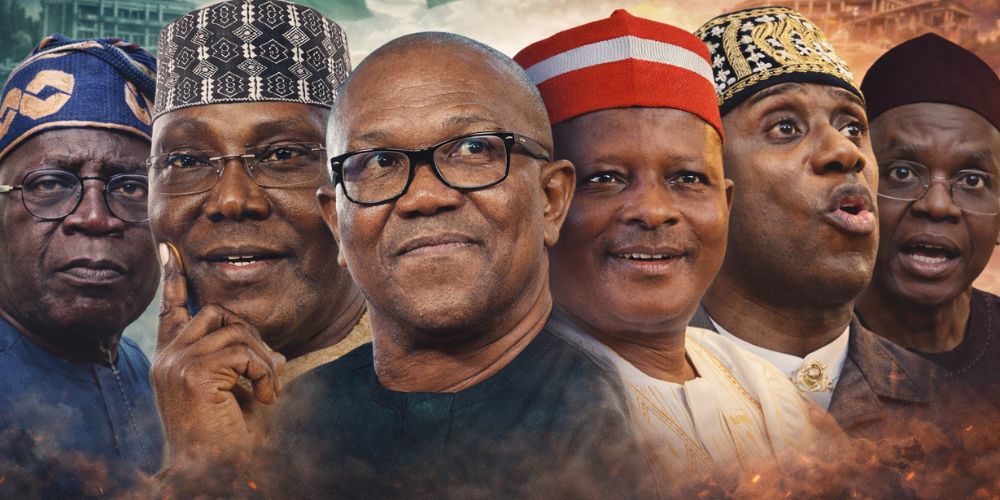
As political parties race to beat the July 11 deadline set by the Independent National Electoral Commission (INEC) for the submission of presidential and National Assembly candidates, attention is rapidly shifting from who will lead the tickets to who will occupy the vice-presidential slot—a decision political analysts believe could determine the outcome of the 2027 presidential election.
With presidential primaries largely concluded across major political parties, intense consultations, negotiations and alliance-building are now centred on selecting running mates capable of strengthening party tickets and broadening electoral appeal ahead of the general election.
The July 11, 2026 deadline requires political parties to upload the particulars of their presidential and National Assembly candidates through INEC’s automated nomination portal, leaving party leaders with limited time to conclude internal consultations and resolve outstanding disagreements.
Running Mate No Longer a Symbolic Choice
Unlike previous election cycles when vice-presidential nominees were often viewed as ceremonial additions to presidential tickets, political observers argue that the current political climate has elevated the office to one of strategic national importance.
READ ALSO; Tinubu will win back Lagos in 2027, Sunday Dare declares
Years of economic hardship, persistent insecurity, rising inflation, unemployment and growing public demand for effective governance have shifted voters’ expectations.
Rather than focusing solely on political balancing, many Nigerians now want assurances that anyone seeking the vice presidency possesses the competence, experience and leadership capacity to govern if circumstances require.
Political analyst Andra Oriyomi noted that presidential candidates are increasingly confronted with a more complex question than political loyalty.
“For every presidential hopeful, the question is no longer simply who is loyal, but who can strengthen the ticket, unite the party and attract votes across Nigeria’s diverse political landscape,” he observed.
Balancing Politics and Competence
Historically, Nigeria’s major political parties have structured presidential tickets around regional and religious balancing, often pairing northern and southern candidates while considering religious representation.
Although the Constitution does not require such arrangements, decades of political practice have made balancing a significant electoral consideration.
However, governance experts believe competence is becoming equally important.
Under the Nigerian Constitution, the vice president plays a central role in government by assisting the president in coordinating executive functions and chairing key economic and policy councils.
Constitutional lawyer and political analyst Prof. Auwalu Yadudu said the office has evolved beyond ceremonial responsibilities.
“The vice president today is expected to contribute significantly to governance. Nigerians are increasingly interested in whether the individual has the experience and capacity to manage complex national challenges if called upon,” he said.
He added that Nigeria’s constitutional history, where vice presidents have assumed the presidency following constitutional transitions, underscores the importance of choosing capable running mates.
READ ALSO; Court fixes July 7 to hear PDP suit seeking INEC recognition of Turaki-led leadership
Party Unity at Stake
Political strategists also argue that vice-presidential nominations have become critical tools for maintaining party cohesion after competitive presidential primaries.
Many unsuccessful presidential aspirants still command substantial grassroots support, making the vice-presidential slot an important instrument for reconciliation and coalition-building.
Analyst Jide Ojo said poorly managed selections could deepen internal divisions and trigger defections.
“The vice-presidential choice is now one of the most delicate political negotiations after party primaries. A wrong decision can alienate influential blocs within a party, while a widely accepted choice can strengthen campaign structures and improve electoral prospects,” he explained.
Electoral Mathematics Remains Critical
Beyond internal party politics, electoral considerations continue to shape discussions around running mate selection.
Political parties are expected to analyse voting patterns, regional influence, youth participation, religious demographics and grassroots mobilisation before making final decisions.
Analysts say successful presidential tickets often combine complementary leadership styles, governance experience and political networks rather than simply satisfying regional balancing.
They note that Nigeria’s increasingly competitive elections are won through broad national coalitions rather than dominance in a single geopolitical zone.
Public Scrutiny in the Digital Age
Political communication experts also warn that the emergence of social media has fundamentally changed the selection process.
Within hours of any announcement, the educational qualifications, professional history, previous public statements and political records of nominees are subjected to intense public examination.
Any unresolved controversy could quickly dominate media narratives and distract from campaign messaging.
Consequently, political parties are believed to be conducting more comprehensive background checks before unveiling their running mates.
INEC Deadline Intensifies Consultations
INEC has repeatedly maintained that the July 11 deadline remains non-negotiable, stressing that its electronic nomination portal will automatically close once the submission window expires.
The approaching deadline has intensified consultations across party leadership structures, with several parties still weighing competing political interests before making final announcements.
While some parties are said to be ready to submit their candidates’ particulars, others continue to negotiate over vice-presidential choices and post-primary reconciliation.
READ ALSO: APC, PDP clinch key by-elections as INEC declares winners in Kano, Rivers
Experts: Nigerians Want More Than Political Balancing
Governance experts say the 2027 elections could mark a turning point in how Nigerians evaluate presidential tickets.
Economist and public affairs analyst Dr. Muda Yusuf observed that economic realities have made governance competence a central campaign issue.
“Citizens want leaders who can contribute meaningfully to economic management, policy formulation and institutional reforms. The vice-presidential candidate is no longer judged solely on regional or political considerations,” he said.
Similarly, development policy analyst Dr. Dakuku Peterside argued that voters increasingly expect presidential tickets capable of inspiring confidence both locally and internationally.
According to him, the quality of a running mate could influence investor confidence, strengthen public trust and improve perceptions of a party’s preparedness for governance.
With only days remaining before INEC’s submission deadline, political parties face mounting pressure to finalise their presidential tickets.
Analysts believe the choices made in the coming days could shape not only campaign narratives but also voter confidence, party unity and the overall trajectory of the 2027 presidential election.
As consultations continue behind closed doors, one question remains at the centre of Nigeria’s political discourse: will political parties select running mates based primarily on electoral calculations, or will they prioritise competence, governance experience and national leadership at a time when many Nigerians are demanding effective solutions to the country’s challenges?


-

 Business7 days ago
Dangote Refinery IPO: 70% Subscription claim meets fourfold demand assertion as investors seek clarity
-

 Latest1 week ago
Umahi defends Lagos-Calabar highway route changes amid public outcry
-
Business1 week ago
Dangote Refinery IPO Extension: Was the 70% subscription report overhyped?
-
 Featured3 days ago
Inside INEC’s race to prepare for Nigeria’s 2027 elections
-

 Latest5 days ago
UCTH faces morgue crisis as 50 unclaimed corpses await mass burial
-

 Business5 days ago
BREAKING: Nigeria’s Inflation Rate Drops to 14.63% in September
-

 Featured1 week ago
El-Rufai, ADC governorship candidate’s court appearance puts Kaduna opposition politics in focus
-
 Featured3 days ago
2027: APC unveils nationwide campaign timetable, Tinubu to rally in 12 states