
Business
FG reaffirms commitment to CNG, EV expansion as stakeholders unite on Nigeria’s clean mobility transition

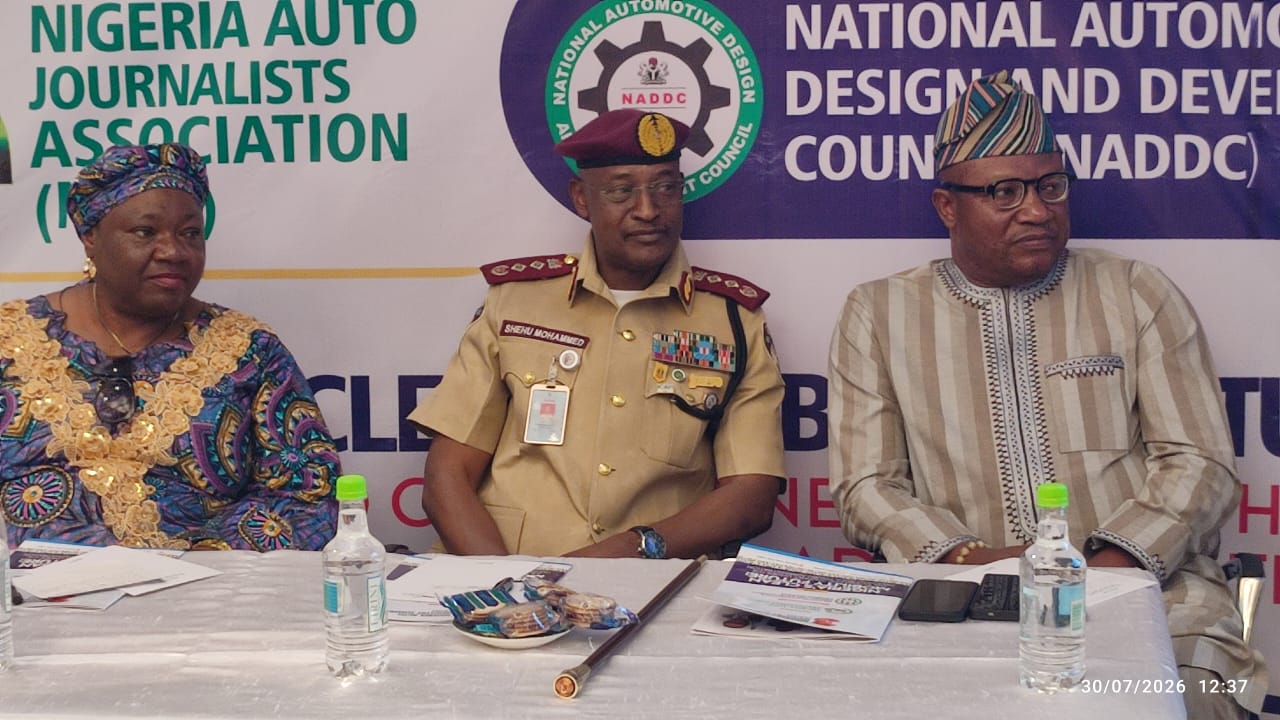
The Federal Government on Thursday , July 30 reaffirmed its commitment to accelerating Nigeria’s transition to cleaner and more affordable transportation, pledging to expand Compressed Natural Gas (CNG) infrastructure, strengthen local vehicle manufacturing and deepen partnerships that will drive the widespread adoption of both CNG and Electric Vehicles (EVs).
The assurance came at the 3rd Nigeria Auto Industry Summit organised by the Nigeria Auto Journalists Association (NAJA) in Lagos, where policymakers, regulators, automotive manufacturers, financiers, transport operators and development partners agreed that collaboration, robust standards, road safety and sustained investment remain critical to achieving Nigeria’s clean mobility ambitions.
Speaking on behalf of the Executive Chairman and Chief Executive Officer of the Presidential Initiative on Compressed Natural Gas and Electric Vehicles (Pi-CNG & EV), Barrister Ismaeel Ahmed, the Initiative’s Chief Compliance Officer, Engr. Zayyanu Tamberi Yabo, said Nigeria’s clean mobility programme has evolved beyond policy discussions to become a central pillar of the Tinubu administration’s transport and energy agenda.
Addressing participants at the summit themed “Nigeria’s Clean Mobility Future: The EV and CNG Journey Under the Bola Tinubu Administration,” Ahmed said the Presidential Initiative was established not simply to promote alternative fuels but to build a complete ecosystem capable of supporting infrastructure, investment, vehicle conversion, local manufacturing, technical capacity development and consumer confidence.
READ ALSO; NAISU 2026; FRSC pledges robust safety framework for EV, CNG adoption
According to him, the initiative was conceived following the removal of fuel subsidy to provide Nigerians with a more practical and affordable transport alternative by harnessing the country’s abundant natural gas resources.
“Our approach from the beginning has been to build the foundations of a sustainable industry rather than pursue isolated interventions,” he said.
Ahmed noted that the initiative has worked closely with regulators, investors, conversion companies, vehicle manufacturers, financial institutions, transport unions, development partners and state governments to accelerate implementation.
He disclosed that the country’s CNG ecosystem has witnessed significant expansion over the past two years, with certified conversion centres increasing across the country while new refuelling stations are being developed through public and private sector investments.
He added that vehicle conversions continue to rise as commercial transport operators and private motorists embrace CNG because of its lower operating costs, while thousands of technicians have been trained to ensure safe and professional conversion services nationwide.
The Pi-CNG & EV boss also highlighted ongoing collaborations with financial institutions, energy companies and automobile manufacturers aimed at improving access to financing, attracting investment and encouraging wider adoption of clean mobility technologies.
He described the Nigeria Gas Vehicle Monitoring System (NGVMS) as a major milestone that would strengthen transparency, safety, regulatory oversight and consumer confidence within the CNG conversion industry.
While acknowledging the increasing popularity of CNG because of its immediate economic advantages, Ahmed stressed that Nigeria’s clean transportation future would depend on multiple technologies
READ ALSO; NAJA auto summit rallies industry leaders behind Nigeria’s clean mobility vision
He said government is engaging investors, manufacturers and development partners to support electric vehicle deployment, charging infrastructure, local assembly and the policy environment required for sustained market growth.
Despite the progress recorded, he identified infrastructure expansion, consumer financing, local manufacturing capacity, technical training, research, innovation and standardisation as areas requiring greater attention.
Ahmed stressed that overcoming these challenges would require stronger collaboration among government agencies, investors, manufacturers, transport operators, financial institutions, development partners and the media.
He reaffirmed that the initiative would continue expanding CNG infrastructure nationwide, strengthen regulatory collaboration, encourage investment in vehicle conversion and local manufacturing, improve financing access and build a commercially viable clean mobility ecosystem.
Earlier, Chairman of NAJA, Theodore Opara, described the summit as more than an industry conference, saying it represented a strategic platform for shaping the future of Nigeria’s automotive industry.
He observed that countries around the world are rapidly embracing cleaner transportation technologies to reduce carbon emissions, improve energy efficiency and build sustainable economies, warning that Nigeria cannot afford to lag behind.
Opara said reforms introduced by President Bola Tinubu’s administration have created fresh momentum around CNG, electric vehicles, local automotive manufacturing and sustainable transportation, but stressed that policy success would depend on stronger collaboration among government, regulators, manufacturers, financiers, researchers, infrastructure providers and the media.
He challenged participants to ensure that discussions translate into practical recommendations capable of influencing policy, encouraging investment, expanding local production, strengthening automotive value chains and promoting skills development.
He also called on journalists covering the automotive industry to see themselves as partners in national development through accurate and constructive reporting that supports informed policymaking and investor confidence.
Reinforcing the need for a coordinated approach, the Director-General of the Standards Organisation of Nigeria (SON), Dr. Ifeanyi Chukwunonso Okeke, represented by Engr. Olalekan Omoniyi, said Nigeria’s clean mobility ambitions would only succeed if backed by internationally recognised standards, certification and strict regulatory compliance.
He said standards remain the foundation upon which a safe, reliable and globally competitive EV and CNG ecosystem must be built.
According to him, SON has already developed more than 80 Nigerian Industrial Standards for CNG vehicles and equipment, alongside 87 additional standards and the National Nigeria Guideline (NNG 1214:2024) governing CNG vehicle conversions.
He added that the agency is also developing standards covering electric vehicles, charging infrastructure, batteries, charging connectors and battery-swapping systems.
Omoniyi warned against the growing proliferation of uncertified CNG conversion centres and substandard equipment, noting that poor installations have contributed to explosions and fire incidents.
READ ALSO; LCCI seeks enhanced government-private sector alliance on EV, CNG adoption
He urged government to make certification compulsory for imported and locally assembled EVs, CNG vehicles, conversion kits and charging equipment while expanding testing facilities and public awareness campaigns.
Similarly, the Corps Marshal of the Federal Road Safety Corps (FRSC), Shehu Mohammed, said Nigeria’s clean mobility journey must be anchored on road safety if it is to deliver its intended benefits.
He explained that as alternative fuel vehicles become increasingly common, regulatory institutions must adapt through specialised training, stronger enforcement and updated operational guidelines.
According to him, the FRSC is already positioning itself to support the transition by strengthening safety regulations, engaging stakeholders and developing operational frameworks for EVs and CNG-powered vehicles.
He emphasised that cleaner mobility should improve not only environmental sustainability but also road safety, vehicle standards and public confidence.


-

 Football7 days ago
Banda, Chawinga make 2026 Women’s Ballon d’Or top 30 shortlist
-

 Featured7 days ago
Peter Obi, Makinde and the 2027 elections: Can unity really challenge APC?
-

 Business1 week ago
Nigerian Breweries’ H1 profitability strengthens as revenue hits N804bn
-

 Trending Stories5 days ago
Davido, Wizkid, Burna Boy or Asake: Who is having the biggest 2026 so far?
-

 Business1 week ago
Nigeria records N12.59trn trade surplus in Q2 2026 — NBS
-

 Football4 days ago
Premier League releases 2026/27 festive fixtures, 7 matches set for Boxing Day
-

 Business3 days ago
Jetour Nigeria, dealers take dashing, other models to Abuja Experience
-

 Business4 days ago
Dangote Refinery IPO shifts spotlight to corporate governance, investor protection