
Business
InnerCity Youth Stakeholders Summit Charts Sustainable Pathways for Vulnerable Youth

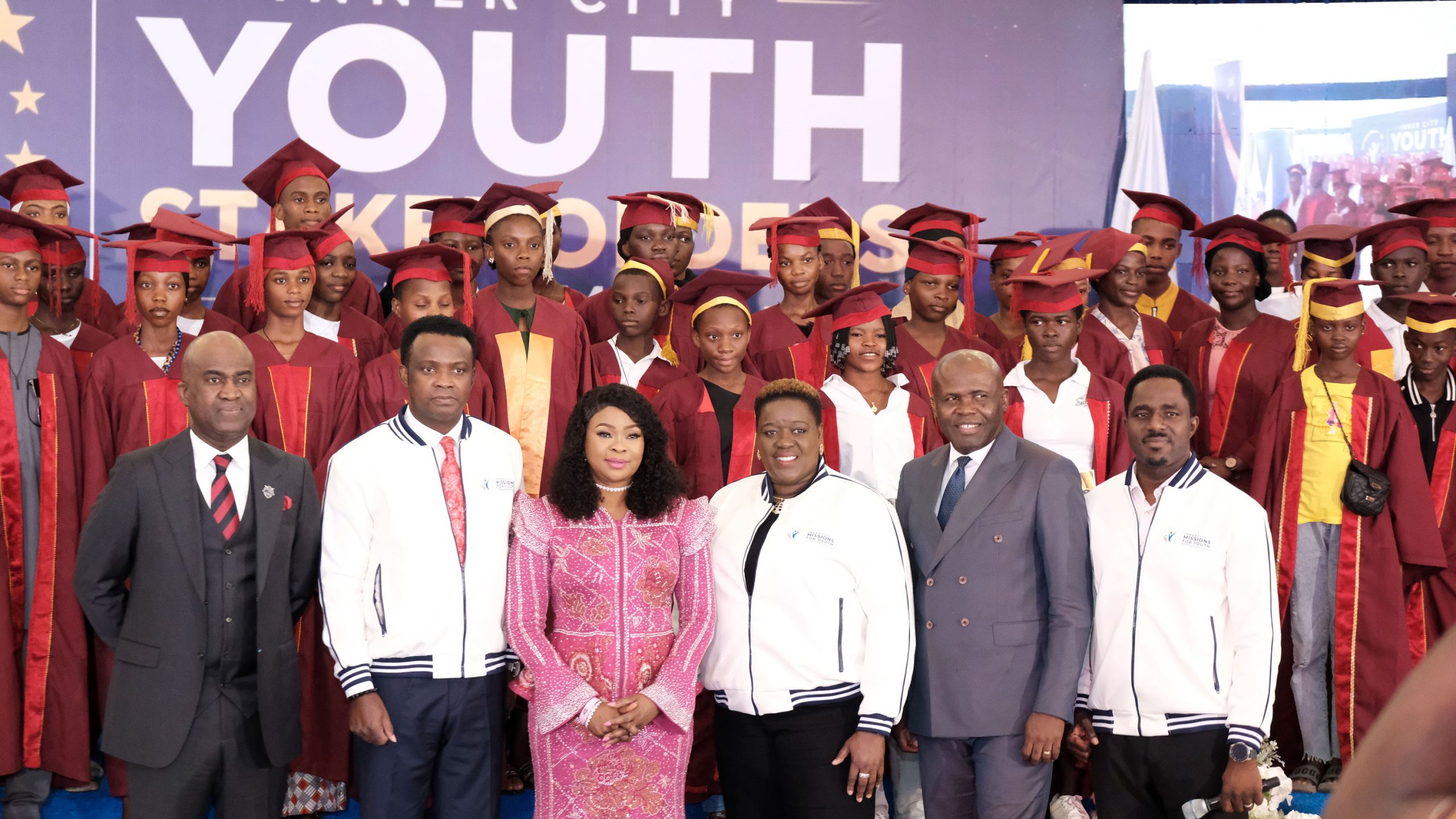
Stakeholders in youth development have called for stronger collaboration among faith-based organisations, government, businesses, entrepreneurs and community leaders to create sustainable pathways out of poverty and vulnerability for underserved young people.
The call was made at the InnerCity Youth Stakeholders Summit, organised by InnerCity Missions for Youth (ICMY) at the Waterfalls Event Center, Ikeja, Lagos.
The summit, which attracted hundreds of participants physically and thousands more online, brought together ministry leaders, corporate executives, entrepreneurs, youth advocates and community stakeholders to discuss practical strategies for equipping vulnerable young people with the skills, mindset and opportunities needed to become productive members of society.
The gathering featured keynote and plenary sessions, panel discussions, testimonies and a graduation ceremony for young people who had completed vocational and leadership development programmes.
Focus shifts from relief to sustainable empowerment
Speaking at the summit, Pastor Dipo Popoola, Head of the InnerCity Missions for Youth, said the organisation deliberately focuses on young people who are often overlooked, including indigent, vulnerable and discouraged youths who have lost confidence in their future.
READ ALSO; InnerCity Mission commissions primary school facility in Taraba
He said participants trained through ICM Youth Hubs had acquired vocational and digital skills alongside character development, spiritual instruction and personal development.
Some of the young people trained in graphic design, he noted, had already contributed to materials used to publicise the summit.
Popoola, however, stressed that skills acquisition alone would not guarantee sustainable transformation, arguing that mindset development must accompany vocational training.
According to him, the Youth Hub model combines practical skills with spiritual and personal development to equip young people to maximise the opportunities available to them.
‘No young person is merely a statistic’
Delivering the keynote address titled “The Urgent Need to Reach the Vulnerable Youth with the LoveWorld Message,” Pastor Yemisi Kudehinbu, Prime Minister of LoveWorld Nation, urged stakeholders to look beyond the circumstances surrounding vulnerable young people.
She said young people affected by poverty, broken homes, neglect, inadequate education and social exclusion should not be regarded merely as statistics.
Kudehinbu described the ICMY initiative as a platform for providing vulnerable youths with vocational, digital, creative, technical and entrepreneurial skills, alongside spiritual development and mentorship.
She also highlighted the role of ICM Youth Hubs, which provide community-based platforms for skills training, mentorship and leadership development.
She challenged stakeholders to take practical steps to establish more hubs, sponsor programmes and provide resources for reaching vulnerable young people.
“Participate. Plant a Hub. Sponsor the work,” she urged stakeholders.
READ ALSO: InnerCity Mission launches another school at Simawa
She also encouraged participants to return to their communities and identify spaces, teams and young people who could benefit from the programme.
Stakeholders examine different dimensions of poverty
Another major session was led by Pastor Shola Agboola, LoveWorld Ambassador Plenipotentiary and Acting Director of Church Growth International.
Following the screening of The Cycle of Fake Poverty and The Indebtedness of Nations, documentaries by Rev. Dr. Chris Oyakhilome, Agboola examined poverty from three perspectives: material, mental and relational.
She explained that while material poverty is associated with the lack of basic resources, mental poverty involves limiting beliefs and thought patterns that can prevent people from identifying and maximising opportunities.
Relational poverty, she added, refers to the absence of productive networks, mentors and connections that can provide access to opportunities.
The discussion emphasised that sustainable empowerment must go beyond meeting immediate needs to include mindset transformation, human capacity development and access to productive networks.
Skills must translate into economic opportunities
Pastor Lanre Alabi, Executive Minister of Human Resource Transformation, also stressed the importance of developing people rather than creating permanent beneficiaries.
He said youth empowerment programmes should equip individuals to become productive, responsible and capable of contributing to their communities and helping others.
The summit’s emphasis on practical economic empowerment was further illustrated by Pastor Alfred Mayson of Christ Embassy Liberia, who shared the experience of a vocational training initiative in Liberia.
According to Mayson, the programme has graduated about 14,000 students over five years in areas including catering, beauty care, soap production, electrical work, plumbing, construction, information and communication technology and hospitality.
He recounted the story of a woman who joined the programme after initially being told that the classes were full.
After learning soap making, she reportedly went on to establish a small business producing different varieties of soap. The income enabled her to contribute to her family’s needs and support the education of her younger siblings.
The story, he said, demonstrated the importance of moving young people beyond acquiring skills to actually earning a livelihood from those skills and eventually creating employment opportunities for others.
Businesses urged to invest beyond CSR donations
The summit also called on private-sector organisations to adopt a broader approach to youth empowerment.
Stakeholders said businesses could support young people through mentorship, internships, workplace experience, enterprise development and employment opportunities rather than limiting their interventions to occasional donations.
They urged companies to create pathways through which young people trained by ICMY could gain practical experience and connect their newly acquired skills to the marketplace.
According to the stakeholders, while charity can provide immediate relief, capacity-building offers young people a greater opportunity to achieve long-term economic independence.
Over 50 youths graduate
The summit also featured the induction of more than 50 young people who had completed vocational and leadership development programmes.
The graduates were formally inducted during a ceremony presided over by Pastor Kudehinbu.
In addition to their vocational training, the graduates had undergone spiritual and personal development programmes.
Each graduate received a complimentary copy of the Teevo Bible, sponsored by LoveWorld Publishing
Four outstanding inductees were also awarded seed grants of ₦100,000 each to support their efforts to turn their acquired skills into viable enterprises.
From dialogue to action
At the conclusion of the summit, stakeholders were urged to translate the discussions into concrete action by establishing more Youth Hubs, volunteering as mentors, providing internship and employment opportunities and supporting ICMY programmes through corporate partnerships and other forms of sponsorship.
Commitments were reportedly made during the event to provide spaces for additional Youth Hubs, signalling an effort to expand the initiative beyond the summit.
The organisers said the ultimate goal was to create a cycle of transformation in which vulnerable young people are equipped to become entrepreneurs, mentors, employers, leaders and community builders.
For ICMY, the success of the summit will therefore not be measured solely by the number of people who attended, but by the Youth Hubs established, mentors mobilised, businesses engaged, opportunities created and young people who move from vulnerability to economic independence and leadership


-

 Featured5 days ago
Inside INEC’s race to prepare for Nigeria’s 2027 elections
-
 Featured5 days ago
2027: APC unveils nationwide campaign timetable, Tinubu to rally in 12 states
-

 Latest1 week ago
UCTH faces morgue crisis as 50 unclaimed corpses await mass burial
-
 Business7 days ago
President Tinubu and the Low Transport Fares Fiasco
-

 Business1 week ago
BREAKING: Nigeria’s Inflation Rate Drops to 14.63% in September
-
 Business5 days ago
Court dismisses ₦170m Trade Fair contract claim, says Zenith Bank was not a party
-

 Business3 days ago
Naira faces exchange rate gap as Dollar hits N1,380 on parallel market
-
 Latest7 days ago
Global excitement builds as Healing Streams Live Services returns October 23