
Latest
IMF boss commends Buhari over anti-corruption crusade

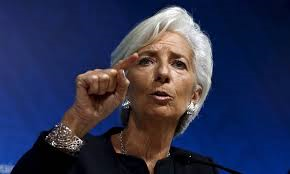
Managing Director of the International Monetary Fund, Christine Lagarde has commended President Muhammadu Buhari for his efforts at tackling corruption in the country, especially with government officials.
“I complimented the authorities on their efforts to address corruption, particularly the decision to publish monthly data on the finances and operations of the National Petroleum Corporation. Transparency and the rule of law will be crucial in reducing constraints to the country’s growth.
Lagarde, who arrived Nigeria on Monday as part of a 8-day visit to both Nigeria and Cameroon described her meetings with top policy makers in the country as extremely fruitful and informative.
“My visit to Nigeria has been extremely fruitful and informative. I wish to thank President Muhammadu Buhari for meeting with me to discuss Nigeria’s achievements and its outlook. I also want to thank Finance Minister Kemi Adeosun and Governor Godwin Emefiele of the Central Bank of Nigeria for their insights. In addition, I had the honor to address members of the National Assembly, chaired by Honorable Bukola Saraki”
According to her, Nigeria’s economy is well diversified, no longer dominated by agriculture and oil, with services accounting for almost half of GDP, including a significant home-grown film industry and innovative startups from fashion to software development. “Nigeria has also experienced a decade of strong growth, averaging 6.8 percent a year. 1n 2015, however, growth is expected to slow to about 3 1/4 percent, with a slight recovery in 2016.”
She said in her meeting with the authorities, “We discussed how to maintain economic progress while making the transition towards more inclusive and sustainable growth. Poverty, inequality, and unemployment levels remain too high, in addition to the challenge of the Boko Haram insurgency. Nigeria also has to deal with the difficulties presented by falling oil prices, reduced emerging market demand, and tightening global financial conditions. This has led to sharply lower export earnings and government revenues. The non-oil sector has also been affected and financing for investment is hard to come by.”
She said she discussed a range of policy recommendations related to improving the competitiveness of the Nigerian economy. This includes, according to her, the focus on the critical area of infrastructure, where power, transportation, and housing are especially key.
“It also includes identifying ways to broaden the revenue base, particularly to create additional fiscal space to offset the impact of lower oil prices; and the need for careful decisions on borrowing, public spending, and managing the cost of fuel subsidies – with a view to safeguarding priority social sectors and the most vulnerable groups. This will require a package of measures involving business-friendly monetary policy, flexible exchange rate policy, and disciplined fiscal policy, and the implementation of structural reforms.”








-

 Football1 week ago
Ballon d’Or 2026: Yamal, Mbappe, Kane emerge early favourites
-

 Football6 days ago
Post-World Cup Shake-Up: Managerial changes, record transfers dominate football headlines
-

 Football6 days ago
WAFCON 2026: Super Falcons target winning start as Nigeria face debutants Malawi
-
 Energy5 days ago
Nigeria wastes enough gas to Ggenerate 62,400GWh of electricity amid deepening energy crisis — NOSDRA
-
 Business2 days ago
Information Minister, VON DG to lead ARCON’s 2026 Advertising Industry Colloquium
-

 Business3 days ago
Cooking gas dealers slash prices amid intensifying market competition
-
 Health5 days ago
Fauci’s personal diaries fuel renewed scrutiny of COVID-19 vaccine safety
-
 Latest5 days ago
ADC petitions Judge after Appeal Court overturns deregistration ruling