
News
Adamawa govt unveils gender policy on education

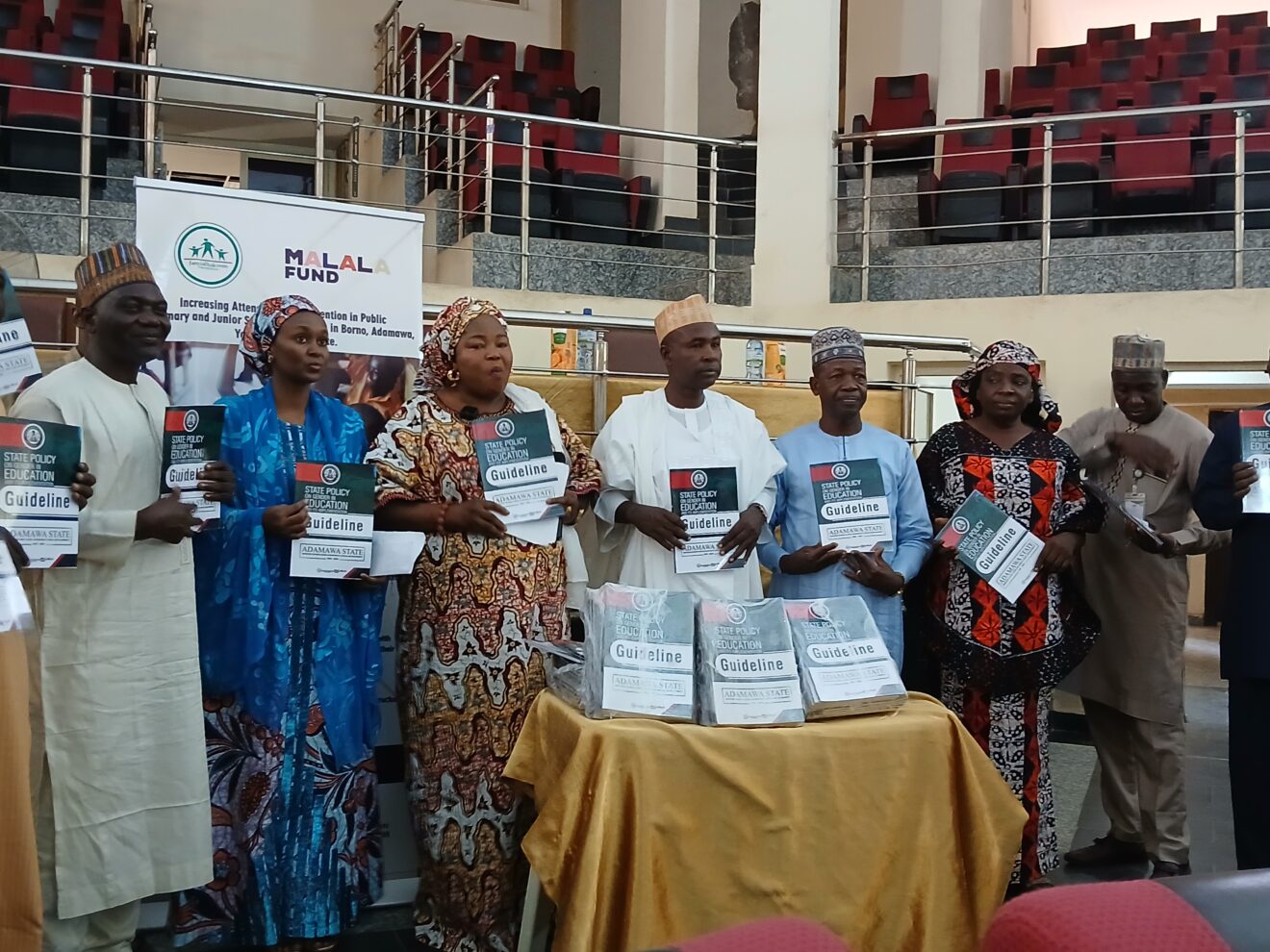
Credit: NAN
The Adamawa Government on Friday, in Yola, launched a gender policy on education aimed at increasing girls’ access to education in the state.
Dr Garba Pella, Commissioner for Education and Human Capital Development, unveiled the policy in partnership with the Jamal Hakeem Foundation, with support from the Malala Fund.
Represented by Mrs Mary Yuwadi, Director of Planning, Research and Statistics, Ministry of Education, Pella said the policy sought to promote gender equity by ensuring all students, regardless of gender, have access to quality education.
“The goal of the policy is to build a just society devoid of discrimination, where women, men, girls, and boys are equitably integrated into all sectors of national development.
“It also aims to empower girls and women by equipping them with the necessary skills and knowledge to participate fully in society and achieve their potential,” he said.
Pella reiterated the government’s commitment to integrating gender into its educational policies and framework.
He said this would be achieved by encouraging teachers to adopt gender-inclusive teaching techniques, forming gender clubs, and implementing strategies to boost girls’ enrollment and retention in schools.
Joel Jutum, Lead Consultant, Education Policy Development at Jami Al Hakeem Foundation, said the policy would be implemented over three years, after which it would be reviewed and evaluated.
He stressed that while policies serve as guiding documents, their successful implementation was crucial to addressing inequalities in the education system.
“The government is mandated to formulate policies, but we have domesticated the National Policy on Education to address specific gender issues in Adamawa.
“This way, policy implementers in the state can better understand the document and take necessary actions to narrow gender gaps in education,” Jutum said.
He highlighted persistent challenges in the state, including limited access to education for girls, early and forced marriage, shortage of girls-only schools, and a lack of female mentors.
Jutum added that implementing the policy would help eliminate these barriers and promote gender equality in education.


-

 Energy1 week ago
Fuel Battle: Dangote, marketers and government clash over petrol imports
-

 Latest3 days ago
Full List: Meet the 2026 Nobel Prize winners across six categories
-
 Featured7 days ago
103 Million Voters: What does INEC’s new register say about Nigeria’s population?
-

 Football3 days ago
Premier League Matchweek 7: Five Fixtures That Could Shape the Weekend
-

 Business1 week ago
The Ministry of Commerce of Loveworld gets a $1 million boost for new investment fund at LTIF 2026 to promote Trade in Ghana
-

 Features1 week ago
Edo’s 2.5 million vote promise: Can the numbers match the politics?
-

 Latest2 days ago
Umahi defends Lagos-Calabar highway route changes amid public outcry
-

 Latest1 week ago
Nigeria to Ghana: Inside police hunt for Anambra kidnap suspect