
News
Anti-migrant marches defy Ramaphosa’s warning as tensions rise in Gauteng

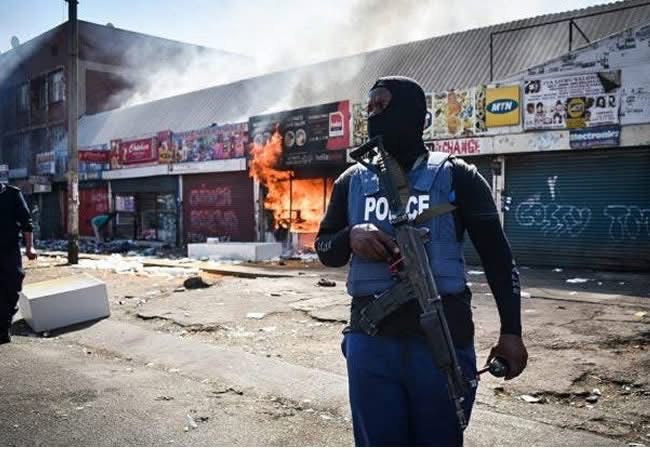
Police in Gauteng monitored protests on Monday after dozens of demonstrators marched through Daveyton and nearby townships in Ekurhuleni, defying warnings from President Cyril Ramaphosa against vigilantism and xenophobic mobilisation linked to anti-immigration campaigns.
The demonstrations form part of a growing wave of anti-foreign sentiment driven by groups such as Operation Dudula and the “March and March” movement, which have intensified activities across Gauteng, KwaZulu-Natal, and the Western Cape. Organisers are demanding the removal of undocumented migrants ahead of a self-imposed June 30 deadline.
The protest took place less than 24 hours after Ramaphosa addressed Parliament during the Presidency Budget Vote, where he acknowledged public concerns over illegal immigration but warned against unlawful citizen action.
He said government would strengthen enforcement measures while cautioning against violence or harassment of foreign nationals, stressing that only state institutions have the authority to enforce immigration laws.
Despite the warning, organisers in Daveyton said the march was intended as a peaceful expression of community frustration over unemployment, crime, and pressure on public services. South Africa’s unemployment rate—estimated to be above 40 percent—has remained a central driver of public discontent.
Analysts from the Human Sciences Research Council have previously noted rising anti-immigrant sentiment in recent years, while rights groups argue that misinformation and political mobilisation have intensified tensions in several communities.
Human rights organisations, including Human Rights Watch and the United Nations, have raised concerns over reported incidents of harassment and violence targeting foreign nationals in parts of South Africa.
Some reports suggest vigilante groups have conducted document checks, closed foreign-owned shops, and engaged in attacks in certain areas, prompting neighbouring countries such as Malawi, Mozambique, and Ghana to begin repatriation measures for their citizens.
While Monday’s protest remained largely contained under police supervision, authorities warned that tensions could escalate as the June 30 deadline set by organisers approaches.


-

 Latest5 days ago
Full List: Meet the 2026 Nobel Prize winners across six categories
-

 Football5 days ago
Premier League Matchweek 7: Five Fixtures That Could Shape the Weekend
-

 Latest4 days ago
Umahi defends Lagos-Calabar highway route changes amid public outcry
-

 Business3 days ago
Dangote Refinery IPO: 70% Subscription claim meets fourfold demand assertion as investors seek clarity
-
Business4 days ago
Dangote Refinery IPO Extension: Was the 70% subscription report overhyped?
-

 Latest2 days ago
UCTH faces morgue crisis as 50 unclaimed corpses await mass burial
-

 Featured4 days ago
El-Rufai, ADC governorship candidate’s court appearance puts Kaduna opposition politics in focus
-

 Business2 days ago
BREAKING: Nigeria’s Inflation Rate Drops to 14.63% in September