
Featured
Buhari unaware: Nigeria has 140 officially gazette grazing routes, 138 in north, 2 in south – Investigation

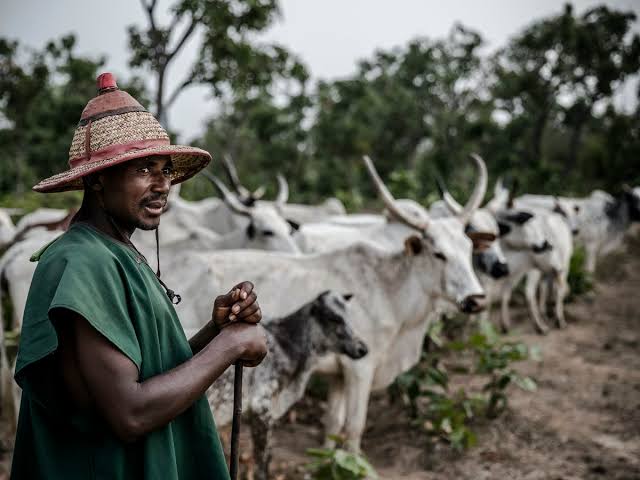
- Grazing routes only exists in Oyo in entire south
An independent Investigator has revealed that Nigeria has 140 officially gazette grazing routes/reserves across Nigeria. The Investigator inquired if President Muhammadu Buhari is aware of the record and that officially gazette grazing routes only exist in Oyo State and no other state in the entire southern Nigeria while he was declaring to reclaim the officially grazing routes across the country. The independent Investigator had commenced research after President Buhari declared that he will reclaim all officially gazette grazing reserves/routes in Nigeria; the independent research was focused on where exactly the gazette cattle routes are located in Nigeria.
The findings showed that officially gazette grazing routes/reserves were predominantly sited in northern Nigeria and in only one state in southern Nigeria.
The independent Investigator specifically conducted the research on the official gazette grazing routes that President Buhari vowed to reclaim for herdsmen in the country.
The Investigator declared that “it is only Oyo State that has two officially gazette cattle routes/reserves in the entire southern Nigeria; the rest states do not have any grazing route.”
The independent Investigator in the presentation of findings, identified 140 officially gazette grazing routes/reserves in Nigeria.
The independent Investigator presented the distribution of the 140 officially gazette grazing reserves/routes as follows:
Adamawa—31
Bauchi—27
Borno—15
Gombe—4
Jigawa—2
Kaduna—2
Kebbi—1
Kogi—1
Kwara—1
Nasarawa— 7
Niger— 2
Plateau— 1
Sokoto— 8
Taraba—9
Yobe— 17
Zamfara— 6
FCT— 4 and
Oyo— 2
There are no grazing routes in two northern states, which include Benue and Kano states, and 16 southern states. The northeast has the highest figure of grazing routes/reserves of 103; distributed in the six states as follows:
Adamawa—31
Bauchi—27
Yobe— 17
Borno—15
Taraba—9
Gombe—4
While Oyo State in southwest Nigeria has two officially gazette grazing routes, the other 35 grazing routes are distributed in the six states in the northwest and the five states of the north central. There are no grazing routes in 16 states of southern Nigeria except Oyo State, none in the southeast and south-south Nigeria.
There were inquiries that while President Buhari declared his awareness that there are gazette grazing reserves and is determined to reclaim the reserves, is he aware of the distribution of the grazing routes or that what was officially gazette did not extend to the entire southern Nigeria, except Oyo State.
The Investigator also found that “as far back as the time these reserves were created, the committee recommended the adoption of a more sedentary method of cattle rearing or ranching.”
It was revealed that S.A. Ingawa, C. Tarawali, presented a paper and R. von Kaufmann, ILCA Subhumid Research Site (1989), the authors listed some of the problems with open grazing of cattle and the need to implement a solution that is both beneficial to the herdsmen and farmers.
The Investigator disclosed that beside the 140 officially gazette grazing reserves in Nigeria, there are some that were never officially gazette. These were excluded because the president focused on the officially gazette grazing routes/reserves.


-

 Featured5 days ago
Inside INEC’s race to prepare for Nigeria’s 2027 elections
-

 Latest1 week ago
UCTH faces morgue crisis as 50 unclaimed corpses await mass burial
-
 Featured5 days ago
2027: APC unveils nationwide campaign timetable, Tinubu to rally in 12 states
-
 Business1 week ago
BREAKING: Nigeria’s Inflation Rate Drops to 14.63% in September
-

 Business6 days ago
President Tinubu and the Low Transport Fares Fiasco
-
 Business5 days ago
Court dismisses ₦170m Trade Fair contract claim, says Zenith Bank was not a party
-
 Business2 days ago
Naira faces exchange rate gap as Dollar hits N1,380 on parallel market
-
 Latest5 days ago
Breaking: NNPCL raises petrol price to ₦1,405 per litre amid discount controversy