
Covid-19
Coronavirus: Lies you bought

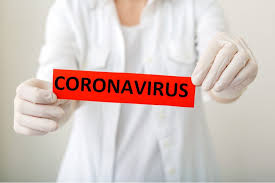
A list of dubious coronavirus tips is going viral on Facebook and Twitter, as well as spreading through email. It falsely claims to be from the Stanford Hospital board and contains advice like “take a few sips of water every 15 minutes at least,” to kill the virus. None of these tips have anything to do with reality; it is dangerous misinformation.
Stanford confirmed the message did not come from the university. In a statement emailed to The Verge, Lisa Kim, a media relations specialist at Stanford Health, said “A widely distributed email about COVID-19 that is attributed to a ‘Stanford Hospital board member’ contains inaccurate information. It did not come from Stanford Medicine.”
“Even if the virus gets into your mouth, drinking water or other liquids will wash them down through your throat and into the stomach. Once there, your stomach acid will kill all the virus,” one tip reads. Loren Rauch, an emergency room doctor in Los Angeles who has a master’s degree in epidemiology, told Mother Jones this advice was “totally bogus.”
Another tip tells people to check for the virus by holding their breath for 10 seconds. “If you complete it successfully without coughing, without discomfort, stiffness or tightness, etc., it proves there is no Fibrosis in the lungs, basically indicates no infection,” it adds.
Unfortunately, this is also false. “That can check if you are anxious or have respiratory compromise,” Rauch said.
The message also says the virus “hates the sun” and isn’t heat-resistant. It can be “killed by a temperature of just 26/27 degrees,” (roughly 78 degrees Fahrenheit). This is not entirely true. “If something’s in sunlight, it’s going to get disinfected pretty quickly, because that’s ultraviolet light, just the same type of sanitation we use in hospitals,” Rauch told Mother Jones. “But just, like, ‘It’s gonna be a warm day today. We don’t have to worry about coronavirus,’ I don’t think that’s gonna work.”
I received the tips firsthand, in an email from a friend who was sending them out in a sincere effort to keep people safe. When I read that I didn’t have coronavirus if I could hold my breath for 10 seconds, I felt relieved. Then I felt suspicious. I remembered Adi Robertson’s advice for spotting fake news: if it sounds too good to be true, it probably is.
So I did what any of us should do if we’re on the receiving end of misinformation from a friend or loved one: I told my friend that the tips were fake. The most reliable sources of information on the coronavirus continue to be the World Health Organization’s guidance on COVID-19, or the Centers for Disease Control’s coronavirus page.
Continue Reading


-

 Featured5 days ago
Inside INEC’s race to prepare for Nigeria’s 2027 elections
-

 Featured5 days ago
2027: APC unveils nationwide campaign timetable, Tinubu to rally in 12 states
-

 Latest1 week ago
UCTH faces morgue crisis as 50 unclaimed corpses await mass burial
-

 Business6 days ago
President Tinubu and the Low Transport Fares Fiasco
-

 Business1 week ago
BREAKING: Nigeria’s Inflation Rate Drops to 14.63% in September
-

 Business5 days ago
Court dismisses ₦170m Trade Fair contract claim, says Zenith Bank was not a party
-

 Business3 days ago
Naira faces exchange rate gap as Dollar hits N1,380 on parallel market
-

 Latest6 days ago
Global excitement builds as Healing Streams Live Services returns October 23