
Business
Latest unemployment figure released

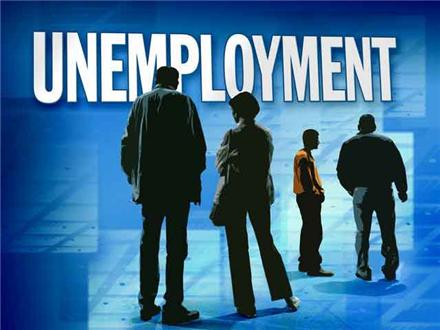
Out of a total active labour force of 85.08 million people in Nigeria, about 16 million were unemployed in the third quarter of 2017, according to the National Bureau of Statistics, NBS.
A report on Labour Force Statistics in the third quarter of 2017 published on the bureau’s website on Monday.
The report said the category of unemployed persons comprised 8.5 million people ”who engaged in an economic activity for at least an hour” and 7.5 million people ”who did absolutely nothing.” confirmed this.
Also, 18.02 million people were underemployed, as they worked for 20 to 39 hours a week, which is less than the 40 hours required to be classified among the workforce.
Fully employed persons working for 40 hours and above in the third quarter of 2018 were 51.06 million people, resulting in a total of 77.6 million people engaged in an extent of economic activity.
According to the report said among the 77.6 million people who were engaged in some extent of economic activity, 29.66 million people were self-employed, engaged in agriculture and 21.66 million were self-employed in non-agricultural sectors.
ALSO SEE: Top ten worst January window transfers
About 19.72 million were working for pay or wage, which, is equivalent to 25.42 per cent of the total workers in the third quarter of 2017, while paid apprentices and unpaid house workers constituted 7.30 per cent and 1.11 per cent of the total working force engaged for at least one hour a week.
The report also revealed that more men worked full-time than women, while a higher percentage of female worked part-time between 20-39 hours and below 20 hours per week.
“The absolute number of male full-time workers, 34.85 million, was more than twice the number of female full-time workers, 16.21 million, in the third quarter of 2017.
“A larger percentage of men to women were self-employed in the agricultural sector, while a larger percentage of women were self-employed in non-agricultural areas of work.
“Agriculture dominated both female and male labor markets. Most economic sectors including agriculture, Other Services, Manufacturing, Professional, Scientific and Technical Services, Transportation and Storage, and Construction employed more male workers than female workers,” the report said.









-

 Latest6 days ago
Pastor Chris Oyakhilome announces mother’s passing at 88 [VIDEO]
-

 Latest1 week ago
Arsenal eye €70-80m move for Real Madrid star
-

 Football4 days ago
How David Beckham made $51.1m from 2026 World Cup, surpassing winners’ prize
-

 Crime1 week ago
Police arrest suspect, launch manhunt for 2 others over Delta Education Director’s death
-

 Comments and Issues5 days ago
Fani-Kayode on Atiku: Separating claims from the record
-

 Latest6 days ago
How adulterated palm oil, coloured pepper are putting consumers at risk
-

 Latest1 week ago
Obi left $155m in Anambra, Otti insists amid debt controversy
-

 Crime6 days ago
Deaths in NSCDC Custody: Can Nigeria guarantee the safety of detainees?