
Latest
Middle East peace efforts face setback as U.S.-Iran negotiations postponed

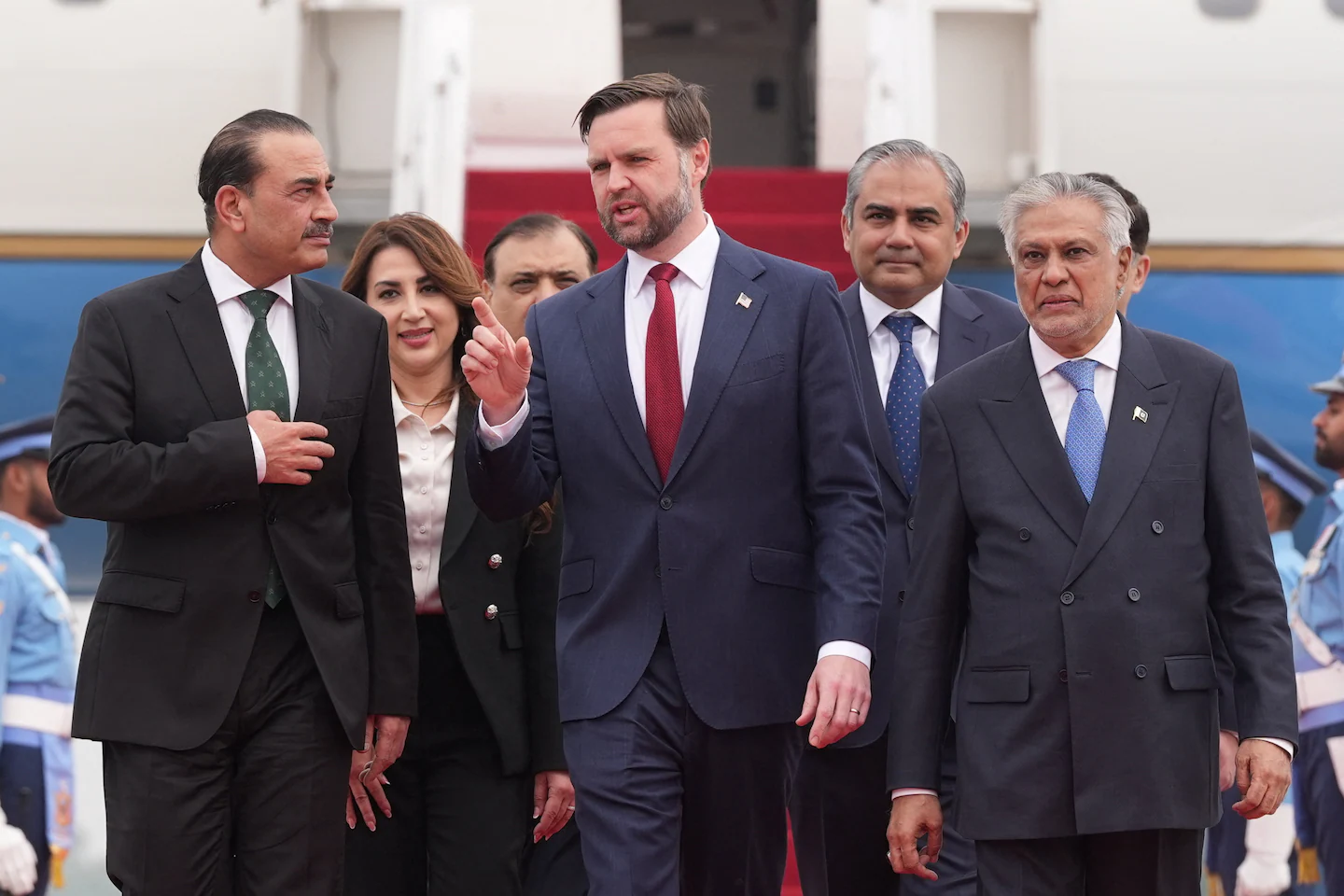
Plans for high-level talks aimed at advancing a newly signed agreement to end the Middle East conflict have been postponed, casting uncertainty over the next phase of diplomatic efforts even as fighting continues in parts of the region.
Switzerland confirmed on Friday that scheduled follow-up negotiations involving the United States, Iran, Qatar and Pakistan had been delayed, just hours after the White House announced the cancellation of U.S. Vice President JD Vance’s planned trip to the Alpine nation.
The talks were expected to build on a landmark agreement signed earlier this week by U.S. President Donald Trump and Iranian President Masoud Pezeshkian.
The accord is designed to formally end the conflict between the United States, Israel and Iran, reopen the strategically vital Strait of Hormuz, and launch a 60-day period of negotiations on broader issues, including Iran’s nuclear programme.
In a statement, Switzerland’s foreign ministry said preparations for the negotiations were continuing despite the postponement.
“The planned talks between the United States, Iran, Qatar and Pakistan have been postponed,” the ministry said, adding that Switzerland remained ready to facilitate the discussions and that preparatory work at the Burgenstock venue was ongoing.
The postponement followed a White House announcement late Thursday confirming that Vice President Vance would no longer travel to Switzerland. A spokesperson for the administration said the cancellation reflected the unpredictable nature of the diplomatic process.
“The logistics of these negotiations have never been simple or predictable,” the spokesperson said, expressing hope that technical discussions would begin as soon as possible.
Iranian officials also appeared cautious regarding the planned talks. Iran’s Tasnim news agency reported that no final confirmation had been given regarding an Iranian delegation’s participation in the Swiss negotiations.
READ ALSO: US, Iran sign formal peace framework as key details of deal surface
The agreement received a significant boost after Iran’s Supreme Leader, Ayatollah Mojtaba Khamenei, announced that he had approved the accord despite expressing personal reservations about some aspects of the arrangement.
Khamenei, who assumed leadership after the death of his father, former Supreme Leader Ali Khamenei, in an airstrike during the opening stages of the conflict in February, said he authorised the deal based on assurances from Iranian officials that national interests would be protected.
In a written statement, he noted that while he held a different perspective on certain elements of the agreement, he approved it because of commitments made by President Pezeshkian and other senior officials to safeguard the rights of the Iranian people.
He also confirmed that future direct negotiations between Tehran and Washington would take place but stressed that dialogue should not be interpreted as acceptance of U.S. positions.
Meanwhile, Iran’s chief negotiator, Mohammad Bagher Ghalibaf, warned that Tehran would respond decisively if any party violated the agreement.
As part of the implementation of the accord, the United States military announced that it had lifted its naval blockade of Iranian ports, allowing maritime traffic to resume after weeks of restrictions.
Although American naval forces remain in the region, commercial shipping activity has begun to recover gradually.
Several oil and gas vessels reportedly transited through the Strait of Hormuz on Thursday, including Saudi oil tankers and a French liquefied natural gas carrier.
Iran’s Supreme National Security Council announced new procedures for vessels seeking passage through the strategic waterway. Under the arrangement, ships must obtain approval from a newly established authority responsible for overseeing traffic through the strait.
The council also stated that no transit fees would be charged for a period of 60 days, in line with provisions contained in the agreement.
The reopening of the Strait of Hormuz is viewed as a critical component of the peace deal, given the waterway’s importance to global energy markets. Analysts have warned that prolonged disruption in the channel could have triggered severe economic consequences worldwide.
Iran-backed Hezbollah announced on Friday that its fighters had destroyed three Israeli tanks in southern Lebanon and said clashes with Israeli forces were ongoing.
Israel has not confirmed the reported tank losses but acknowledged carrying out fresh air and ground operations against Hezbollah positions in several parts of southern Lebanon.
While governments involved in the negotiations have welcomed the accord, reactions among political leaders and citizens remain divided.
Under the agreement, Washington has committed to lifting oil sanctions that have severely constrained Iran’s economy. The deal also outlines plans for a $300 billion reconstruction fund, backed by regional partners, to be made available once a final agreement on Iran’s nuclear programme is reached.


-

 Latest5 days ago
US Immigration fees rise from October 16 as USCIS announces new charges
-
 Business5 days ago
Nigeria’s $55bn reserves raise fresh questions over naira value
-
 Health4 days ago
Florida sues Pfizer over deceptive COVID-19 vaccine marketing
-
 Latest5 hours ago
Israel marks 3 years since October 7 Hamas attack amid Gaza strikes, election debate
-
![Edo Special Court sentences four kidnappers to death over woman’s abduction [VIDEO]](https://nationaldailyng.com/wp-content/uploads/2026/09/828831764_1099651439663438_3480600082081067427_n-400x240.jpg)
![Edo Special Court sentences four kidnappers to death over woman’s abduction [VIDEO]](https://nationaldailyng.com/wp-content/uploads/2026/09/828831764_1099651439663438_3480600082081067427_n-80x80.jpg) Crime1 week ago
Crime1 week agoEdo Special Court sentences four kidnappers to death over woman’s abduction [VIDEO]
-
 Crime4 days ago
From camp to captivity: How kidnappers now target NYSC Corps members on highways
-

 Business6 days ago
Tuoyo Erikowa wins digital marketing personality of the Year at 2026 EDGE awards
-
 Featured5 days ago
2027: Can Nigeria’s opposition still unite behind a single presidential candidate?