
Business
Fraud biggest enemy of e-payment, says CBN

By Chioma Obinagwam
The Central Bank of Nigeria (CBN) has described e-fraud as the biggest challenge facing the electronic payment sector and needs to be collectively tackled by customers, banks and financial sector regulators.
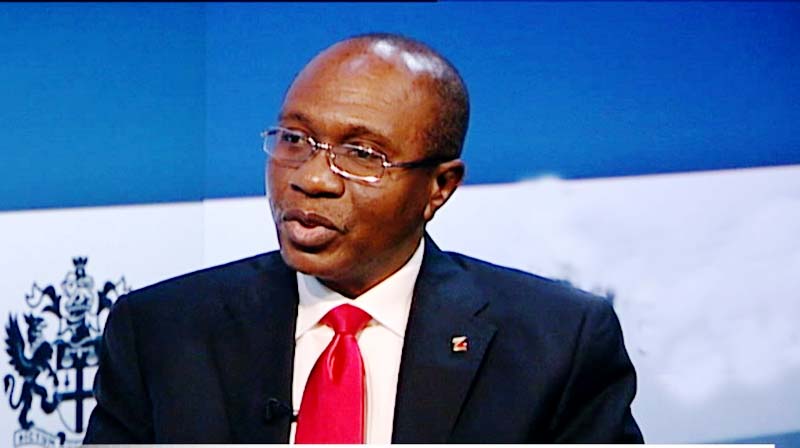
CBN Director, Banking and Payments System Department, ‘Dipo Fatokun who disclosed this at the weekend in Lagos, said fraud not only leads to loss of funds, but reduces confidence of customers using e-channels.
Fatokun, who spoke at the Finance Correspondents Association of Nigeria (FICAN) Bi-Monthly Forum said e-fraud has never been completely eliminated, even as bank customers lost over N2 billion to e-fraud last year.
Speaking on the theme: “Electronic Payments Industry’s Performance and Regulatory Issues”, the CBN Director described e-payment as any form of payment that allows the use of electronics system to initiate, authorize and confirm the transfer of money between two parties.
The transaction reason, he said, could be for the payment for goods and services, settlement of obligations, gifts among others.
He explained that e-payments are driven by a network of interconnected systems, which make it possible for exchanges of value between payer and payee, sender and receivers or donor and donee.
“Banks, Payment Service Providers(PSPs), Financial Authorities and Central Banks play various roles in developing the payments system infrastructure to drive electronic payments, that is nationally utilized. The e– payments industry refers to all stakeholders, operators, regulators, infrastructures, merchants, retailers and the final consumers of the payments products and services. Payment technologies and platforms bind the industry together in a tight ecosystem,” he said.
Fatokun disclosed that global non-cash (electronic payment) transaction volumes grew at 8.9 per cent to reach $387.3 billion in 2014, an increase, driven by accelerated growth in developing markets.
“Cards have been the fastest growing payments instrument since 2010, as cheque use has declined consistently and significantly. Debit cards accounted for the highest share (45.7 per cent) of global e-payment transactions and were also the fastest growing (12.8 per cent) payments instrument in 2014,” he added.
According to him, global non-cash volumes are estimated to have grown by 10.1 per cent to reach $426.3 billion in 2015, aided by high growth in emerging economies across the world, including Africa even as the Nigerian e-payments industry has been evolving in line with the evolution in global payments in both Wholesale and Retail systems.
“Banks, PSPs, and the CBN have played various roles in developing the payments system and creating products and channels for electronic payments. The Retail Payments Transformation Programme of the CBN has led to the introduction of various electronic payments products and services by operators in the industry. The electronic products are gradually reducing the usage of cheques and cash, as noticed consistently in the annual performance report since the inception of the Cash-less Policy in 2012,” he said.
He said the volume and value of transactions based on cheques and National Electronic Funds Transfer (NEFT) have been consistently reducing annually since 2013, while same data for the Nigeria Interbank Settlement System- NIBSS Instant Payment (NIP), Automated Teller Machine (ATM), and mobile money channels have been on the increase. This is an indication of users’ preference for instant value channels over non-instant payment channels.
“The ATM Channel accounts for the highest volume of transactions, while the NIP accounts for the highest value of transactions annually. This is because the ATM is usually the e-payment channel that new and lower value account holders always interface with, while corporates and upwardly mobile middle class customers make transfers using NIP,” he said.
Fatokun said that banks and other e-payment service providers operate in a highly regulated environment.
“Regulation is necessary to ensure that operators focus on delivering products and services that enable compliance, efficiency, financial stability and a positive customer experience. The attempt to regulate electronic payments in Nigeria started with the CBN Electronic Banking Guidelines, issued in August 2003,” he said.
Also, in furtherance of its effort to promote and facilitate the development of efficient and effective systems for the settlement of transactions, including the development of electronic payments system, the CBN has since 2008, issued and reviewed several e-payment related framework, guidelines and circulars.












-
 Latest6 days ago
Israel marks 3 years since October 7 Hamas attack amid Gaza strikes, election debate
-

 Energy6 days ago
Fuel Battle: Dangote, marketers and government clash over petrol imports
-

 Energy1 week ago
Petrol, diesel prices rise 86% in 2026 as costs hit fresh highs
-

 Football7 days ago
Nigeria’s World Cup exit under spotlight as FIFA’s DR Congo files emerge
-
 Energy1 week ago
Has Iran lost control of the Strait of Hormuz? Oil flows rebound as war disruptions persist
-

 Latest7 days ago
US Court set to rule on release of FBI, DEA records on Tinubu
-

 Latest19 hours ago
Full List: Meet the 2026 Nobel Prize winners across six categories
-

 Business7 days ago
Nigerian investors at a crossroads as fixed-income yields slide