
Business
NCC tasks Judges with greater responsibility in tackling cybercrime

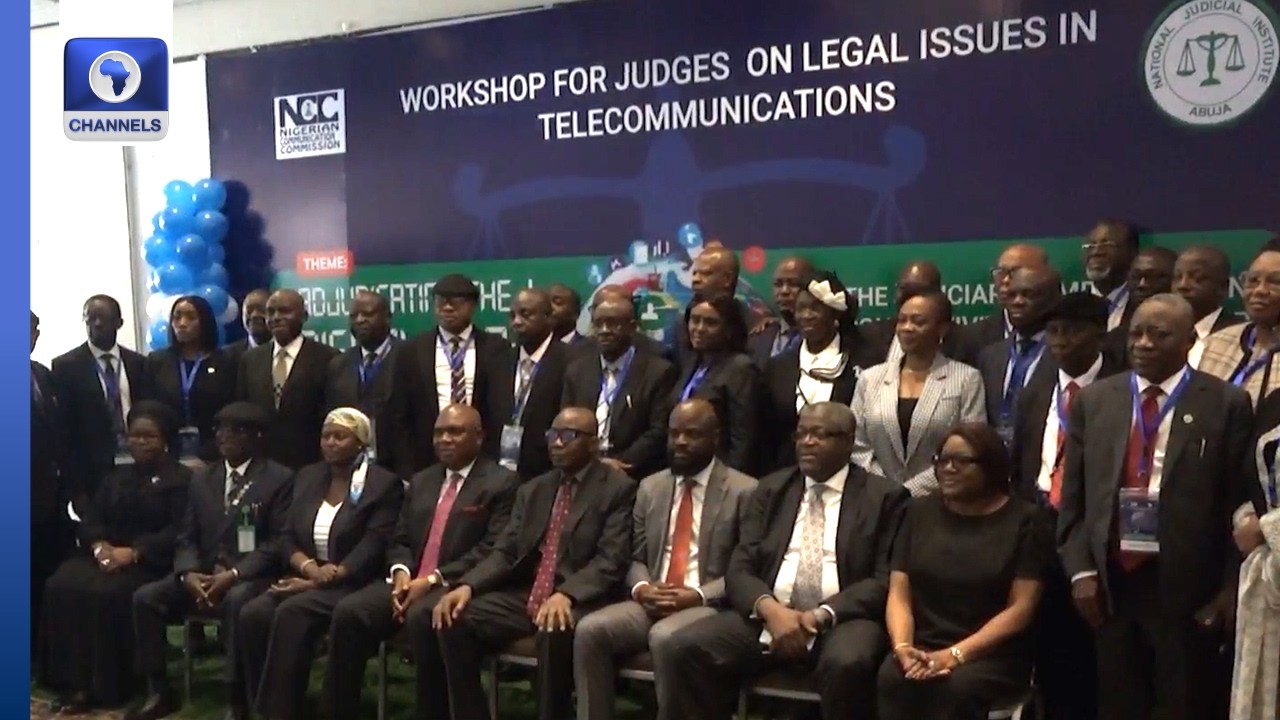
The Nigerian Communications Commission (NCC) has called on judges across the country to play a more proactive role in combating cybercrime and addressing the growing legal challenges associated with Nigeria’s rapidly expanding digital economy.
The Executive Vice Chairman and Chief Executive Officer of the NCC, Dr. Aminu Maida, made the call at the 2026 Workshop for Justices and Judges on Legal Issues in Telecommunications held in Lagos on Thursday.
The workshop, themed “Adjudicating in the Digital Era: The Judiciary’s Imperative in Connectivity, Infrastructure Protection and Online Safety,” brought together senior judicial officers, telecommunications regulators, security experts and industry stakeholders to examine emerging legal issues in the digital ecosystem.
Maida said the judiciary has become increasingly important in ensuring that technological innovation is supported by a robust legal framework capable of protecting critical infrastructure, safeguarding digital rights and addressing cyber-enabled crimes.
According to him, the rapid growth of Nigeria’s digital economy has created enormous opportunities for economic development while simultaneously exposing the country to rising cases of cybercrime, identity theft, misinformation, online fraud, data privacy breaches and attacks on telecommunications infrastructure.
He noted that internet usage in Nigeria continues to rise significantly, with data consumption reaching more than 1.42 million terabytes in March 2026, compared with 995,000 terabytes recorded in the corresponding period of 2025.
The NCC boss also disclosed that broadband penetration has increased from 47.7 per cent to 54.3 per cent within the past year, while telecommunications operators invested over $1 billion in network expansion during 2025 to improve connectivity and service quality nationwide.
Despite these gains, Maida warned that cybercriminals and vandals continue to target telecommunications infrastructure, threatening national security, economic activities and public safety.
He recalled that President Bola Ahmed Tinubu recently designated telecommunications infrastructure as Critical National Information Infrastructure (CNII), underscoring its strategic importance to the country’s digital transformation agenda.
“The telecommunications sector remains central to Nigeria’s digital transformation and economic growth. However, this progress also comes with significant risks that require stronger institutional collaboration and legal protection,” he said.
Maida urged judges to recognise their growing responsibility in interpreting laws, resolving disputes and establishing judicial precedents that will shape Nigeria’s response to evolving digital and cybersecurity challenges.
“My Lords, as judges, you are increasingly being called upon to interpret laws, adjudicate disputes and set precedents that will determine how these complex issues are resolved,” he stated.
He revealed that the Commission is collaborating with security agencies, telecommunications operators and other stakeholders to strengthen the protection of telecom infrastructure and combat criminal syndicates involved in equipment theft and sabotage.
The NCC, he added, has also deployed the Telecommunications Identity Risk Management System (TIRMS) to combat SIM-related fraud, identity theft and other cyber-enabled financial crimes.
According to Maida, the Commission has signed a Memorandum of Understanding with the Central Bank of Nigeria (CBN) to improve intelligence sharing and strengthen efforts to tackle electronic fraud linked to telecommunications services.
Speaking at the event, the Administrator of the National Judicial Institute (NJI), Justice B.A. Adejumo, described the judiciary as a vital institution in balancing constitutional freedoms with privacy, security and digital rights in an increasingly connected society.
He stressed that while digital technologies have transformed governance, commerce and communication, they have also created new legal and ethical challenges requiring informed judicial interpretation.
Adejumo called for closer collaboration between the judiciary, the NCC and other government institutions to address persistent issues such as fibre-optic vandalism, Over-the-Top (OTT) services, Internet of Things (IoT) technologies and the protection of critical digital infrastructure.


-

 Latest1 day ago
Pastor Chris Oyakhilome announces mother’s passing at 88 [VIDEO]
-

 Football5 days ago
Saka: England still carry World Cup scar
-

 Comments and Issues6 days ago
Sometimes, goodwill finds us through the people we love
-

 Latest3 days ago
Arsenal eye €70-80m move for Real Madrid star
-

 Business6 days ago
CBN reduces MPR by 350bps to 23% in major monetary policy shift
-

 Business1 week ago
Jetour takes T1 adventure SUV experience to Abuja, targets growing Nigerian market
-

 Football1 week ago
Nigeria vs Colombia: Falconets battle for U-20 World Cup semi-final ticket
-

 Latest2 days ago
How adulterated palm oil, coloured pepper are putting consumers at risk