
Business
NHIS board petitions Minister over ES’s financial recklessness

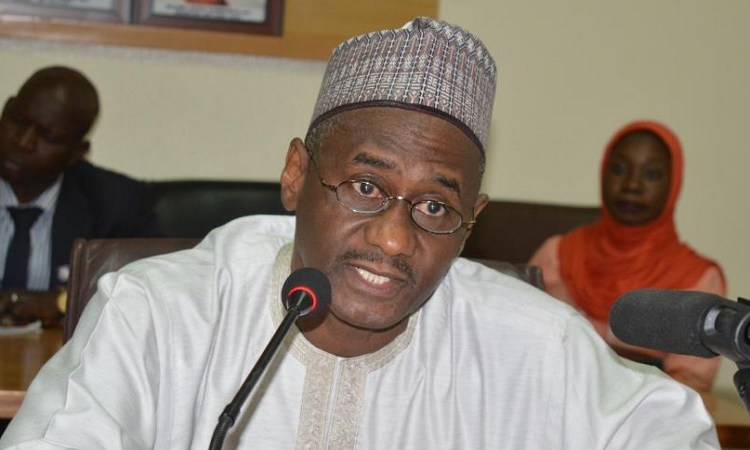
The Governing council of the National Health Insurance Scheme (NHIS), has petitioned the Minister of Health, Isaac Adewole over the financial recklessness of the Executive Secretary of the body, Usman Yusuf.
Recall that Yusuf was suspended by the Minister on July 6 over allegations of fraud levelled against him, but was later recalled by the presidency on July 29, 2016.
Since then he has been at loggerhead with members of the governing council, who accused him of running it into “ruin”.
The governing council in a letter addressed to the Minister of Health, Isaac Adewole, raised the alarm that unless an urgent intervention is done, the risk of the pending collapse “will have catastrophic consequence for the Buhari change mandate.”
The letter, signed by Enyantu Ifenna, chairman of the council, and dated August 8, raised various issues of concern, including “dwindling annual revenues”, “inefficient operations” and “alarming net operating cash position”.
The council said, for instance, that whereas the scheme’s total annual revenue should be on the increase, it has continued to decline since 2015, blaming this on “shortfalls in the remittance of enrollee’s contributions.”
It noted that the contributions the scheme is getting from the federal government enrollees reduced from N6 billion in 2017 to N4.2 billion in 2018 “whereas a recent forensic audit revealed that about N138 billion is currently trapped in commercial banks”.
It also expressed reservations with the scheme’s 2018 budget which it said does not conform to standard accounting practices, and is ruined with cases of alleged padding that would lead to the loss of N265 million, “arbitrary inclusion of $28 million” projects on information and communication technology and “disturbing budget deficit of N36 billion” (with projected expenditure of N80.8 billion when the projected revenue for the year [2018] Is N45 billion).
According to the board, the overall 2018 budget proposal was “skewed towards administrative costs in the headquarters to the detriment of field operations” and that “in fact, expenditure in zonal and sates offices is skeletal and for the most part token.”
The council said the NHIS is overstaffed – with 133 drivers at the moment – and that it has also been reeling from the effect of “punitive postings”.
It said the scheme’s administrative costs currently constitute 43.63% of revenue compared with 10% and 5% in Federal Inland Revenue Service and Tertiary Education Trust Fund respectively, adding that “ironically, NHIS has serious capacity gaps despite the overstaffing.”
The governing council further lamented that some of the scheme’s operations are inefficient and are eating deep into its accounts. It said while the act enabling the NHIS stipulates it is expected to cover its administrative costs from 10% of its revenues, factors such as “poor management decisions, overstaffing and frivolous expenditures” have pushed administrative costs to 43.63% of its entire revenue.


-

 Featured5 days ago
Inside INEC’s race to prepare for Nigeria’s 2027 elections
-

 Featured5 days ago
2027: APC unveils nationwide campaign timetable, Tinubu to rally in 12 states
-

 Latest1 week ago
UCTH faces morgue crisis as 50 unclaimed corpses await mass burial
-

 Business7 days ago
BREAKING: Nigeria’s Inflation Rate Drops to 14.63% in September
-

 Business6 days ago
President Tinubu and the Low Transport Fares Fiasco
-
 Business5 days ago
Court dismisses ₦170m Trade Fair contract claim, says Zenith Bank was not a party
-

 Business2 days ago
Naira faces exchange rate gap as Dollar hits N1,380 on parallel market
-

 Latest5 days ago
Breaking: NNPCL raises petrol price to ₦1,405 per litre amid discount controversy