
Business
Nigeria faces growing poverty burden despite global progress, experts warn

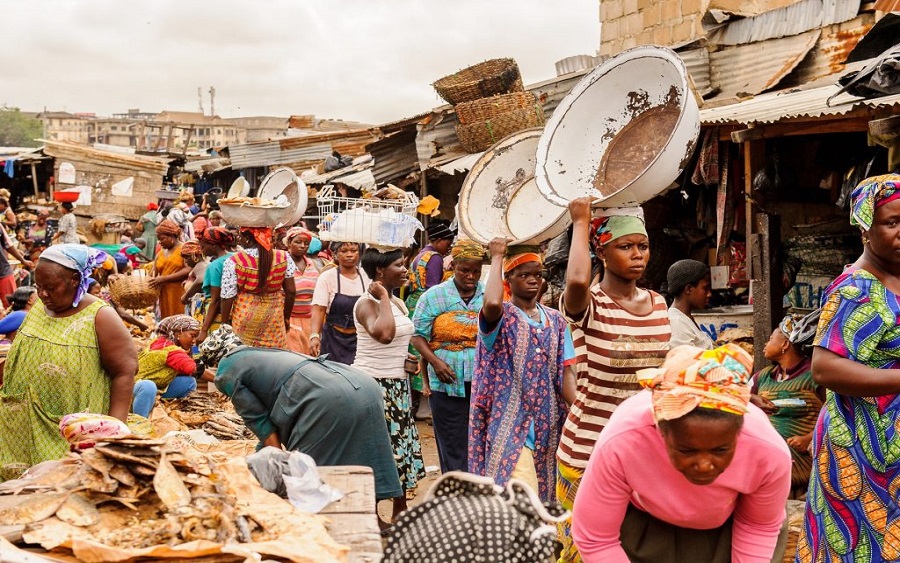
A new data-driven visual analysis tracking global extreme poverty trends over the past three decades has revealed a sharp contrast between countries that achieved major economic progress and nations still struggling with deepening hardship, with Nigeria emerging as one of the countries facing severe poverty challenges.
The visual presentation, which examined changing poverty levels across different regions of the world over time, highlighted how millions of people globally have escaped extreme poverty through industrialisation, improved governance, social investments, and economic reforms.
However, it also showed that several developing countries, particularly in sub-Saharan Africa, continue to battle rising poverty rates driven by population growth, inflation, unemployment, insecurity, and weak social protection systems.
According to figures referenced in the analysis, global extreme poverty rates have declined significantly since the early 1990s. The World Bank estimates that more than one billion people escaped extreme poverty between 1990 and 2019, largely due to rapid economic growth in parts of Asia, especially China and India.
However, the report noted that progress has been uneven, with countries affected by economic instability, conflict, weak infrastructure, and governance challenges continuing to record alarming poverty levels.
In Nigeria, economists say the poverty crisis has worsened in recent years as inflation, currency depreciation, unemployment, and rising food costs continue to erode household incomes.
Data from the National Bureau of Statistics previously showed that over 133 million Nigerians were living in multidimensional poverty, lacking access to adequate healthcare, education, clean water, sanitation, and decent living conditions.
The World Bank also projected that Nigeria accounts for one of the largest populations of extremely poor people globally, with millions surviving on less than the international poverty benchmark per day.
Economic analyst Bismarck Rewane said Nigeria’s poverty challenge cannot be separated from its weak productivity levels and heavy dependence on oil revenues.
“Countries that successfully reduced poverty invested heavily in manufacturing, education, technology, and job creation. Nigeria has struggled with structural issues that continue to limit inclusive growth,” he said.
READ ALSO: Outrage as FG moves to review politicians’ salaries amid widespread poverty
Another development economist, Muda Yusuf, noted that inflation remains one of the biggest threats to living standards in the country.
“When inflation rises faster than income, more people are pushed below the poverty line. Food inflation, transportation costs, and energy prices are hitting low-income households the hardest,” Yusuf explained.
The visual analysis also highlighted how population growth has influenced poverty statistics across Africa. Nigeria, now Africa’s most populous country with more than 220 million people, continues to face mounting pressure on infrastructure, healthcare, education, housing, and employment opportunities.
Development experts warned that without large-scale investments in human capital and economic diversification, poverty levels could continue to rise despite government intervention programmes.
Public policy analyst Jide Ojo said tackling poverty requires long-term planning and accountability.
“Poverty reduction is not just about distributing palliatives. It involves creating sustainable opportunities, improving governance, supporting small businesses, and investing in security and education,” he said.
The video presentation further illustrated how some countries that once battled widespread poverty managed to record dramatic improvements through export-driven growth, industrial expansion, and targeted social welfare programmes.
Experts say the contrast serves as both a warning and a lesson for Nigeria and other developing economies seeking long-term economic stability.
Despite the grim statistics, analysts maintain that Nigeria possesses significant economic potential due to its large population, natural resources, entrepreneurial sector, and expanding technology industry.
However, they stressed that sustained reforms, policy consistency, and investment in critical sectors would determine whether the country can reverse current poverty trends in the coming years.
The visual report concludes by showing that while humanity has made historic progress in reducing extreme poverty globally, millions of people — particularly in vulnerable economies — remain trapped in difficult living conditions, underlining the urgent need for inclusive economic growth and stronger social protection policies.


-

 Latest5 days ago
Full List: Meet the 2026 Nobel Prize winners across six categories
-

 Football5 days ago
Premier League Matchweek 7: Five Fixtures That Could Shape the Weekend
-

 Latest4 days ago
Umahi defends Lagos-Calabar highway route changes amid public outcry
-

 Business4 days ago
Dangote Refinery IPO: 70% Subscription claim meets fourfold demand assertion as investors seek clarity
-
Business4 days ago
Dangote Refinery IPO Extension: Was the 70% subscription report overhyped?
-

 Latest2 days ago
UCTH faces morgue crisis as 50 unclaimed corpses await mass burial
-

 Featured4 days ago
El-Rufai, ADC governorship candidate’s court appearance puts Kaduna opposition politics in focus
-
 Business2 days ago
BREAKING: Nigeria’s Inflation Rate Drops to 14.63% in September