
Business
Nigeria: Investors count losses as All-Share Index continue to plunge

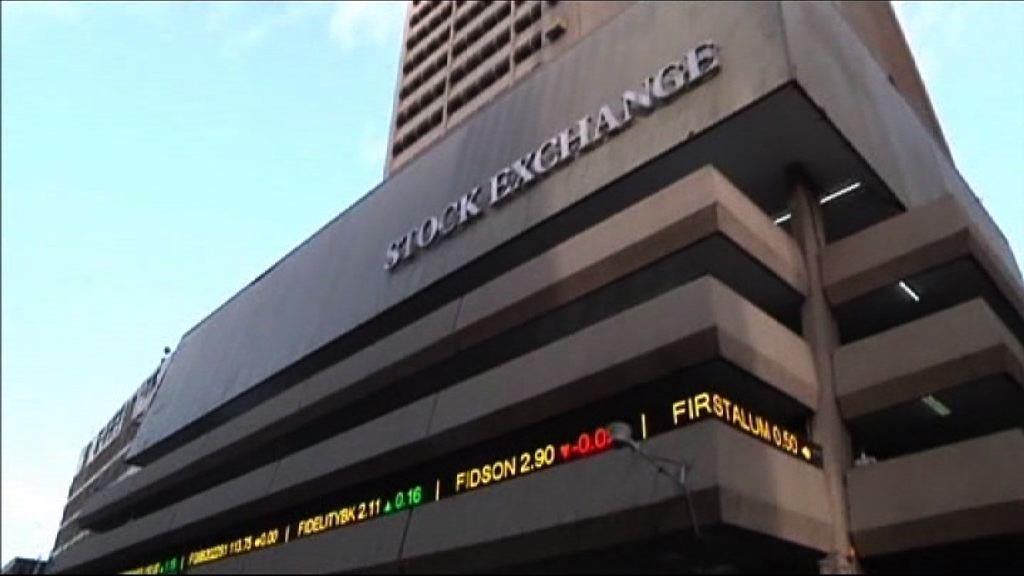
A review of market performance last week showed that investors wealth plunged further by 2.5 per cent, a development, which is currently constraining efforts to restore confidence in the nation’s bourse.
For instance, at the close of transactions last week Monday, the bears strengthened their grip, as the All-Share Index (ASI) plunged further by 0.9 per cent despite improved corporate performances.
The market depreciated by 287.85 absolute points, representing a dip of 0.90 per cent, closing at 36,232.66 points, while the market capitalisation decreased by N107 billion, closing at N11.798 trillion.
The downturn was impacted by losses recorded in medium and large capitalised stocks like Nestle Nigeria, Okomu Oil, Lafarge Africa, International Breweries and Ecobank Transnational Inc. (ETI).
On Tuesday, the losing momentum worsened with the composite All-Share Index consolidating five consecutive losing streak, as market capitalisation slumped further by N121 billion.
ASI declined by 323.30 absolute points, representing a decrease of 1.02 per cent, to close at 31,313.36 points. Similarly, market capitalisation shed N121 billion, to close at N11.677 trillion.
This time, the downturn was impacted by losses recorded in medium and large capitalised stocks like Mobil Nigeria, International Breweries, Guaranty Trust Bank, NASCON Allied Industries and Dangote Cement.
Furthermore, at close of transactions on Thursday, sell pressure in some blue chip stocks, especially Learn Africa and Transcorp Hotel, dragged market capitalisation by N56 billion.
ASI was down by 149.49 absolute points, representing an increase of 0.48 per cent, to close at 31,210.79 points, while market capitalisation decreased by N56 billion to close at N11.639 trillion.
The downturn was caused by majority of the same group of large and medium capitalised stocks like Nestle Nigeria, Dangote Cement, Transcorp Hotel, Eterna and Guaranty Trust Bank.
Analysts, at the weekend, attributed the lull to low liquidity, mixed earnings and outcome of the just concluded general elections, which observers say have come below expectations.
The Chief Research Officer of Investdata Consulting, Ambrose Omodion, said: “The prevailing negative sentiments started again after the 2018 lull situation that extended to early January, but reversed on inflow from smart money that took position ahead of the presidential polls, which outcome was against their expectation.
“This triggered their quick exit as reflected in the average traded volume and money flow index that have been declining since the re-election of President Muhammadu Buhari, despite the ongoing earnings season.
“One cannot also, ignores the expiration of Central Bank of Nigeria Governor, Godwin Emefiele on June 3, as investors are anxious to know who the replacement could likely be.”


-

 Football7 days ago
Banda, Chawinga make 2026 Women’s Ballon d’Or top 30 shortlist
-

 Featured7 days ago
Peter Obi, Makinde and the 2027 elections: Can unity really challenge APC?
-

 Trending Stories5 days ago
Davido, Wizkid, Burna Boy or Asake: Who is having the biggest 2026 so far?
-

 Business1 week ago
Nigeria records N12.59trn trade surplus in Q2 2026 — NBS
-
 Football5 days ago
Premier League releases 2026/27 festive fixtures, 7 matches set for Boxing Day
-

 Business3 days ago
Jetour Nigeria, dealers take dashing, other models to Abuja Experience
-

 Business4 days ago
Dangote Refinery IPO shifts spotlight to corporate governance, investor protection
-

 Crime4 days ago
Anambra Police arrest mother over alleged child sexual exploitation