
News
Oyo Assembly passes rotational leadership bill for council of Obas and Chiefs
Rahman criticized the process, stating that the committee failed to conduct public hearings or consult stakeholders from Oyo, thereby neglecting the historical significance of the Alaafin’s role.”

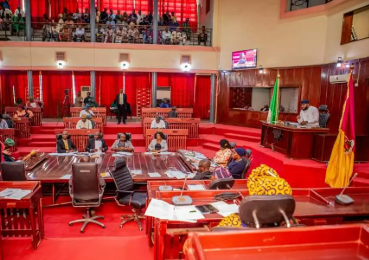
The Oyo State House of Assembly has passed a landmark bill instituting a rotational leadership system for the state’s Council of Obas and Chiefs, signaling a significant shift in traditional governance.
Under the new law, the chairmanship of the council will now alternate every two years among the Alaafin of Oyo, the Olubadan of Ibadanland, and the Soun of Ogbomosoland.
This legislative action, intended to promote inclusivity and balanced representation within the traditional leadership structure, comes after intense debates and notable opposition, particularly from representatives of Oyo town.
During Tuesday’s plenary session, two lawmakers, Olorunpoto Rahman (Oyo East) and Gbenga Oyekola (Atiba), staged a walkout in protest.
Rahman sharply criticized the process, alleging that the committee failed to conduct public hearings or consult stakeholders from Oyo, thereby neglecting the historical significance of the Alaafin’s traditional role.
“Rahman criticized the process, stating that the committee failed to conduct public hearings or consult stakeholders from Oyo, thereby neglecting the historical significance of the Alaafin’s role.”
The passage of the bill follows earlier proposals to make the Alaafin the permanent chairman of the Council, which had faced considerable backlash from traditional leaders and communities in Ibadan land and Ogbomosho land.
ALSO READ : TCN announces planned power outage in Ibadan for transformer integration
These groups had argued that a permanent chairmanship would marginalize other significant monarchs and disrupt the established balance of traditional authority within the state.
In addition to the rotational chairmanship, the Assembly has also expanded the Council’s membership from 35 to 41, incorporating more traditional rulers from various regions to further enhance inclusivity.
The new structure also introduces deputy and vice-chairmanship positions, aimed at further distributing leadership roles within the Council.
While these legislative changes are designed to foster unity among Oyo State’s traditional rulers and ensure broader representation, the visible dissent from representatives of Oyo town suggests that debates over historical precedence and traditional authority may continue in the state.











-

 Latest1 week ago
Full List: Meet the 2026 Nobel Prize winners across six categories
-

 Football7 days ago
Premier League Matchweek 7: Five Fixtures That Could Shape the Weekend
-

 Business5 days ago
Dangote Refinery IPO: 70% Subscription claim meets fourfold demand assertion as investors seek clarity
-

 Latest6 days ago
Umahi defends Lagos-Calabar highway route changes amid public outcry
-
Business6 days ago
Dangote Refinery IPO Extension: Was the 70% subscription report overhyped?
-

 Latest4 days ago
UCTH faces morgue crisis as 50 unclaimed corpses await mass burial
-

 Business4 days ago
BREAKING: Nigeria’s Inflation Rate Drops to 14.63% in September
-

 Featured6 days ago
El-Rufai, ADC governorship candidate’s court appearance puts Kaduna opposition politics in focus