
News
Recession: Not too late to take urgent measures, SERAP tells Buhari

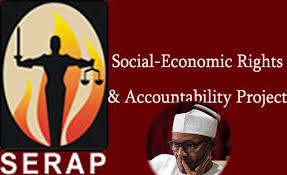
Socio-Economic Rights and Accountability Project (SERAP) says Nigeria’s present economic crisis provides opportunity for the President Muhammadu Buhari-led administration to prioritise access of poor and vulnerable Nigerians to basic socio-economic rights, and a genuine fight against corruption.
This is coming after the National Bureau of Statistics, NBS has confirmed that Nigeria’s economy has slipped into another recession, the second time since 2016.
In an open letter to President Buhari dated 21 November 2020 signed by SERAP’s Deputy Director, Kolawole Oluwadare, it urged President Muhammadu Buhari to cut the cost of governance and implement bold transparency and accountability measures in his government’s response to Nigeria’s second recession in five years.
The organization also urged the federal government to increase investment in public health, the healthcare system, education services, provision of clean water and other basic public goods and services that will benefit the majority of the population.
“Decades of mismanagement and corruption, and deep-seated deficiencies in public financial management have directly contributed to higher levels of borrowing and public debts, and consequently, the economic recession. Successive governments have squandered the promise afforded by the country’s natural wealth and resources.”
“The country’s resources appear to have been used almost exclusively for the benefit of the political elites rather than on projects that would ensure the right to an adequate standard of living, the maximum welfare, prosperity, freedom and happiness of every citizen on the basis of social justice and equality.”
SERAP said the country has been poorly governed for many years, with systemic and widespread corruption at all levels of government, contributing to failures by successive governments to deliver essential public goods and services to Nigerians, contrary to the country’s constitution and human rights and anti-corruption obligations.
“Prioritizing the human rights of poor and vulnerable Nigerians means providing public goods and services free of charge for those who cannot afford them. This is the time to prioritise poor and vulnerable Nigerians, and to ensure that any response to the recession goes well beyond bailing out large companies and banks.”
“As the National Bureau of Statistics stated, the country’s GDP recorded a negative growth of 3.62 per cent in the third quarter of 2020. The country had earlier recorded a 6.10 per cent contraction in the second quarter.”


-

 Football1 week ago
Premier League Matchweek 7: Five Fixtures That Could Shape the Weekend
-
 Business6 days ago
Dangote Refinery IPO: 70% Subscription claim meets fourfold demand assertion as investors seek clarity
-
 Latest1 week ago
Umahi defends Lagos-Calabar highway route changes amid public outcry
-
Business1 week ago
Dangote Refinery IPO Extension: Was the 70% subscription report overhyped?
-
 Featured3 days ago
Inside INEC’s race to prepare for Nigeria’s 2027 elections
-
 Latest5 days ago
UCTH faces morgue crisis as 50 unclaimed corpses await mass burial
-
 Business5 days ago
BREAKING: Nigeria’s Inflation Rate Drops to 14.63% in September
-
 Featured1 week ago
El-Rufai, ADC governorship candidate’s court appearance puts Kaduna opposition politics in focus