
Health & Fitness
Researchers identify ‘improbably high rate of deaths’ in newborns who received new RSV shot

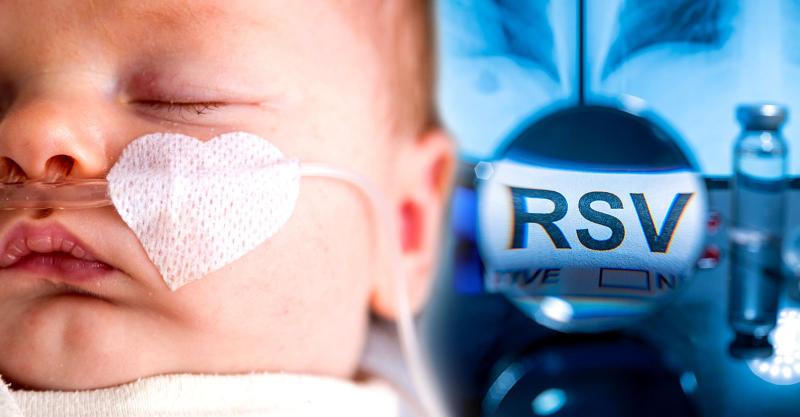
Independent French researchers discovered a significant increase in newborn deaths in France coinciding with the rollout of Beyfortus, a new respiratory syncytial virus shot for infants.
The researchers identified possible safety signals in babies coinciding with the rollout of Beyfortus, a recently approved monoclonal antibody treatment for respiratory syncytial virus (RSV) in newborns.
The discovery comes as public health authorities’ ramp up warnings about the spread of respiratory viruses and step up their promotion of the drug.
French independent scientist and author Hélène Banoun, Ph.D., and French statistician Christine Mackoi — explained that data from France’s National Institute of Statistics and Economic Studies (INSEE) indicates an improbably high rate of deaths of babies between 2 and 6 days old in France during September and October 2023.
READ ALSO: Adjuvants in COVID vaccines may lead to serious respiratory disease –experts
This increase, the researchers said, coincides with the introduction of Beyfortus in French hospitals, which began on Sept. 15, 2023. In an interview with cardiologist Peter McCullough, M.D., MPH, Banoun said that over 200,000 newborn babies in France have been injected with Beyfortus since that date.
The Centers for Disease Control and Prevention (CDC) recommended Beyfortus in August 2023, while the European Medicines Agency (EMA) authorized the drug in September 2022.
The drug is offered as a “one-time shot for infants born just before or during the RSV season and for those less than 8 months old before the season starts,” and for some high-risk 8- to 19-month-old infants.
READ ALSO: How Pfizer, Moderna control COVID-19 vaccine narratives, influence health policy
According to The Associated Press, “In the U.S., about 58,000 children younger than 5 are hospitalized for RSV each year and several hundred die.” CNBC reported that “RSV is the leading cause of hospitalization among infants in the U.S.” According to the CDC, nearly all children are infected with RSV before the age of 2.
But the French researchers and other medical experts warned that no long-term studies have been conducted involving Beyfortus and newborns and that the administration of monoclonal antibodies on this population is unprecedented. They also pointed to data indicating RSV’s low risk to babies.
Dr. Meryl Nass, an internist, biological warfare epidemiologist and member of the Children’s Health Defense (CHD) scientific advisory committee, told The Defender, “Giving newborns any drug or biologic should be done with extreme caution, let alone a novel, injected monoclonal antibody. You cannot tell if the infant is damaged by the shot, when you don’t yet know how healthy the newborn is and how it normally behaves. This should be a huge red flag for manufacturers as well as parents.”
According to Banoun, “The French government is recommending that Beyfortus be injected into newborns before they leave the maternity ward, from Sept. 15, 2023, even though the product has not been tested on this age group,” Banoun said.









-

 Latest6 days ago
US Immigration fees rise from October 16 as USCIS announces new charges
-
 Latest2 days ago
Israel marks 3 years since October 7 Hamas attack amid Gaza strikes, election debate
-

 Business6 days ago
Nigeria’s $55bn reserves raise fresh questions over naira value
-

 Health6 days ago
Florida sues Pfizer over deceptive COVID-19 vaccine marketing
-

 Business1 week ago
Tuoyo Erikowa wins digital marketing personality of the Year at 2026 EDGE awards
-

 Crime6 days ago
From camp to captivity: How kidnappers now target NYSC Corps members on highways
-

 Featured6 days ago
2027: Can Nigeria’s opposition still unite behind a single presidential candidate?
-

 Crime5 days ago
Fulani Militia leader linked to Christian killings arrested in Plateau