
Business
Stakeholders calls for new business model in palm oil production in Africa


Key players and stakeholders in the continent’s palm oil industry have resolved that in other to increase the production of palm oil in Africa, there is need for member countries, companies in palm oil production to convert their business operating models from import base to export base services so as to meet up with the increasing demands of the palm oil value chain.
This was decided at the third sustainable palm oil conference during a roundtable on sustainable palm oil (RSPO) and proforest, held in Lagos.
Palm oil production in Africa is carried out by 70 percent of smallholder farmers but a shortfall of 30 percent output is realised from the overall production due to lack of support from relevant authorities.
Speaking at the conference, Godwin Obaseki, governor of Edo state, urged delegates to be totally committed towards the production of the produce to make it a sustainable venture.
He said, “If you are not part of the solution, then you are part of the problem. Let me congratulate all of you here today, for demonstrating your commitment to a solution, it is in the interest of all of us in Africa to make sustainable palm oil the norm.”
For centuries, palm oil has been a veritable household name in the country and now that economies are looking inward on how to boost its GDP, Africa cannot afford to neglect the palm oil sector.
Salahudin Yaacob, assurance director, RSPO called on member countries and delegates to focus on the sustainable path of palm oil production.
He said, “RSPO can only achieve its vision of transforming markets to make sustainable palm oil through collaboration with all the stakeholders from growers to governments and financial institution to NGOs.”
Abraham Baffoe, Africa regional director, Proforest, reiterated the group’s commitment on sustainable environment for the palm oil industry.
He said, “a sustainable oil palm industry in Africa is something we are deeply committed to – and it is wonderful to have so much interest from companies and other stakeholders. We look forward to seeing these connections deepen as a result of this conference, as we all work together towards an industry which contributes to the economic development of African countries, whilst preserving the crucially important biodiversity of the region.”
Not only did the body focused on turning around the fortune of the palm oil industry in the continent, it has included strategies to improve soil quality in boosting the yield of the produce during its forthcoming general assembly in November as well setting up standard remuneration of Smallholders farmers called; Decent Living Wage Guidance.
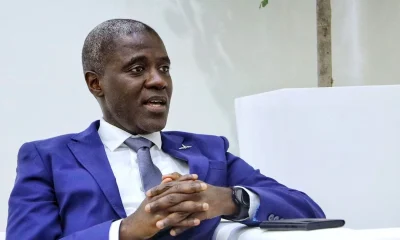
Addressing this was Robert Fagans, deputy minister for Agriculture, Liberia.
He said, “Working with smallholders to improve their yields through sustainable farming methods is critical for palm oil growth in Liberia.


-
 Featured1 week ago
Tinubu’s Renewed Hope: Reforms, hardship and the unanswered question of a second term
-

 Featured1 week ago
The cost of Renewed Hope: How Nigeria’s economic reforms are reshaping everyday family life
-

 Crime4 days ago
Kwara bandit deal under scrutiny as footage shows security operatives negotiating with terrorists [VIDEO]
-

 Business1 week ago
CBN forex reforms under scrutiny as Nigeria’s reserves drop $300m in 10 days
-
 Business1 week ago
NCC plans spectrum incentives to push telecom operators into more network investment
-

 Entertainment6 days ago
2027 Grammys: Asake, Wizkid, Tems, Ayra Starr lead Nigerian nominees in African music category
-

 Latest1 week ago
Nigeria’s security crisis deepens as October death toll hits 835, highest in 2026
-

 Sports1 week ago
Kenya’s Timothy Kibii wins Port Harcourt International Marathon