
Business
Think Tank calls for urgent amendments to Petroleum Industry Act as revenues plunge

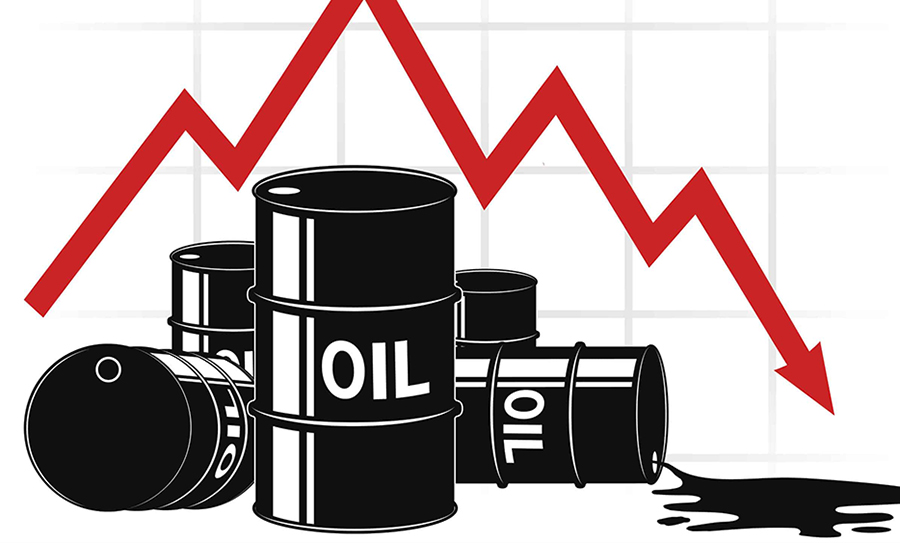
Agora Policy, an Abuja-based think tank, has raised alarms over the significant drop in petroleum sector revenues following two years of implementing the Petroleum Industry Act (PIA).
The think tank’s report reveals that the Federation has received far less revenue from the sector compared to the period before the law was enacted, despite the PIA’s initial goals of attracting investment, enhancing regulation, and boosting government earnings.
The PIA, which was signed into law by former President Muhammadu Buhari on August 16, 2021, was designed to overhaul Nigeria’s petroleum sector. It aimed to modernize the regulatory framework and drive foreign investment.
However, Agora Policy’s recent policy note indicates that these ambitions have fallen short.
“After two years of PIA implementation, the Federation has received significantly lower revenues from the petroleum sector compared to the period before the law. This
One of the major issues highlighted is the Nigerian National Petroleum Company Limited’s (NNPCL) interpretation of key sections of the PIA, which Agora Policy believes has contributed to the shortfall in revenue.
The NNPCL, under the PIA, assumed ownership of the Federation’s equity stakes in joint venture (JV) assets. However, dividends paid to the Federation from these JV assets have been meager.
READ ALSO: Secret Investment: How much is NNPCL’s money in Dangote Refinery?
In 2021, the last full year before the PIA’s implementation, the Federation received $10.65 billion from JV crude oil sales and an additional $1.252 billion from JV gas and feedstock sales, totaling $11.902 billion.
In stark contrast, during 2023, the first full year under the PIA, the Federation received only $399,000 from JV crude oil sales, $701.287 million from gas sales, and $1.13 billion in dividends from NNPCL—a total of just $1.833 billion.
“This represents a drastic reduction in revenues, underscoring how the Federation has not materially benefited from the new arrangement governing its JV assets under the PIA,” Agora Policy emphasized.
The report further points to troubling trends in Production Sharing Contracts (PSCs), where NNPCL’s interpretation of the PIA has allowed it to deduct 60% of profits—30% for management fees and another 30% for the frontier exploration fund—leaving the Federation with only 40% of profits. Even this share, the report notes, was not always remitted on time.
Agora Policy also questioned the fairness of this arrangement, which effectively limits the Federation—the actual owner of the assets—to only 40% of the profits, with many months seeing no payments at all.
The think tank has called for an immediate review and amendment of the PIA to reverse these trends and ensure that the Federation gains more equitable revenues from its petroleum resources.


-

 Featured5 days ago
Inside INEC’s race to prepare for Nigeria’s 2027 elections
-

 Featured5 days ago
2027: APC unveils nationwide campaign timetable, Tinubu to rally in 12 states
-

 Latest1 week ago
UCTH faces morgue crisis as 50 unclaimed corpses await mass burial
-

 Business7 days ago
President Tinubu and the Low Transport Fares Fiasco
-

 Business1 week ago
BREAKING: Nigeria’s Inflation Rate Drops to 14.63% in September
-
 Business5 days ago
Court dismisses ₦170m Trade Fair contract claim, says Zenith Bank was not a party
-

 Business3 days ago
Naira faces exchange rate gap as Dollar hits N1,380 on parallel market
-

 Latest7 days ago
Global excitement builds as Healing Streams Live Services returns October 23