
Latest
Tinubu’s economic reforms: Between global praise and citizens’ distrust

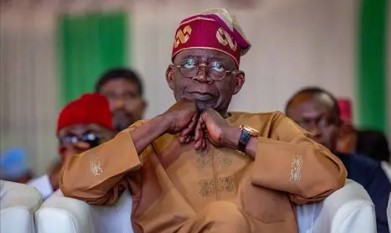
Since assuming office, President Bola Ahmed Tinubu has projected an image of bold reform, with his administration rolling out sweeping economic policies that have received commendation from global financial institutions.
Yet, behind the optimism and optics, Nigerians continue to grapple with doubts over transparency, accountability, and the widening gap between government promises and citizens’ lived realities.
From the outset, Tinubu made the removal of the fuel subsidy a cornerstone of his administration, ending a policy widely regarded as a drainpipe of corruption.
This decision deregulated the downstream petroleum sector, attracting private players, improving product supply, and increasing state revenue allocations.
Similarly, the liberalisation of the foreign exchange market sought to eliminate arbitrage and corruption, even though it triggered a steep devaluation of the naira.
The government has also championed ambitious infrastructure projects, including the Lagos-Calabar Coastal Highway and the Badagry-Sokoto Expressway, touted as drivers of social and economic growth.
Coupled with efforts to rebase Nigeria’s GDP and CPI, these moves are designed to provide more accurate data for inclusive development. Internationally, Tinubu has travelled widely to woo investors, with leaders from the IMF, World Bank, and other global partners applauding Nigeria’s reform agenda.
In the oil sector, increased security in the Niger Delta has boosted production, stabilising forex reserves and strengthening the naira. Tax reforms, too, are projected to bolster fiscal balance and long-term stability.
On paper, these policies signal a deliberate attempt to undo the economic damage of past administrations, particularly under the late Muhammadu Buhari, whose tenure has been widely criticised for mismanagement.
However, despite the gains, many Nigerians question the sincerity of the reforms. Fiscal policy remains clouded in opacity, with budget cycles repeatedly extended and quarterly performance reports withheld—violations flagged by civic-tech watchdog BudgIT as breaches of the Fiscal Responsibility Act.
The awarding of contracts for high-profile projects has also bypassed due process, undermining the government’s anti-corruption stance.
READ ALSO: New Five Percent Fuel Tax: Another in Tinubu’s fleet of indecent proposals
Concerns over budget padding persist, with the 2025 budget reportedly inflated with questionable projects tied to irrelevant agencies. At the same time, political elites remain shielded from the hardship ordinary Nigerians face.
Extravagant displays of wealth by ministers and the president’s own decisions—such as expanding his fleet of official vehicles and acquiring a new presidential jet—have drawn sharp criticism for being poorly timed amid economic fragility.
The administration is also under fire for its lopsided appointments favouring the South-West, which many argue undermines the federal character principle and deepens ethnic divides. Citizens further lament rising intolerance of opposition, suppression of protests, and selective enforcement of the law, with close allies of the president seen as untouchable even when they flout regulations.
Analysts say that while Tinubu’s reforms hold potential to stabilise the economy and spur growth, their success hinges on transparency, accountability, and empathy for citizens’ struggles. Without these, the reforms risk becoming hollow exercises that alienate the very people they are meant to uplift.
Governance, critics argue, is not about glossy reports or international applause but about the affordability of food, healthcare, transport, and education for everyday Nigerians. For Tinubu’s “Renewed Hope” agenda to resonate, his government must move beyond optics and embrace sincerity, fairness, and shared sacrifice.


-
 Featured6 days ago
Inside INEC’s race to prepare for Nigeria’s 2027 elections
-
 Latest1 week ago
Global excitement builds as Healing Streams Live Services returns October 23
-
 Featured6 days ago
2027: APC unveils nationwide campaign timetable, Tinubu to rally in 12 states
-

 Business1 week ago
President Tinubu and the Low Transport Fares Fiasco
-
 Business3 days ago
Naira faces exchange rate gap as Dollar hits N1,380 on parallel market
-
 Business6 days ago
Court dismisses ₦170m Trade Fair contract claim, says Zenith Bank was not a party
-
 Latest6 days ago
Breaking: NNPCL raises petrol price to ₦1,405 per litre amid discount controversy
-
 Business1 week ago
Rite Foods targets beverage market growth with LIDA Malt