
Features
Trump’s Gambit: The Iran war, oil and the shadow of China

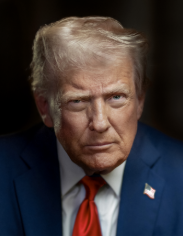
From Venezuela’s oil fields to Iran’s strategic Kharg Island, Donald Trump’s foreign policy has placed energy at the centre of a widening confrontation. But behind the battlefield lies a larger question: is the struggle over Iran also part of Washington’s long-running competition with China and could the cost of the war shape the political battle at home?
The war against Iran was presented as a confrontation with Tehran. But as the conflict widened, its consequences began reaching far beyond the Middle East into oil markets, shipping routes, the strategic competition between the United States and China, and increasingly, American domestic politics.
That has raised broader questions about President Donald Trump’s strategy: was Iran the ultimate target, or part of a larger effort to reshape the global balance of energy and power?
The answer remains contested. There is no publicly established evidence that the war was launched primarily as a campaign against China. But the sequence of events from the U.S. operation that captured Venezuelan leader Nicolás Maduro to Washington’s growing focus on Iranian oil infrastructure has placed energy security at the centre of the debate.
In January, U.S. forces carried out a military operation in Venezuela that resulted in Maduro’s capture. Trump subsequently said Washington would play a central role in the country’s transition and expressed interest in developing its vast oil reserves with American companies.
Months later, the administration’s confrontation with Iran brought another major energy producer into the centre of a military crisis.
The strategic value of Kharg Island
The heavily protected island is a critical hub for Iran’s oil industry, handling the overwhelming majority of the country’s crude exports. During the conflict, Trump publicly threatened to take control of Kharg Island and other Iranian oil infrastructure, comparing his plans to the U.S. approach in Venezuela.
The United States later confirmed airstrikes on military targets on the island. Trump said the strikes had targeted military facilities and that the oil infrastructure had not been destroyed at that stage.
For Iran, Kharg represents more than an economic asset. Any prolonged disruption to its operations could affect government revenues, regional energy supplies and global oil prices.
For the United States, the island’s importance also highlights a larger strategic reality: control over energy infrastructure can have consequences far beyond the country where it is located.
China is one of the world’s largest energy consumers and has developed deep commercial ties with oil-producing states facing Western sanctions, including Iran and Venezuela.
That connection has fuelled arguments that Washington’s actions against major oil producers could also affect Beijing’s long-term energy security.
But the conflict should not be reduced to a single explanation.
The United States has publicly cited a range of objectives in its confrontation with Iran, including concerns about its military capabilities, regional security and the protection of shipping through the Strait of Hormuz.
Still, energy remains an unavoidable part of the equation.
A disruption to Iranian exports, instability around the Strait of Hormuz or greater U.S. influence over Venezuelan oil could reshape the calculations of countries that depend heavily on imported energy including China.
The question, therefore, is not necessarily whether the war was about China, but whether the confrontation could produce strategic consequences that extend into the U.S.-China rivalry.
The war comes home
The geopolitical calculations are unfolding against another pressure point: the U.S. midterm elections.
Foreign policy has historically played a secondary role in many midterm contests, where inflation, jobs and household costs often dominate voters’ concerns. But the Iran conflict has become harder to separate from those domestic issues as the war affects energy prices, shipping costs and wider concerns about the cost of living.
Recent polling has shown significant public concern about the conflict, although views vary sharply along political lines. A Pew Research Center survey conducted in late September and early October found that 65% of Americans disapproved of Trump’s handling of the military action in Iran, while 33% approved. The survey also found that a majority expected the conflict to continue for at least another six months.
Other surveys have pointed to a broader political challenge: voters may not see the Iran war as their single most important issue, but foreign policy can become more politically significant when it affects household finances. Rising fuel prices, higher shipping costs or prolonged economic uncertainty could make the consequences of the conflict part of a wider debate about the cost of living.
The political effect, however, remains uncertain. Midterm elections are shaped by a combination of national and local issues, including the economy, immigration and voters’ assessments of Congress and the president. A single foreign policy crisis does not automatically determine an electoral outcome.
The timing and direction of the conflict could nevertheless influence the political environment. A reduction in fighting or a clearly defined outcome could strengthen the administration’s argument that its strategy has improved American security. A prolonged war, particularly one accompanied by higher economic costs or an expanded U.S. military commitment, could intensify criticism and add to existing voter concerns.
For Trump and his Republican allies, the challenge is to demonstrate that the strategy serves American security interests without creating costs that overshadow its intended gains. Democrats, meanwhile, are likely to scrutinise the duration, cost and consequences of the conflict.
Neither argument alone will determine the election. But the longer the conflict continues and the more directly its economic consequences are felt at home, the more likely foreign policy is to become part of the broader political environment shaping the midterms.
Iran’s long preparation
If Washington expected a short and decisive campaign, the conflict has demonstrated the difficulty of confronting a country that has spent decades preparing for the possibility of military confrontation.
Iran has invested heavily in missiles, drones, dispersed military infrastructure and the ability to threaten shipping and regional adversaries. Despite extensive military pressure, Tehran has retained the capacity to strike targets across the region and create wider disruption.
That resilience has complicated calculations about what military force can achieve.
Airstrikes can damage infrastructure and weaken military capabilities. They may not, however, eliminate a country’s ability to retaliate or guarantee the political outcome sought by those conducting the campaign.
Iran’s leadership has continued to warn that any renewed attack would draw a response beyond its borders, underscoring the risk that a conflict intended to contain Tehran could instead widen across the region.
A gamble with global consequences
Trump’s approach has linked military power with an unusually direct focus on strategic resources.
In Venezuela, the capture of Maduro was followed by renewed American interest in the country’s oil industry. In Iran, Kharg Island and the wider oil infrastructure became part of the military and political calculations surrounding the conflict.
The two cases are different, and there is no evidence that they form a single, publicly declared campaign against China.
Yet together, they illustrate a broader reality: in a world where energy remains tied to national power, military conflict over one country can affect strategic competition far beyond its borders.
That is the gamble at the heart of Trump’s approach.
A campaign designed to weaken Iran could reshape energy markets. Greater American influence over Venezuelan oil could alter commercial relationships. And prolonged instability in the Middle East could test the energy security of economies thousands of kilometres away.
At home, the same strategy faces a separate test. Its political consequences may depend not only on developments on the battlefield, but also on whether Americans experience the effects of the conflict through higher costs, a prolonged military commitment or a sense of improved security.
Whether Trump’s gamble ultimately changes the balance of power abroad or politically at home remains uncertain.
But the conflict has already demonstrated one thing: a war that begins with Iran does not necessarily end at Iran’s borders.


-

 Featured1 week ago
BREAKING NEWS: Shouts of joy rock the world as Pastor Chris opens final Healing Streams edition for 2026
-

 Business1 week ago
How Ethiopian Airlines is challenging Africa’s aviation narrative through self-reliance
-
 Sports1 day ago
Senegal opens Dakar 2026 Youth Olympic Games, Africa’s first Olympic event
-
 Latest4 days ago
Tinubu endorses Nigeria’s participation in 2026 World Travel Market London
-

 Latest7 days ago
Pastor Chris to lead special family prayers as Healing Streams grand finale holds today
-
 Crime6 days ago
Passengers feared abducted on Kebbi-Abuja journey as viral video shows armed men threatening captives (VIDEO)
-
 Featured7 days ago
Kaduna APC rally sparks row over turnout, alleged rented crowd and AI disinformation
-

 News6 days ago
Rugby: Borthwick Faces Key Selection Questions as World Cup Looms