
Maritime
Key highlights of new Customs Bill


Many will continue to wonder if the ongoing feud between the current Comptroller-General, Hammed Ibrahim Ali and the Senate played a major role in the new Nigeria Customs Service Management Act, especially those related to appointment of a new Comptroller-General.
However, National Daily findings revealed that majority of the clauses seem to affect the daily administration and business practices of the NCS in a positive manner.
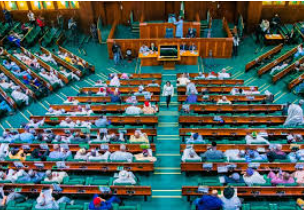
Recall that on May 31, the Senate passed the Repeal and Re-enactment Bill, 2017 of the Nigeria Customs Service Management Act. This followed the clause-by-clause consideration and discussion on a report submitted by the Senate Committee on Customs and Excise through its Chairman, Senator Hope Uzodinma.
Below are some of the highlights of the new bill:
The bill consolidates into a single reference document, the NCS legal authority, which was scattered in multiple enactments. It also brings the Customs and Excise Management Act (CEMA) 1958, in line with modern day reality and international best practices. It is therefore, not surprising that the Bill has several differences from the status quo. Some of these differences are highlighted below.
Unlike what is currently the case, if assented, henceforth only a person who is serving in the Customs service would be qualified to be appointed as the Comptroller-General of the NCS.
The appointment of the Comptroller-General, still by the President, is now subject to the confirmation of the Senate.
The NCS will now be financed from a seven percent cost of collection of import duty, excise and fees, special levies, revenues derived from assessment and collection of cost based user fees, and from budgetary provisions. This is in a bid to ensure increased revenue generation from the NCS.
The use of modern Information Technology (IT) platforms and systems, such as the use of electronic documents, signatures and electronic payment, as well as application of risk management and a host of other IT related issues, are adequately catered for in the bill, thus bringing it up-to-date with current realities.
In order to expedite the clearing of goods without sacrificing national security, the bill strengthens the full implementation of pre-shipment laws of the country through the provisions for screening as a prerequisite for clearing goods into the country.













-
 Latest6 days ago
Israel marks 3 years since October 7 Hamas attack amid Gaza strikes, election debate
-

 Energy6 days ago
Fuel Battle: Dangote, marketers and government clash over petrol imports
-

 Energy1 week ago
Petrol, diesel prices rise 86% in 2026 as costs hit fresh highs
-

 Football7 days ago
Nigeria’s World Cup exit under spotlight as FIFA’s DR Congo files emerge
-
 Energy1 week ago
Has Iran lost control of the Strait of Hormuz? Oil flows rebound as war disruptions persist
-

 Latest21 hours ago
Full List: Meet the 2026 Nobel Prize winners across six categories
-

 Latest7 days ago
US Court set to rule on release of FBI, DEA records on Tinubu
-

 Business7 days ago
Nigerian investors at a crossroads as fixed-income yields slide