
Latest
Sheikh Jingir questions equal senate seats for Kano, Bayelsa

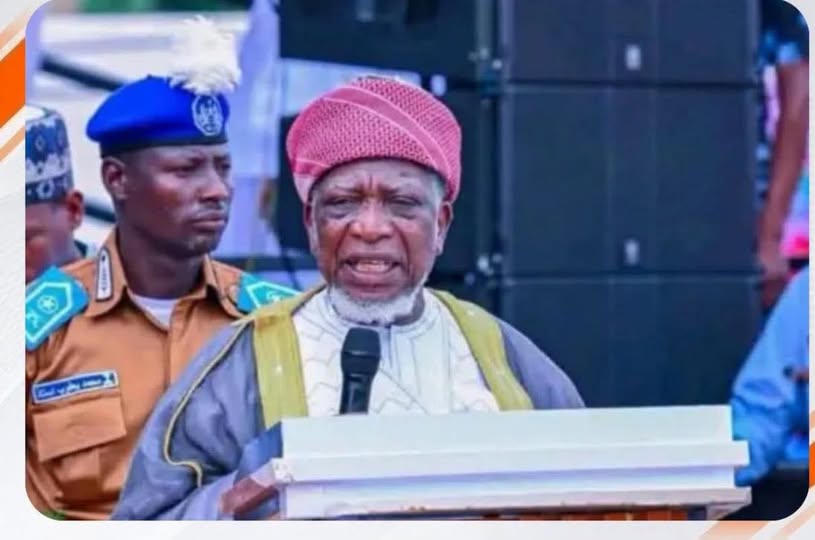
Khalifa Ash-Sheikh Muhammad Sani Yahaya Jingir has questioned the fairness of Nigeria’s current allocation of Senate seats, arguing that significant differences in population among states warrant a fresh debate on political representation.
Jingir specifically compared Kano and Bayelsa states, noting that Kano has 44 local government areas and a significantly larger population, yet both states are represented by three senators in the National Assembly.
“Kano has millions of people, while Bayelsa has a much smaller population, yet both have three senators each. Where is the fairness?” he asked.
The Islamic scholar argued that the existing arrangement should be reviewed to determine whether it adequately reflects population differences and guarantees equitable representation for Nigerians.
He said the question was not about denying any state representation but about ensuring that the distribution of political representation was perceived as fair across the country.
Quoting a Hausa saying, “An yi rabo sai ya gane an yi zalunci,” which roughly translates to “sometimes people only recognise injustice after the distribution has been made,” Jingir said Nigerians should critically examine the existing structure of representation.
READ ALSO; Outgoing governors target Senate seats in 2027 as succession politics heats up
Population and Representation Debate
The comments are likely to renew debate over Nigeria’s federal structure and the constitutional principle governing representation in the Senate.
Unlike the House of Representatives, where constituency allocation is more directly linked to population, each Nigerian state is constitutionally represented by three senators, while the Federal Capital Territory has one.
This arrangement means states with vastly different populations have the same number of senators.
Jingir argued that the disparity raises questions about whether the current system adequately captures the principle of equitable representation.
He also made broader claims about population, land productivity and economic contributions, saying the northern region’s contribution to Nigeria’s Gross Domestic Product (GDP) should be considered in discussions about the country’s political and economic structure.
However, economists and constitutional experts note that political representation cannot be assessed solely on the basis of GDP contribution or land productivity, particularly in a federation where states have constitutional equality in the Senate.
The debate also extends beyond Senate seats to broader questions about revenue allocation, population figures, federal appointments, resource distribution and the balance between equality of states and proportional representation.
Jingir maintained that fairness should remain central to any discussion about Nigeria’s political structure, insisting that every Nigerian deserves equitable representation.


-

 Football6 days ago
Banda, Chawinga make 2026 Women’s Ballon d’Or top 30 shortlist
-
 Featured6 days ago
Peter Obi, Makinde and the 2027 elections: Can unity really challenge APC?
-

 Business1 week ago
Nigerian Breweries’ H1 profitability strengthens as revenue hits N804bn
-

 Business7 days ago
Nigeria records N12.59trn trade surplus in Q2 2026 — NBS
-

 Trending Stories4 days ago
Davido, Wizkid, Burna Boy or Asake: Who is having the biggest 2026 so far?
-

 Football4 days ago
Premier League releases 2026/27 festive fixtures, 7 matches set for Boxing Day
-
 Latest1 week ago
Tinubu’s US legal battle: Group questions silence of elder statesmen
-

 Business2 days ago
Jetour Nigeria, dealers take dashing, other models to Abuja Experience