
Crime
Another Nigerian killed in South Africa

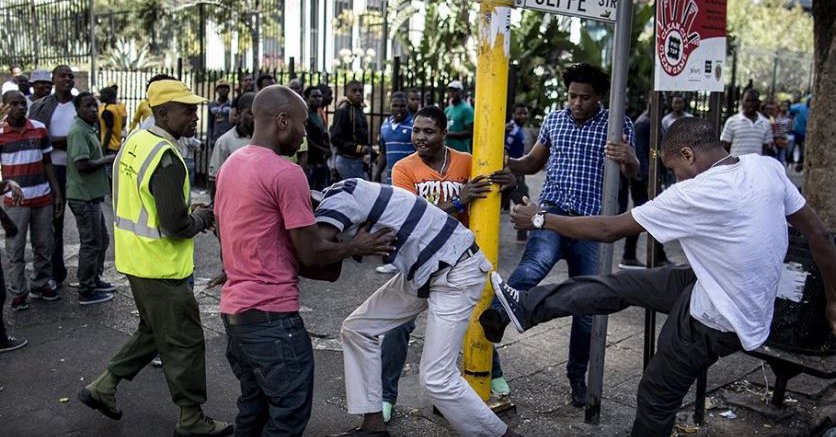
Chibuzo Nwankwo, a patron of a local bar in Johannesburg, South Africa, was on Friday killed after allegedly harassing a female worker.
The Nigerian community in South Africa confirmed the killing, saying the deceased hailed from Enugu state.
The community said Nwankwo’s death brings the number of Nigerians killed in South Africa to 121, since January 2016.
Habib Miller, publicity secretary of the Nigerian union in South Africa, said a yet to be identified person opened fire on Nwankwo at the bar in Kempton Park, Johannesburg.
He added that the South African police later intervened and arrested the murder suspect.
“The deceased, a patron of the bar, got drunk and started harassing a female worker,” he said.
“Information available to the union said that Nwankwo was chased out by security personnel, but he kept on coming back, became very aggressive and rude before the ugly incident occurred.
“A murder case has been opened and an investigation has started. We call on Nigerians to be calm and allow the law to take its course.”
He said the union was against any form of violence, adding that it would monitor the case to ensure that justice prevailed.
The killings of Nigerians in South Africa has been on the increase in recent times, which has sparked a number of protests.














-

 Featured7 days ago
Inside INEC’s race to prepare for Nigeria’s 2027 elections
-

 Featured7 days ago
2027: APC unveils nationwide campaign timetable, Tinubu to rally in 12 states
-
 Business4 days ago
Naira faces exchange rate gap as Dollar hits N1,380 on parallel market
-

 Business7 days ago
Court dismisses ₦170m Trade Fair contract claim, says Zenith Bank was not a party
-

 Latest7 days ago
Breaking: NNPCL raises petrol price to ₦1,405 per litre amid discount controversy
-
 Featured1 week ago
From kitchen to Supreme Court: Nigerian’s fight over alleged support for terrorists
-

 Football1 week ago
Maresca reveals Guardiola’s reaction to Man City’s 4-2 defeat to PSG
-

 Business6 days ago
NCC launches Internet Governance Working Group to tackle AI risks, boost online safety