
Crime
Babajide Otitoju reveals why ISWAP reduced attacks on military formations & focused on killing civilians

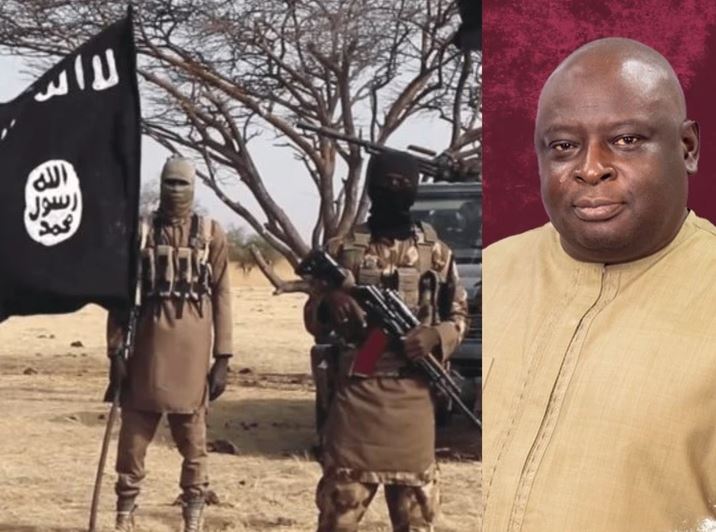
Investigative journalist, Babajide Otitoju, has revealed why terrorists have significantly reduced their attacks on military formations and focused more on attacking civilians. In his interview on TVC News, Babajide explained how the army can easily neutralize terrorists even if they try to start an attack on its formations.
Addressing the topic, Babajide said, “ISWAP appears to have changed tactics.” The terrorists are no longer attacking military formations anymore; they have turned to attacking civilians. They recently killed 50 scrap collectors in Borno State. They have lost the capacity to attack the Nigerian Army like before. They now go after civilians as they have lost the capacity to damage the army’s capacity like they used to.
He continued, “Even before they start the attack, a jet or an unmanned aerial vehicle (UAV) would sight them and waste them.” Therefore, it is hard for them to carry out major operations like they used to. They used to overrun super camps, but they appear to have lost that capacity. While we are making progress in the North-East, the terrorists are expanding to states like Taraba and Yobe, where they were previously not attacking people. The North-Central is not spared from their expansion either.


-

 Latest4 days ago
Full List: Meet the 2026 Nobel Prize winners across six categories
-

 Football4 days ago
Premier League Matchweek 7: Five Fixtures That Could Shape the Weekend
-

 Latest3 days ago
Umahi defends Lagos-Calabar highway route changes amid public outcry
-

 Business3 days ago
Dangote Refinery IPO Extension: Was the 70% subscription report overhyped?
-
Business2 days ago
Dangote Refinery IPO: 70% Subscription claim meets fourfold demand assertion as investors seek clarity
-
 Featured3 days ago
El-Rufai, ADC governorship candidate’s court appearance puts Kaduna opposition politics in focus
-

 Latest1 day ago
UCTH faces morgue crisis as 50 unclaimed corpses await mass burial
-
 Latest4 days ago
Makinde’s Chief of Staff, Segun Ogunwuyi, resigns