
Featured
El-Rufai fixes date for payment of new minimum wage

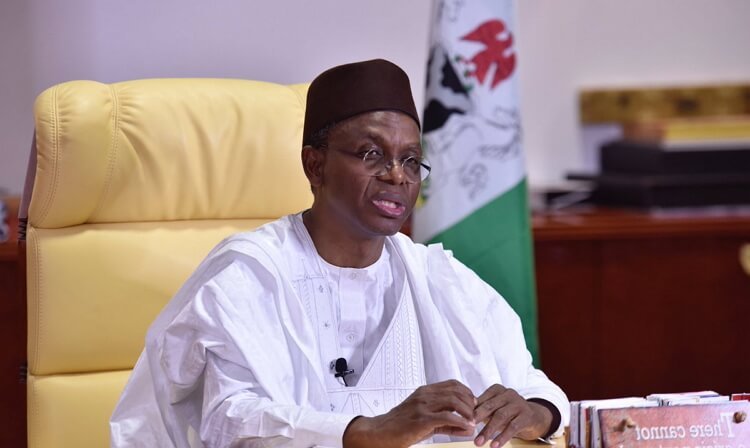
The Kaduna State government has approved the new minimum for state workers, and also fixed September 2019 for implementation.
The State Executive Council on Monday approved that payment of the new national minimum wage and consequential adjustments to civil servants will begin from 1st September 2019.
Muyiwa Adekeye, Special Adviser to the Governor on Media & Communication, in a statement explained, “The Executive Council meeting, chaired by Dr. Hadiza Balarabe, the Deputy Governor, noted the commitment of Governor Nasir El-Rufai to strengthen the public service and its capacity to deliver quality and responsive public service.
“The council deliberated on the minimum wage memo and unanimously approved commencement of the implementation in September 2019.”
The Executive Council stated that its commitment to the public service includes a desire to improve the standard of living of workers in the state, adding that pursuant to that, the Kaduna state government launched a pay review process early in 2018.
The statement explained that a cabinet committee was charged with exploring how the Kaduna State government could sustainably improve public sector salaries.
It stated, “Guided by the twin principles of ability to pay and sustainability, the government considered several scenarios, bearing in mind the trend of internally generated revenues and allocations from the federation account.
“Several salary scenarios were considered, and one option was identified as most prudent. A final decision was suspended as negotiations for a new national minimum wage appeared to gather momentum.
“It was reactivated after the Federal Government announced the new national minimum wage in April 2019.”
The council said paying the new national minimum wage and consequential adjustments would increase the wage bill of the Kaduna state government by 33 per cent, pointing out that gross monthly salary outlay will rise to N3.759bn from the current N2.827bn.
“This almost N1bn monthly increase in the wage bill means that salary and pension commitments will take the lion’s share of state government expenditure. Meeting these salary obligations while meeting development objectives for citizens will further raise the pressure to expand and deepen revenue sources and collections,” the statement explained.
The council noted that according to the new wage structure, the lowest-paid workers in the civil service enjoyed increments of as much as 67 per cent. Middle-ranking officers from Grade 10 to 14 were awarded increments of 60 per cent.








-

 Featured5 days ago
Four reportedly killed in Delta NDC attack as Tinubu’s ‘All Is Fair in Politics’ remark faces fresh scrutiny (Video)
-
 Latest5 days ago
Abuja protesters March on INEC headquarters, demand accountability ahead of 2027 elections [video]
-
 Latest5 days ago
2027: Tinubu woos Lagos Igbo community, assures of inclusion in governance
-

 Football4 days ago
Man United: Pochettino prioritises new striker over defensive signings in January
-
 Latest1 week ago
2027: Obi declares election day ‘Public Holiday’ for vote defence, warns against rigging
-

 Featured5 days ago
NDC denies rift with Peter Obi over 2027 campaign funding
-

 Featured1 week ago
Lagos, Abuja lead Nigeria’s housing price race as rent, homeownership costs rise
-

 Featured4 days ago
Sowore withdraws AAC from National Peace Accord, questions committee’s role