
Business
France’s renewed Africa push raises neo-colonial fears at Nairobi talks

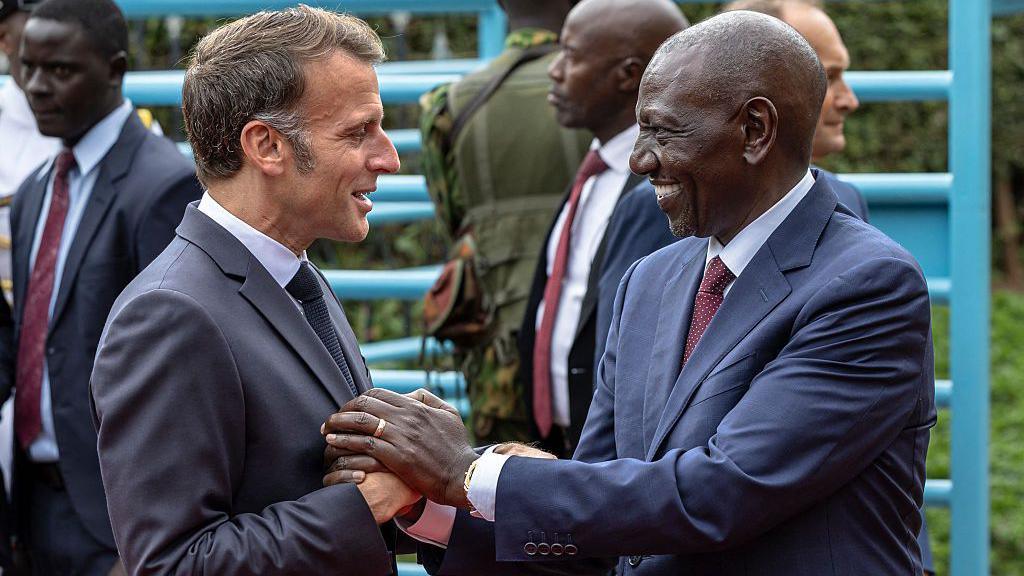
France’s renewed diplomatic and economic engagement across Africa has triggered intense debate among policy experts and geopolitical observers, with many questioning whether Paris is genuinely pursuing a new era of partnership—or merely repackaging old strategic interests under modern diplomatic language.
The debate gained fresh momentum following the recent Africa Forward Summit in Nairobi, where the French President unveiled a multi-billion euro investment package aimed at infrastructure, technology, agriculture, clean energy, and digital transformation across the continent.
While Paris describes the initiative as the beginning of a “partnership of equals,” critics say history suggests caution.
Among those raising concerns is a respected development journalist and public affairs analyst, who argues that France’s current strategy bears striking similarities to its post-colonial playbook.
“France may have changed its language, but not necessarily its interests. What we are witnessing is a strategic reinvention of old influence structures under the banner of economic cooperation,” Anyanwu said.
Drawing historical parallels, Anyanwu points to the legacy of , the influential architect of France’s Africa policy under .
“From the days of Jacques Foccart, French diplomacy in Africa has always combined economic promises with strategic calculations. The methods may have evolved, but the objectives remain familiar,” Anyanwu noted.
Foccart, often referred to as “Monsieur Afrique,” built the network that came to define Françafrique—France’s post-independence political, economic and military influence over much of Francophone Africa.
According to Anyanwu, the loss of French influence in the Sahel—including , and —has forced Paris to rethink its continental strategy.
READ ALSO: Tinubu calls for overhaul of global lending system at Nairobi summit
“Humiliated in the Sahel, France is now pivoting toward Anglophone Africa, using ’s economic weight and ’s diplomatic ambition as entry points for a broader geopolitical recalibration,” he said.
Anyanwu also questioned the timing of France’s deeper defense cooperation with Kenya.
“When a former colonial power suddenly speaks the language of equal partnership while simultaneously seeking new security footholds, Africa must ask hard questions.”
France has insisted the era of Françafrique is over, with Macron repeatedly stating that Paris has no intention of interfering in African sovereignty.
But Anyanwu warns that African leaders—particularly the younger generation—must remain historically conscious.
“No continent builds a secure future by forgetting the architecture of its past. Investment is welcome, but memory is strategic.”
As global powers—including the , , , Gulf states and European powers—compete for influence on the continent, Anyanwu says Africa’s response will determine whether new partnerships become engines of development—or extensions of old dependencies.
“The real question,” Anyanwu concluded, “is whether France is truly changing—or simply playing ping pong with Africa.”


-
 Latest6 days ago
Israel marks 3 years since October 7 Hamas attack amid Gaza strikes, election debate
-

 Energy6 days ago
Fuel Battle: Dangote, marketers and government clash over petrol imports
-

 Energy1 week ago
Petrol, diesel prices rise 86% in 2026 as costs hit fresh highs
-

 Football7 days ago
Nigeria’s World Cup exit under spotlight as FIFA’s DR Congo files emerge
-
 Energy1 week ago
Has Iran lost control of the Strait of Hormuz? Oil flows rebound as war disruptions persist
-

 Latest7 days ago
US Court set to rule on release of FBI, DEA records on Tinubu
-

 Latest17 hours ago
Full List: Meet the 2026 Nobel Prize winners across six categories
-

 Business7 days ago
Nigerian investors at a crossroads as fixed-income yields slide